

Flowers can brighten any home, but not every beautiful plant is safe for pets. Many cat owners wonder, “are carnations poisonous to cats?” The short answer is yes. Carnations may look harmless, but they can cause mild toxicity in cats if eaten or touched excessively.
Cats are naturally curious animals. They love sniffing, chewing, and playing with flowers and plants around the house. Unfortunately, some common decorative flowers contain substances that irritate a cat’s digestive system and skin. Carnations are one of those flowers that pet parents should keep an eye on.
In this guide, you’ll learn everything about are carnations poisonous to cats, including symptoms, treatment options, prevention tips, and safe flower alternatives for your furry friend.
Why Are Carnations Toxic to Cats?
Carnations belong to the Dianthus family. These flowers contain natural compounds that can irritate a cat’s body when consumed. While carnations are not considered deadly like lilies, they can still make your cat uncomfortable and sick.
The toxins are mostly found in the petals and stems. Even a small bite may lead to stomach irritation in sensitive cats.
Toxic Components in Carnations
The exact toxic substance in carnations is not fully identified, but experts believe the plant contains:
- Natural irritants
- Bitter compounds
- Plant sap that affects digestion and skin
Because of these substances, veterinarians classify carnations as mildly toxic to cats.
Symptoms of Carnation Poisoning in Cats
If you are asking, are carnations poisonous to cats, it’s important to recognize the warning signs quickly.
Symptoms usually appear within a few hours after exposure.
Common Symptoms
- Vomiting
- Diarrhea
- Drooling
- Loss of appetite
- Mild skin irritation
- Pawing at the mouth
- Lethargy
Some cats may only experience mild stomach discomfort, while others can have stronger reactions depending on how much of the plant they consumed.
Severe Symptoms to Watch For
Although rare, severe reactions may include:
- Continuous vomiting
- Dehydration
- Weakness
- Difficulty eating
If symptoms worsen or continue for more than 24 hours, contact your veterinarian immediately.
How Dangerous Are Carnations for Cats?
Many pet owners panic after learning are carnations poisonous to cats, but the good news is that carnations are usually only mildly toxic.
Most cats recover quickly with proper care and monitoring. However, kittens, elderly cats, and cats with health issues may react more strongly.
Here’s a quick overview of the toxicity level:
| Flower | Toxicity Level for Cats | Possible Symptoms |
| Carnations | Mild | Vomiting, diarrhea, drooling |
| Lilies | Severe | Kidney failure |
| Tulips | Moderate | Digestive irritation |
| Roses | Generally Safe | Minor stomach upset from thorns |
| Chrysanthemums | Moderate | Vomiting, skin irritation |
This table shows why it’s still important to keep carnations away from curious pets.
What Should You Do If Your Cat Eats Carnations?
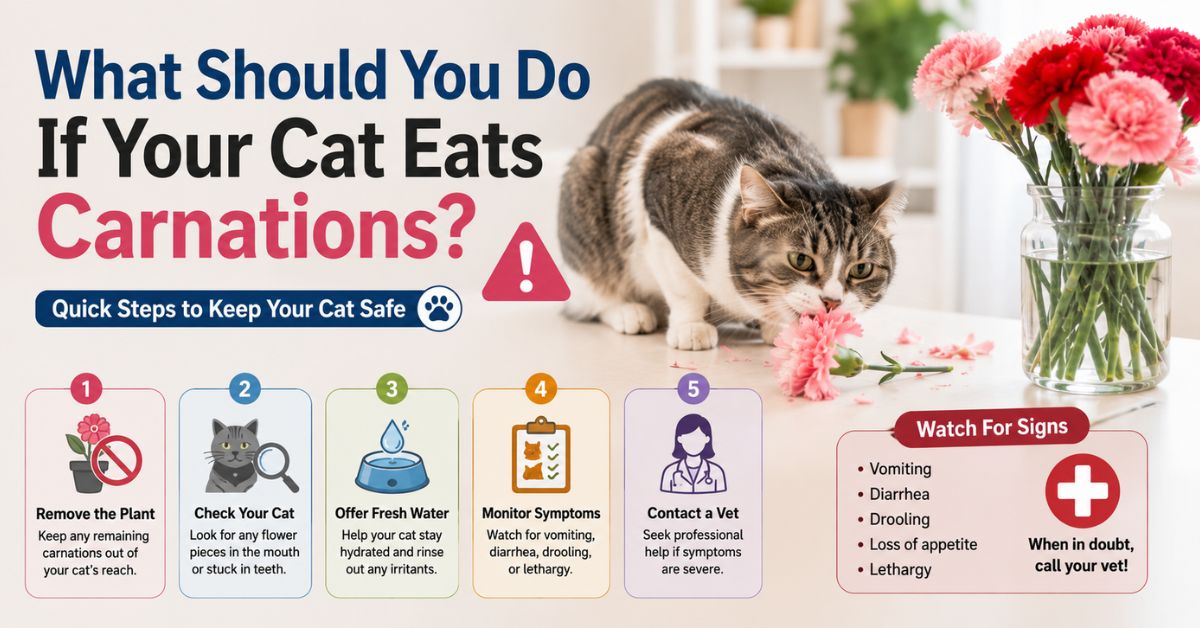
If you suspect your cat has eaten carnations, stay calm and act quickly.
Step-by-Step Actions
1. Remove the Plant
Take away any remaining flower pieces to prevent further eating.
2. Check Your Cat’s Mouth
Look for plant material stuck in the mouth or teeth.
3. Offer Fresh Water
Water can help reduce irritation and keep your cat hydrated.
4. Monitor Symptoms
Watch closely for vomiting, diarrhea, or unusual behavior.
5. Contact a Veterinarian
If symptoms appear severe or your cat ate a large amount, call your vet immediately.
Early action helps prevent complications.
Can Carnations Cause Skin Irritation?
Yes, carnations can sometimes irritate a cat’s skin. The sap inside the stems may trigger mild dermatitis in sensitive cats.
Signs of Skin Irritation
- Redness
- Excessive scratching
- Swelling
- Fur licking
- Rash-like patches
Wash the affected area gently with lukewarm water and contact your veterinarian if irritation continues.
Why Cats Are Attracted to Flowers
Cats are naturally playful and curious. Flowers move slightly, smell interesting, and often resemble toys.
Some cats chew plants because:
- They are bored
- They enjoy textures
- They seek fiber
- They are exploring their environment
Understanding this behavior can help prevent accidental poisoning.
How to Keep Your Cat Away From Carnations
Since are carnations poisonous to cats is a common concern among pet owners, prevention is extremely important.
Practical Prevention Tips
Keep Flowers Out of Reach
Place bouquets on high shelves or in rooms your cat cannot access.
Choose Pet-Safe Plants
Decorate your home with non-toxic flowers instead.
Use Hanging Planters
Suspended plants reduce the chance of chewing.
Provide Cat Grass
Cat grass gives your feline a safe plant to chew on.
Spray Pet-Safe Deterrents
Some natural sprays discourage cats from approaching plants.
Safe Flower Alternatives for Cat Owners
If you love flowers but want a safer home, consider pet-friendly alternatives.
Cat-Safe Flowers
- Roses
- Orchids
- Sunflowers
- Snapdragons
- Freesias
- Gerbera daisies
These flowers are generally considered safer than carnations for homes with cats.
Flowers That Are Extremely Dangerous for Cats
While researching are carnations poisonous to cats, it’s equally important to know the most dangerous flowers.
Highly Toxic Flowers
Lilies
Even small exposure can cause kidney failure.
Tulips
Bulbs are especially toxic.
Daffodils
Can lead to vomiting and heart issues.
Chrysanthemums
Cause digestive and neurological symptoms.
Azaleas
Highly poisonous even in small amounts.
Avoid keeping these plants indoors if you own cats.
How Veterinarians Treat Carnation Poisoning
Treatment depends on how much the cat consumed and the severity of symptoms.
Common Veterinary Treatments
- Physical examination
- Fluid therapy for dehydration
- Anti-vomiting medication
- Activated charcoal in some cases
- Monitoring digestion and hydration
Fortunately, most cats recover fully within a day or two.
Are Dried Carnations Dangerous to Cats?
Yes, dried carnations can still be harmful. Even though the flower is no longer fresh, the irritating compounds may remain.
Cats sometimes chew dried flowers because of their crunchy texture, so keep decorative dried arrangements away from pets.
Can Cats Smell Toxic Plants?
Cats cannot always tell which plants are poisonous. Their curiosity often overrides caution.
That’s why relying on your cat to avoid dangerous flowers is risky. Pet owners should always check plant safety before bringing flowers home.
Signs Your Cat Needs Emergency Care
Although mild symptoms are most common, seek immediate veterinary help if your cat experiences:
- Trouble breathing
- Severe lethargy
- Continuous vomiting
- Refusal to drink water
- Collapse
- Tremors
These signs may indicate a stronger reaction or another medical issue.
Tips for Creating a Cat-Friendly Home
Creating a safe environment helps reduce stress and accidental poisoning.
Simple Safety Ideas
- Research all household plants
- Keep toxic flowers outside
- Use pet-safe decorations
- Offer enrichment toys
- Provide scratching posts
- Rotate safe cat grass regularly
A cat-friendly home keeps your pet healthy and happy.
Conclusion
So, are carnations poisonous to cats? Yes, carnations are mildly toxic and can cause stomach upset, vomiting, diarrhea, and skin irritation in cats. While they are not usually life-threatening, they should still be kept away from curious pets.
The safest approach is prevention. Choosing cat-safe flowers and monitoring your pet around plants can help avoid unnecessary health problems. Always contact your veterinarian if you notice concerning symptoms after plant exposure.
At WhyKittiesHome, we believe every cat owner deserves reliable information to keep their furry companions safe, healthy, and happy.
You have not enough Humanizer words left. Upgrade your Surfer plan.
Simply smelling carnations is usually harmless. Problems occur when cats chew or ingest parts of the flower.
Most mild symptoms disappear within 24–48 hours with proper care and hydration.
Yes, kittens are smaller and more sensitive, so they may react more strongly to toxins.
No. Lilies are far more toxic and can cause fatal kidney failure in cats.
If your cat only ate a tiny amount and has mild symptoms, monitoring may be enough. However, consult a veterinarian if symptoms worsen or continue.

Muhammad Ahad — Passionate writer sharing informative, engaging, and easy-to-read articles across different topics. Focused on delivering valuable content that helps readers learn, explore, and stay inspired every day.
1 thought on “Are Carnations Poisonous to Cats?”