

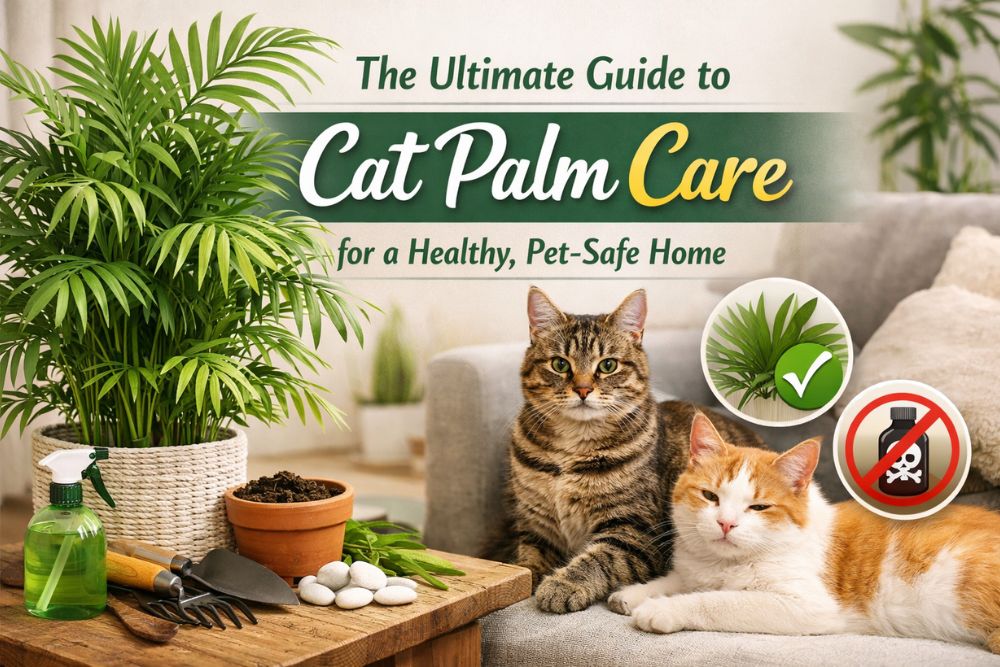
If you’re a cat owner who loves indoor plants, finding greenery that’s both beautiful and safe can feel tricky. Luckily, the cat palm also known as the areca palm is a perfect solution. It’s elegant, air-purifying, and non-toxic to cats, making it an excellent addition to your home.
In this complete guide, we’ll walk you through everything you need to know about cat palm care, from watering routines to troubleshooting common issues. Whether you’re a beginner or a seasoned plant parent, this article will help you keep your palm thriving while ensuring your feline friend stays safe.
What Is a Cat Palm?
The cat palm (Chamaedorea cataractarum) is a lush, tropical plant known for its feathery fronds and compact growth. Unlike some other palms, it grows in a dense, bushy form, making it ideal for indoor spaces.
Why Cat Palms Are Perfect for Cat Owners
One of the biggest advantages of choosing this plant is its pet safety. Cat palms are:
- Non-toxic to cats and dogs
- Soft-leaved, reducing injury risk
- Visually appealing for home décor
Because of these qualities, mastering cat palm care is a smart choice for pet-friendly households.
Ideal Growing Conditions for Cat Palm
To succeed with cat palm care, you need to replicate its natural tropical environment as closely as possible.
Light Requirements
Cat palms thrive in bright, indirect light.
- Place near a window with filtered sunlight
- Avoid direct sun, which can scorch leaves
- Can tolerate low light, but growth slows
Temperature and Humidity
This plant loves warmth and humidity.
- Ideal temperature: 65–80°F (18–27°C)
- Avoid cold drafts or sudden temperature changes
- Maintain moderate to high humidity
Tip: Use a humidifier or mist the plant occasionally to improve growth.
Watering Guide for Proper cat palm care
Watering is one of the most critical aspects of maintaining a healthy cat palm.
How Often to Water
- Keep soil consistently moist, not soggy
- Water when the top inch of soil feels dry
- Reduce watering during winter months
Signs of Overwatering and Underwatering
- Overwatering: Yellow leaves, root rot, soggy soil
- Underwatering: Brown tips, dry soil, drooping fronds
Balancing moisture is essential for effective cat palm care.
Soil and Potting Requirements
Choosing the right soil mix helps your plant thrive.
Best Soil Type
Use well-draining, rich potting soil.
- Mix of peat, sand, and perlite works well
- Avoid heavy soils that retain too much water
Pot Selection
- Use pots with drainage holes
- Choose slightly larger pots when repotting
- Repot every 2–3 years
Fertilizing Your Cat Palm
Fertilization supports healthy growth but should be done carefully.
When and How to Fertilize
- Use a balanced liquid fertilizer
- Apply once a month during spring and summer
- Avoid over-fertilizing, which can damage roots
Proper feeding is a key part of successful cat palm care.
Common Problems and Solutions
Even with the best care, issues can arise. Here’s how to handle them.
Yellow Leaves
Causes:
- Overwatering
- Poor drainage
Solution: Adjust watering schedule and improve soil drainage.
Brown Leaf Tips
Causes:
- Low humidity
- Fluoride in tap water
Solution: Use filtered water and increase humidity.
Pest Issues
Cat palms may attract:
- Spider mites
- Mealybugs
Solution:
- Wipe leaves regularly
- Use neem oil or insecticidal soap
Cat Palm Care Checklist
Here’s a quick reference table to simplify your routine:
| Care Aspect | Recommendation |
| Light | Bright, indirect sunlight |
| Watering | Keep soil moist, not soggy |
| Temperature | 65–80°F (18–27°C) |
| Humidity | Moderate to high |
| Soil | Well-draining potting mix |
| Fertilizer | Monthly (spring & summer) |
| Pet Safety | Non-toxic to cats |
Pruning and Maintenance Tips
Regular maintenance keeps your plant looking fresh and healthy.
How to Prune
- Remove yellow or dead fronds
- Use clean, sharp scissors
- Avoid cutting healthy growth
Cleaning Leaves
Dust can block sunlight absorption.
- Wipe leaves with a damp cloth
- Mist occasionally to keep foliage fresh
Consistent upkeep enhances your overall cat palm care routine.
Benefits of Having a Cat Palm at Home
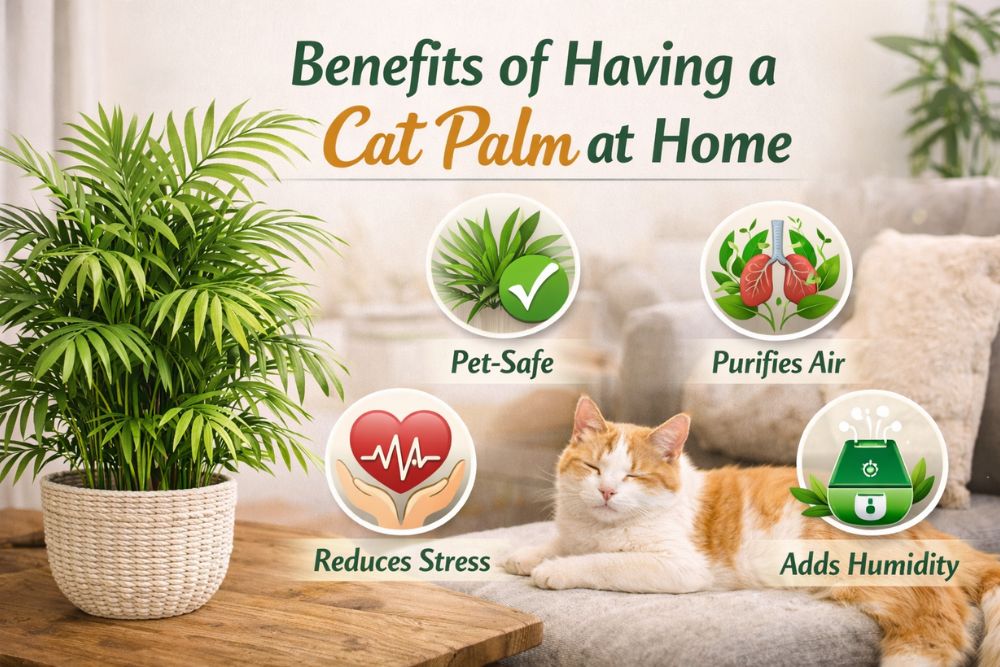
Adding a cat palm to your living space offers more than just aesthetic appeal.
Key Benefits
- Improves indoor air quality
- Safe for curious cats
- Adds a tropical vibe to your home
- Easy to maintain for beginners
This makes it one of the best plants for pet-loving households.
Placement Ideas for Your Cat Palm
Strategic placement improves both plant health and home design.
Best Spots in Your Home
- Living room corners with filtered light
- Bedrooms for a calming effect
- Near windows with sheer curtains
Avoid placing it in:
- Direct sunlight areas
- Air-conditioned vents
- Dark corners
Final Thoughts on cat palm care
Mastering cat palm care doesn’t have to be complicated. With the right balance of light, water, humidity, and occasional feeding, this plant can thrive beautifully in your home. Its pet-safe nature makes it a top choice for cat owners who want greenery without worry.
By following the tips in this guide, you’ll not only keep your cat palm healthy but also create a safer, more vibrant living space for your furry companion.
For more expert advice on pet-friendly homes and cat care, keep exploring WhyKittiesHome your trusted resource for all things feline and beyond.
Yes, cat palms are non-toxic and safe for cats, making them an excellent indoor plant choice.
Cat palms grow slowly to moderately, depending on light, humidity, and overall care conditions.
It can survive in low light, but growth may slow, and leaves may become less vibrant.
Brown tips are usually caused by low humidity or inconsistent watering.

Muhammad Ahad — Passionate writer sharing informative, engaging, and easy-to-read articles across different topics. Focused on delivering valuable content that helps readers learn, explore, and stay inspired every day.
1 thought on “The Ultimate Guide to cat palm care for a Healthy, Pet-Safe Home”