

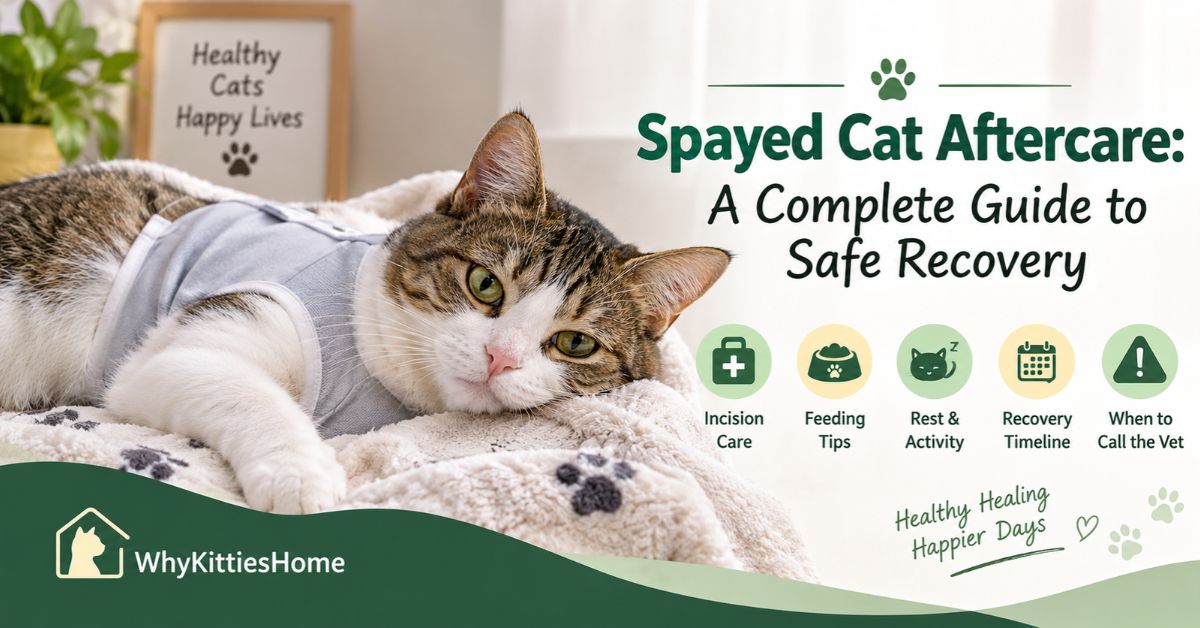
Your cat has just come home after being spayed. She may seem sleepy, walk unsteadily, refuse her usual meal, or hide in a quiet corner. As an owner, you might wonder whether these changes are normal or whether something has gone wrong. Spayed Cat Aftercare
Spayed cat aftercare is about more than keeping a surgical wound clean. Your cat needs time for the tissues inside her abdomen to heal, the effects of anesthesia to wear off, and her stress levels to settle. Too much activity, licking the incision, or missing early warning signs can complicate recovery.
The good news is that a calm recovery space, careful daily checks, and guidance from your veterinarian can help your cat recover comfortably. This guide explains what to do at home, what to avoid, and when professional care is necessary.
-
✓
Provide a Calm Recovery Space
Keep your cat indoors and quiet for the period recommended by your veterinarian, usually 10–14 days.
-
✓
Prevent Licking and Excessive Activity
Limit jumping, running, rough play, and licking to protect the incision and deeper healing tissues.
-
✓
Inspect the Incision Daily
Look for increasing redness, swelling, discharge, bleeding, or any opening of the surgical wound.
-
✓
Use Only Vet-Approved Medication
Never give human painkillers to your cat. Some, including paracetamol and ibuprofen, can cause severe poisoning.
-
✓
Recognize Warning Signs Early
Contact your veterinarian promptly if your cat worsens, vomits repeatedly, or has difficulty urinating. Seek emergency care for severe symptoms.
What Happens to a Cat’s Body After Spaying?
Spaying is a surgical procedure that typically removes a female cat’s ovaries and uterus, although the exact procedure can vary. It requires anesthesia and an incision through the abdominal wall, so recovery involves more than the skin closing.
Your cat’s body must repair damaged tissue, manage inflammation, and recover from the effects of anesthetic drugs. These processes explain why she may sleep more, move cautiously, or behave differently for a short time.
Why your cat may act differently after surgery
- Sleepiness: Anesthetic and sedative medications can temporarily affect alertness, coordination, and energy.
- Reduced appetite: Anesthesia, nausea, stress, and postoperative discomfort may make food less appealing.
- Hiding or seeking solitude: Cats often feel safer in enclosed, quiet spaces when they are uncomfortable or overwhelmed.
- Less movement: Your cat may instinctively avoid movements that stretch a sore abdomen.
- Temporary restlessness: Discomfort, unfamiliar smells, and the effects of medication may make settling down difficult.
Mild changes can occur during the first night. However, your cat should gradually become more alert. If she becomes increasingly weak, remains unusually difficult to wake, or seems to be getting worse rather than better, contact your veterinarian.
2. Spayed Cat Aftercare: What to Do During the First 24 Hours
The first day is primarily about warmth, quiet, observation, and a gradual return to eating and drinking.
Step 1: Prepare a quiet recovery room
Choose a clean, comfortable room with a soft bed, fresh water, food, and a litter tray. Keep other pets and young children away while your cat recovers.
A smaller room reduces opportunities to jump onto furniture or hide somewhere difficult to reach. Keep the temperature comfortable and make sure she can stand, turn around, and reach her essentials easily.
Step 2: Let her rest without unnecessary handling
Speak gently and allow your cat to choose whether to approach you. Avoid repeatedly picking her up or pressing her abdomen to check for pain.
Cats may conceal discomfort because they naturally avoid appearing vulnerable. A quiet cat is not necessarily pain-free, so watch her posture, breathing, walking, and response to food.
Step 3: Offer a small meal when she is alert
Follow the discharge instructions from your clinic. Once your cat is fully awake and swallowing normally, you can usually offer a small portion of her usual food.
A small meal may be easier to tolerate than a large one because anesthetic drugs can temporarily cause nausea. Offer fresh water as directed and avoid forcing food or water into her mouth.
Step 4: Observe the incision without disturbing it
Look at the surgical site when your cat is comfortable and allows you to do so. A photograph taken once daily can help you compare changes over time.
Do not press, scrub, or pull at the incision. Avoid applying alcohol, hydrogen peroxide, creams, powders, or antiseptics unless your veterinarian specifically recommends them.
These steps follow common veterinary discharge guidance, but the instructions from the surgeon who performed your cat’s procedure should take priority.
How to Care for Your Cat’s Spay Incision
The incision deserves close attention because the skin may look nearly healed before the deeper tissues have recovered fully.
When your cat jumps, twists, or stretches, tension travels through the abdominal wall. Excessive movement can irritate the wound, cause swelling, or contribute to separation of the incision.
How to check the incision safely
- Inspect it once or twice daily. Use good lighting and look without touching the wound.
- Check for changes. Note whether redness, swelling, bruising, or discharge is increasing.
- Keep the area dry. Do not bathe your cat or allow the incision to become wet during the recovery period.
- Prevent licking and chewing. Use the protective collar or recovery garment recommended by your veterinarian.
- Follow the scheduled recheck. If external sutures or staples were used, ask whether they need removal.
A healing incision should generally remain closed and become less inflamed over time. A small amount of mild redness or bruising may be expected immediately after surgery, but increasing redness, heat, pain, or discharge is not something to ignore.
Vet Insight
The skin is only one layer of the surgical repair. In a typical female cat spay, deeper abdominal tissues also need time to heal. A wound that looks neat on the outside can still be vulnerable to strain underneath.
This is why activity restriction matters even when your cat seems energetic and wants to return to her usual routine.
Should your cat wear a cone after spaying?
Usually, a properly fitted Elizabethan collar, commonly called an E-collar or cone, is recommended if it is needed to prevent access to the incision. Some veterinarians may approve a recovery suit instead.
Cats lick wounds because grooming is a natural response to irritation. Unfortunately, their tongues can irritate healing tissue, introduce bacteria, and damage sutures.
- Keep the prescribed protection on for the period recommended by your vet, often around 7–14 days.
- Make sure the collar prevents your cat from reaching her abdomen.
- Check that she can eat and drink comfortably while wearing it.
- Contact the clinic if the collar causes distress or does not prevent licking.
Do not remove the cone simply because the incision looks better after a few days. Spayed Cat Aftercare
4. Restrict Jumping, Running, and Rough Play
One of the hardest parts of spayed cat aftercare is keeping an energetic cat calm. Your cat may feel better before the incision has fully healed, especially after the effects of anesthesia wear off.
Follow your veterinarian’s activity restrictions, commonly lasting 7–14 days after surgery. Some procedures or complications require a different timeline.
How to keep an active cat calm
- Keep her in a comfortable, enclosed room when you cannot supervise her.
- Temporarily block access to cat trees, window ledges, high shelves, and tall furniture.
- Provide a low bed and easy access to food, water, and the litter tray.
- Avoid chasing games, laser pointers, wand toys that encourage jumping, and rough play.
- Separate her from other pets if they wrestle, chase, or groom her incision.
- Carry her carefully if needed, supporting her chest and hindquarters without squeezing her abdomen.
Avoid punishment if your cat tries to jump. Instead, change the environment so that high surfaces are harder to reach. Spayed Cat Aftercare
What if your cat keeps jumping?
If she makes an occasional jump, do not panic. Calmly return her to a safe space and check the incision for new swelling, bleeding, or opening.
Contact your veterinarian if the wound changes or if your cat seems painful afterward. Do not assume that every jump has caused damage, but do not allow repeated jumping just because no immediate problem is visible.
5. Feeding and Hydration During Recovery
Your cat needs adequate nutrition to repair tissue, maintain normal body functions, and regain her energy. However, the first meal after anesthesia should be approached carefully.
What should you feed a spayed cat?
Unless your veterinarian recommends a specific diet, continue feeding her usual complete and balanced cat food.
For example, if she normally eats a complete wet food or dry food that suits her, there is usually no need to introduce a new brand immediately after surgery. Sudden dietary changes may cause digestive upset and make it harder to distinguish food-related symptoms from postoperative problems.
For the first evening:
- Wait until your cat is awake and alert enough to eat safely.
- Offer a small portion of her normal meal.
- Observe whether she eats comfortably and keeps the food down.
- Offer more in small portions if she tolerates the first meal and her clinic’s instructions permit it.
- Keep clean drinking water available as directed.
Do not force-feed her or give milk, rich table scraps, or unfamiliar treats to stimulate her appetite.
Does spaying mean she needs a new diet?
Not immediately. Her immediate priority is surgical recovery.
Over the following weeks, her energy needs may change because spaying alters reproductive hormone levels and can affect appetite and energy expenditure. Once she has recovered, monitor her weight and body condition, measure meal portions, and discuss calorie needs with your veterinarian.
Avoid restricting food sharply during the healing period without veterinary advice, especially for kittens or cats with existing medical conditions.
What if your cat refuses to eat?
A mildly reduced appetite on the first evening can occur, but it should improve. If your cat refuses food, seems nauseated, or is not drinking as expected, contact the veterinary clinic for advice rather than waiting several days.
For a kitten, a diabetic cat, or a cat with another significant health condition, seek advice sooner because going without food can carry additional risks. Repeated vomiting, marked weakness, or inability to keep water down also warrants prompt veterinary attention. Spayed Cat Aftercare
6. Pain Management and Medication Safety
Your cat may experience soreness after surgery even if she does not cry or resist handling. Cats often communicate pain through subtle changes, including a hunched posture, flattened ears, reduced grooming, tense muscles, or reluctance to move.
A veterinarian may administer pain relief during surgery and prescribe additional medication for home use.
How to give medication safely
- Follow the prescribed dose and schedule exactly.
- Use the measuring syringe or dosing device provided for liquid medication.
- Never double a dose if you are unsure whether the previous dose was swallowed.
- Contact the clinic if your cat spits out medication, vomits after taking it, or refuses it.
- Do not give additional painkillers unless your veterinarian approves them.
Never give your cat human painkillers such as paracetamol (acetaminophen), ibuprofen, or naproxen. These can cause severe poisoning in cats, and paracetamol can be fatal.
If you accidentally give a human medication, contact an emergency veterinarian immediately. Do not wait for symptoms to appear or attempt to induce vomiting at home.
7. Litter Box Care After Spaying
A clean, easily accessible litter box helps your cat eliminate comfortably and lets you monitor whether she is urinating and passing stool normally.
After surgery, some cats avoid their usual litter box because they feel groggy, find it difficult to climb into a high-sided tray, or dislike the unfamiliar smells associated with the clinic.
Make the litter box easier to use
- Place a clean litter tray close to your cat’s recovery bed.
- Choose a low-entry tray so she does not need to jump.
- Remove waste regularly and keep the surrounding area clean.
- Follow your surgeon’s instructions about litter type, especially if litter dust could contaminate the wound.
- Monitor urination and bowel movements without repeatedly disturbing your cat.
If your veterinarian recommends changing litter, a low-dust paper-based litter may be appropriate. Avoid making unnecessary changes if your cat is already comfortable using her tray and the clinic has not recommended a different option.
Is it normal for a cat not to poop after spaying?
It can be. Reduced food intake, anesthesia, and less physical activity may slow bowel movements for a short period.
However, straining, repeated trips to the litter box, crying while trying to urinate, or producing little or no urine requires prompt veterinary attention. A urinary blockage is an emergency, particularly in male cats, but urinary difficulties in any cat should not be dismissed.
If your cat has not passed stool for several days, appears uncomfortable, or strains repeatedly, contact your veterinarian. Do not give human laxatives or enemas without veterinary direction.
Normal Recovery vs. Warning Signs
Not every change after surgery means something is wrong. What matters is the severity of the symptom, how long it lasts, and whether your cat is improving.
Cat Spay Recovery: Signs & Actions
Know what to expect and when your cat needs veterinary care.
| What You Notice | What It May Mean | What to Do |
|---|---|---|
| Sleepiness on the first evening | Effects of anesthesia | Provide quiet rest and monitor alertness. |
| Smaller meal after surgery | Temporary nausea or stress | Offer small portions as instructed. |
| Mild redness near the incision | Early tissue inflammation | Monitor for improvement; contact your vet if redness increases. |
| Hiding or reduced interaction | Stress or discomfort | Provide a quiet space and observe behavior. |
| Repeated vomiting | Medication reaction or another complication | Contact your veterinarian promptly. |
| Increasing swelling or discharge | Possible infection or wound complication | Arrange prompt veterinary assessment. |
| URGENT Open incision or active bleeding | Possible surgical complication | Seek urgent veterinary care. |
| EMERGENCY Labored breathing, collapse, or pale gums | Potentially serious emergency | Seek emergency veterinary care immediately. |
| URGENT Straining with little or no urine | Possible urinary obstruction or another urinary problem | Seek urgent veterinary care. |
Important: If your cat has difficulty breathing, collapses, or cannot urinate, do not wait for symptoms to improve. Seek emergency veterinary care.
The timing and severity of symptoms matter. When in doubt, call the clinic that performed the surgery because its team knows which procedure and medications your cat received.
Red Flag / When to Call the Vet
Recognize serious symptoms and act without delay.
Seek immediate veterinary attention if your cat has any of the following warning signs:
- ! Difficulty breathing, collapse, or extreme weakness.
- ! Pale or white gums, heavy bleeding, or a rapidly enlarging abdomen.
- ! An open incision or tissue protruding from the wound.
- ! Repeated vomiting accompanied by weakness or inability to keep water down.
- ! Straining to urinate or producing no urine.
Seek veterinary advice for increasing redness, swelling, discharge, persistent pain, or an appetite that does not return as expected.
9. Spayed Cat Aftercare: Recovery Timeline
Every cat heals at a slightly different rate. Age, general health, the surgical technique, and any complications can influence recovery.
Cat Spay Recovery Timeline
A step-by-step guide to your cat’s healing journey.
Rest and Observation
Your cat may sleep more than usual and eat less. Keep her warm, quiet, indoors, and away from elevated surfaces. Watch her breathing, alertness, appetite, and comfort.
Gradual Return to Normal Behavior
Her appetite and alertness should generally improve. Continue prescribed medication, prevent licking, and check the incision. Contact your vet if she is worsening or not recovering as expected.
Maintain Activity Restrictions
Your cat may want to play and jump again. Continue limiting activity even if she seems comfortable. The incision still needs protection.
Check Before Resuming Normal Activity
Many cats approach the end of their usual recovery restriction during this period. Resume jumping and energetic play only when your veterinarian’s instructions allow it and the incision has healed appropriately.
These timeframes are general guidance, not a guarantee. Some cats recover sooner, while others need longer restrictions or a follow-up examination.
10. Common Mistakes to Avoid After Spaying
Even well-meaning owners can accidentally make recovery harder. The following mistakes are worth avoiding.
- Letting your cat outside too early: Outdoor activity introduces dirt and makes it harder to monitor the incision.
- Allowing unrestricted jumping: A cat that appears energetic may still have healing tissue beneath the skin.
- Removing the cone too soon: Licking can damage the wound even when it initially looks healthy.
- Applying home remedies: Oils, powders, creams, and disinfectants may irritate the incision or interfere with healing.
- Changing food suddenly: An unfamiliar diet may trigger digestive upset when your cat is already recovering.
- Stopping prescribed medication early: Follow the veterinary instructions and ask before changing a treatment plan.
- Ignoring subtle deterioration: Hiding, reduced interaction, and a tense posture can be signs of discomfort, not simply a change in mood.
The safest approach is to keep care simple and consistent. Follow the discharge instructions, monitor daily changes, and contact your veterinary team when something does not look right.
Frequently Asked Questions About Spayed Cat Aftercare
1. How long does a cat take to recover after being spayed?
Many cats become noticeably more alert within 24 hours, although their appetite and energy may take longer to return to normal. The incision and deeper tissues commonly need around 10–14 days of protected recovery. Your veterinarian may recommend a different period depending on the procedure and your cat’s health.
2. Can I leave my spayed cat alone at home?
A healthy adult cat may be left alone for short periods once she is fully awake and stable, provided your veterinarian has not instructed otherwise. During the first night, arrange closer observation if possible.
Before leaving, ensure she has a quiet room, fresh water, accessible food and litter, and appropriate incision protection. Do not leave a cat unattended if she is difficult to wake, repeatedly vomiting, bleeding, or otherwise deteriorating.
3. Should my cat eat normally after spaying?
Her appetite may be reduced on the first evening because anesthesia and postoperative discomfort can cause nausea. Offer a small amount of her usual food when she is sufficiently alert and follow the clinic’s instructions.
Her appetite should gradually improve. If she refuses food, appears unwell, or does not resume eating as expected, contact your veterinarian rather than assuming she is simply being fussy.
4. Is it normal for a spayed cat to hide or sleep all day?
Some hiding and extra sleep are common during early recovery because of medication effects, stress, and discomfort. Give her a quiet place to rest and monitor her progress.
She should become increasingly alert rather than progressively weaker. If she is unusually difficult to wake, has trouble breathing, refuses food while appearing unwell, or shows worsening symptoms, seek veterinary advice promptly.
5. Can my cat lick her incision if it looks healed?
No. Do not allow licking unless your veterinarian has confirmed that protection is no longer needed. The surface may look closed while deeper tissues are still healing.
Use the recommended E-collar or approved recovery suit for the prescribed period. If your cat can still reach the wound, ask the clinic to help you find a better-fitting option.
Veterinary Sources and Further Reading
For additional guidance on spayed cat aftercare, incision monitoring, activity restriction, feeding, and warning signs, consult these trusted veterinary resources:
-
VCA Animal Hospitals — Post-Operative Instructions for Cats
General guidance for caring for your cat after surgery.
-
ASPCA — After Surgery: How to Care for Your Pet
Advice on post-surgery care and monitoring your pet’s recovery.
-
SPCA of Texas — Care After Spay & Neuter Surgery
Practical instructions for care after spay and neuter procedures.
-
Tufts University — Veterinary Aftercare Guidance
Additional veterinary guidance for post-procedure care.
Final Thoughts
Successful spayed cat aftercare comes down to three priorities: protect the incision, keep your cat calm, and recognize changes that require veterinary attention.
Give her a quiet recovery space, provide her normal food and water as directed, prevent licking, and follow the prescribed activity restrictions. Most importantly, do not assume that a cat who looks better is ready to resume every normal activity.
Every cat deserves patient, informed care while healing. At WhyKittiesHome, our goal is to help cat owners make confident, responsible decisions with practical feline health and care guidance.
A little extra attention during these first two weeks can help your cat return to her comfortable, playful self while reducing the risk of avoidable complications.

Muhammad Ahad — Passionate writer sharing informative, engaging, and easy-to-read articles across different topics. Focused on delivering valuable content that helps readers learn, explore, and stay inspired every day.