

Introduction
If you’re a cat owner, one of the most common questions you may have is: when do cats go into heat? Understanding your cat’s reproductive cycle is essential for providing proper care and avoiding unexpected behaviors.
Female cats, also known as queens, experience a natural cycle that prepares them for mating. This cycle can bring noticeable behavioral and physical changes. Whether you’re a first-time cat parent or experienced, knowing when do cats go into heat helps you manage your pet better and make informed decisions about spaying or breeding.
What Does “Going Into Heat” Mean?
When a cat goes into heat, it means she has entered the fertile phase of her reproductive cycle. This stage is medically referred to as the estrus cycle.
During this time, your cat becomes receptive to mating and may display specific behaviors to attract male cats. Unlike humans, cats do not menstruate. Instead, their cycle revolves around periods of fertility.
When Do Cats Go Into Heat for the First Time?
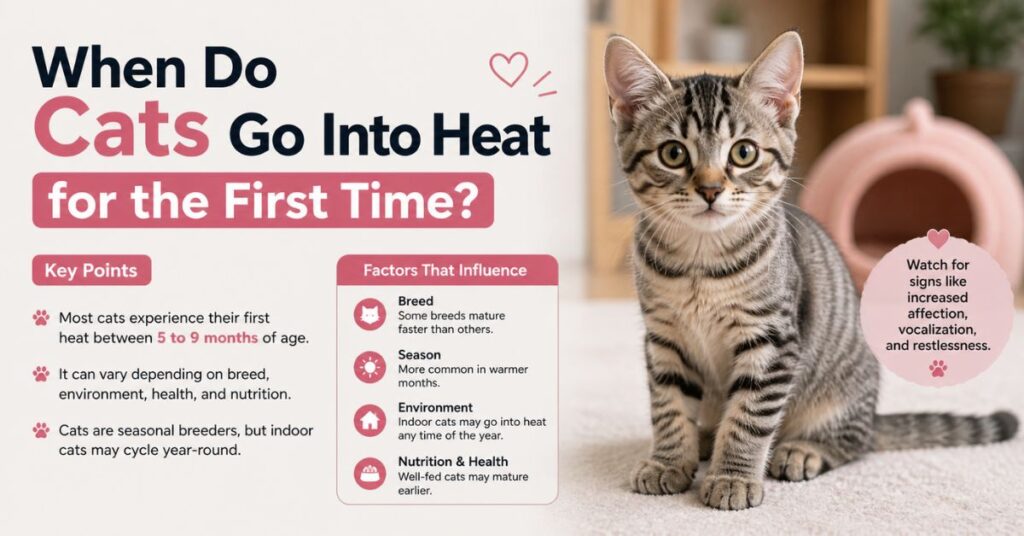
Most cats experience their first heat cycle between 5 to 9 months of age, although it can vary depending on several factors.
Key Influencing Factors:
- Breed: Some breeds mature faster than others
- Season: Cats are seasonal breeders (more active in warmer months)
- Environment: Indoor cats may go into heat year-round
- Nutrition and health: Well-fed cats may mature earlier
So, if you’re wondering when do cats go into heat, the simple answer is: as early as 5 months old in many cases.
How Often Do Cats Go Into Heat?
Cats can go into heat every 2 to 3 weeks during the breeding season if they do not mate. This frequent cycle can surprise many owners.
Typical Pattern:
- Heat lasts about 4 to 7 days
- If no mating occurs, the cycle repeats
- Breeding season usually runs from spring to early fall
Indoor cats exposed to artificial lighting may cycle continuously throughout the year.
Stages of the Cat Heat Cycle
Understanding the stages helps clarify when do cats go into heat and what to expect at each phase.
| Stage | Duration | Description |
| Proestrus | 1–2 days | Mild behavioral changes, not receptive to males |
| Estrus | 4–7 days | Full heat phase, mating behavior occurs |
| Interestrus | 1–3 weeks | Period between cycles if no mating happens |
| Diestrus | Varies | Occurs if mating leads to ovulation |
| Anestrus | Months | Inactive phase, usually in winter |
The estrus stage is the most noticeable and is when owners typically realize their cat is in heat.
Signs Your Cat Is in Heat
Recognizing the signs is key to understanding when do cats go into heat.
Common Behavioral Signs:
- Loud, persistent meowing or yowling
- Increased affection toward humans
- Rolling on the floor frequently
- Raising the hindquarters (mating posture)
- Attempting to escape outdoors
Physical Signs:
- Tail held to one side
- Slight decrease in appetite
- Increased grooming of the genital area
These behaviors are natural but can be challenging for owners.
Why Do Cats Go Into Heat So Often?
Cats are induced ovulators, meaning they ovulate only after mating. This is why they may repeatedly go into heat until they successfully mate.
This biological trait increases the chances of reproduction in the wild. However, for pet owners, it can lead to repeated cycles if the cat is not spayed.
How to Care for a Cat in Heat
If your cat is in heat, proper care is essential.
Helpful Tips:
- Keep her indoors to prevent unwanted pregnancy
- Provide extra attention and comfort
- Use interactive toys to distract her
- Maintain a clean litter box
- Avoid scolding her for natural behavior
Some owners use calming products, but always consult a vet before trying anything new.
Should You Spay Your Cat?
If you don’t plan to breed your cat, spaying is highly recommended.
Benefits of Spaying:
- Prevents unwanted pregnancies
- Eliminates heat cycles
- Reduces risk of certain diseases
- Minimizes behavioral issues
Most vets recommend spaying before the first heat cycle, but it can be done later as well.
Common Myths About Cats in Heat
Understanding when do cats go into heat also means clearing up misconceptions.
Myth vs Reality:
- Myth: Cats should have one litter before spaying
- Reality: Not necessary for health
- Myth: Indoor cats don’t go into heat
- Reality: They do, sometimes year-round
- Myth: Heat cycles are painful
- Reality: They are instinct-driven, not painful
Conclusion
Understanding when do cats go into heat is essential for every cat owner. From the first cycle at a young age to frequent repetitions during breeding seasons, a cat’s heat cycle is a natural but important aspect of feline life.
By recognizing the signs, understanding the cycle stages, and providing proper care, you can ensure your cat remains safe and comfortable. Spaying is also a responsible option for long-term health and behavior management.
At WhyKittiesHome, we’re dedicated to helping you become a more informed and confident cat parent.
Most cats stay in heat for 4 to 7 days, but it can vary depending on the individual cat.
Yes, especially indoor cats exposed to artificial light can go into heat even during winter.
Provide attention, keep her indoors, and use toys to distract her. Avoid medications unless prescribed by a vet.
Cats don’t experience menopause like humans. They can continue cycles into older age unless spayed.

Muhammad Ahad — Passionate writer sharing informative, engaging, and easy-to-read articles across different topics. Focused on delivering valuable content that helps readers learn, explore, and stay inspired every day.
1 thought on “When Do Cats Go Into Heat? Complete Guide for Cat Owners”