

Introduction
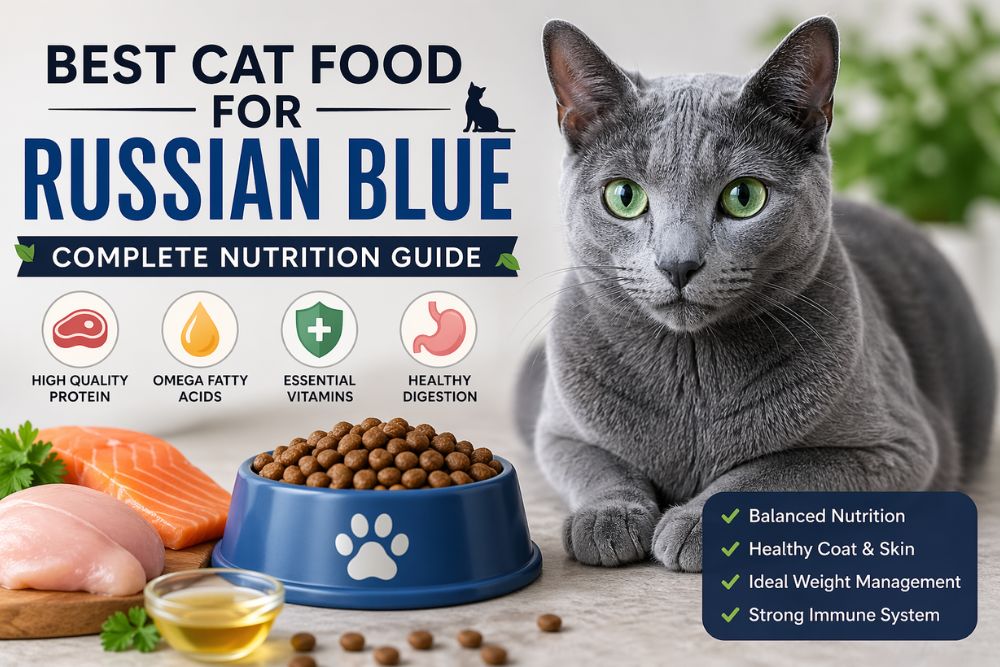
Russian Blue cats are known for their striking silver-blue coats, emerald-green eyes, and calm yet playful personalities. But beyond their beauty, these cats require a well-balanced diet to maintain their health and signature glossy coat. Choosing the right cat food for russian blue is essential to support their metabolism, prevent obesity, and enhance their overall well-being.
In this guide, we’ll explore everything you need to know about feeding your Russian Blue—from nutritional needs to the best food types and practical feeding tips.
Understanding the Nutritional Needs of Russian Blue Cats
Russian Blues are naturally lean and muscular, but they can easily gain weight if overfed. This makes selecting the right cat food for russian blue even more important.
Key Nutritional Requirements
A balanced diet for Russian Blues should include:
- High-quality protein: Supports muscle development and energy
- Healthy fats: Promotes a shiny coat and skin health
- Low carbohydrates: Helps prevent weight gain
- Essential vitamins and minerals: Boosts immunity and organ function
Why Breed-Specific Nutrition Matters
While all cats are obligate carnivores, Russian Blues have a slightly slower metabolism. Feeding them generic food without portion control can lead to obesity. Tailoring the cat food for russian blue ensures optimal health and longevity.
Types of Cat Food Suitable for Russian Blue
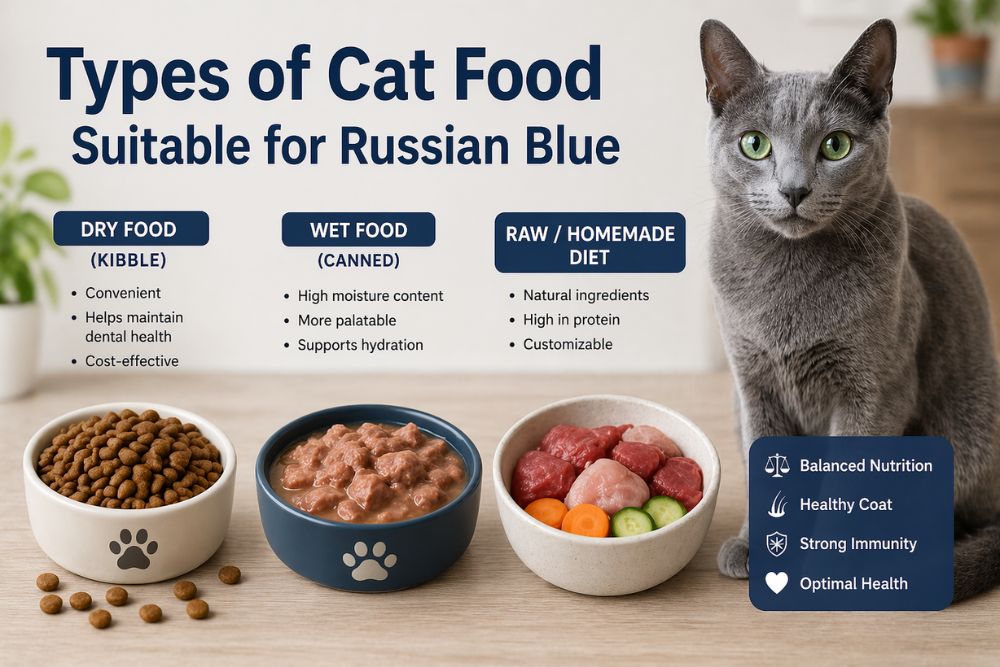
Choosing the right type of food is just as important as the ingredients.
Dry Food (Kibble)
Pros:
- Convenient and cost-effective
- Helps maintain dental health
Cons:
- Lower moisture content
- Can lead to overeating if free-fed
Wet Food (Canned)
Pros:
- High moisture content (great for hydration)
- More palatable for picky eaters
Cons:
- More expensive
- Shorter shelf life after opening
Raw or Homemade Diet
Pros:
- Complete control over ingredients
- High protein and natural nutrients
Cons:
- Requires careful preparation
- Risk of nutritional imbalance if not planned properly
For most owners, a combination of wet and dry cat food for russian blue works best.
Best Ingredients to Look for in Cat Food
When selecting cat food for russian blue, always check the label.
Essential Ingredients
- Real meat (chicken, turkey, fish) as the first ingredient
- Omega-3 and Omega-6 fatty acids for coat health
- Taurine for heart and eye health
- Probiotics for digestion
Ingredients to Avoid
- Artificial preservatives
- Fillers like corn and soy
- Excessive carbohydrates
- By-products of low quality
Feeding Guide for Russian Blue Cats
Proper feeding routines are just as important as food quality.
Portion Control
Russian Blues love to eat, so portion control is crucial. Follow feeding guidelines based on:
- Age
- Weight
- Activity level
Feeding Schedule
- Kittens: 3–4 small meals daily
- Adults: 2 meals per day
- Seniors: Adjust based on activity and health
Avoid free-feeding, as it can lead to overeating.
Recommended Feeding Chart
| Age Group | Weight Range | Daily Food Amount | Feeding Frequency |
| Kitten (2–6 months) | 1–3 kg | 50–80g | 3–4 times/day |
| Adult (1–7 years) | 3–5 kg | 40–70g | 2 times/day |
| Senior (7+ years) | 3–5 kg | 30–60g | 2 times/day |
Note: Adjust portions based on your cat’s activity level and vet recommendations.
Special Dietary Considerations
Weight Management
Russian Blues are prone to weight gain. Choose cat food for russian blue that is:
- High in protein
- Low in fat
- Calorie-controlled
Sensitive Stomach
If your cat has digestive issues, opt for:
- Grain-free formulas
- Limited ingredient diets
- Easily digestible proteins like chicken or fish
Coat Health
Their iconic coat requires:
- Omega fatty acids
- High-quality protein
This helps maintain their plush, shiny fur.
Tips for Choosing the Best Cat Food
Here are some practical tips to ensure you pick the right cat food for russian blue:
- Always read ingredient labels carefully
- Choose reputable brands with high-quality standards
- Consult your veterinarian before changing diets
- Introduce new food gradually to avoid digestive upset
- Monitor your cat’s weight and adjust portions accordingly
Common Feeding Mistakes to Avoid
Even well-meaning cat owners can make mistakes.
Overfeeding
Russian Blues often act hungry even when they’re not. Stick to measured portions.
Feeding Too Many Treats
Treats should not exceed 10% of daily calorie intake.
Ignoring Water Intake
Ensure fresh water is always available, especially if feeding dry food.
Conclusion
Choosing the right cat food for russian blue is one of the most important decisions you can make for your feline companion. With their unique metabolism and tendency to gain weight, Russian Blues require a carefully balanced diet rich in protein, healthy fats, and essential nutrients.
By understanding their dietary needs, selecting high-quality ingredients, and maintaining proper feeding habits, you can ensure your cat stays healthy, active, and beautiful for years to come.
At WhyKittiesHome, we believe that every cat deserves the best care—and it all starts with the right nutrition.
A balanced mix of high-quality wet and dry food is ideal. Look for high protein and low carbohydrate content.
Yes, grain-free food can be beneficial, especially for cats with sensitivities. However, it’s not mandatory unless recommended by a vet.
It depends on their age, weight, and activity level. Typically, 40–70g per day for adults is sufficient.
Yes, but in moderation. Excess treats can lead to weight gain and nutritional imbalance.
Yes, but it must be nutritionally balanced. Consult a veterinarian to ensure all dietary needs are met.

Muhammad Ahad — Passionate writer sharing informative, engaging, and easy-to-read articles across different topics. Focused on delivering valuable content that helps readers learn, explore, and stay inspired every day.
1 thought on “Best Cat Food for Russian Blue: Complete Nutrition Guide”