

Introduction
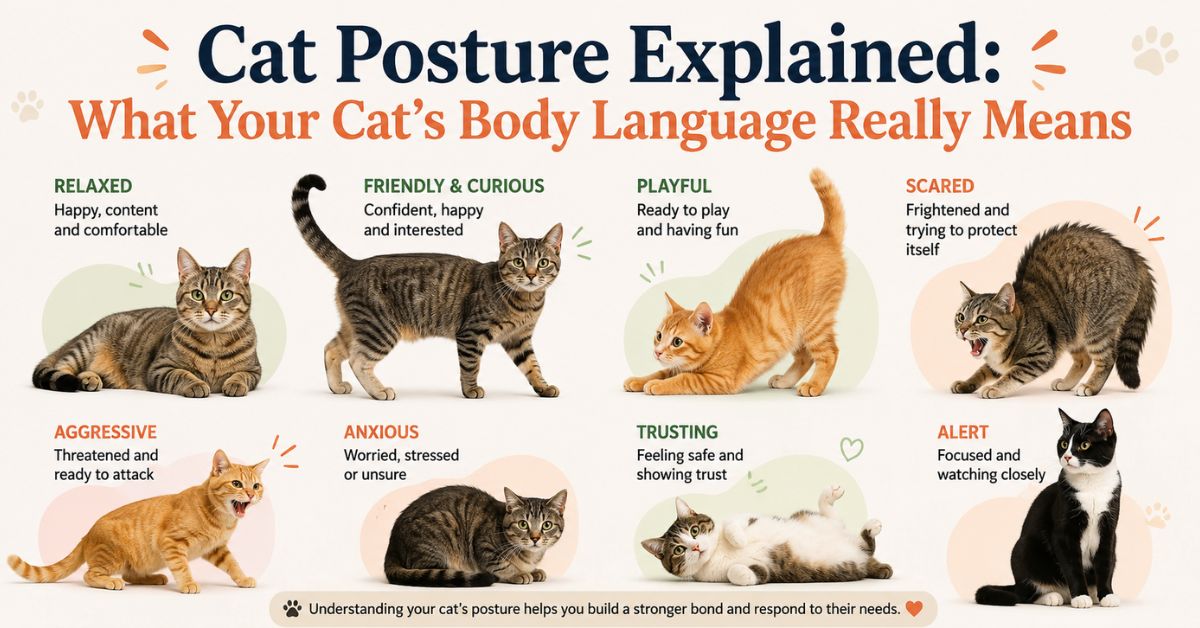
Cats may not speak human language, but they communicate constantly through movement, facial expressions, and body positioning. Understanding cat posture can help you build a stronger bond with your furry companion and recognize how they feel in different situations.
From a relaxed sleeping pose to an arched back during fear, every position tells a story. Learning feline body language can also help prevent stress, aggression, and misunderstandings between you and your cat.
In this guide, you’ll discover the meaning behind common cat poses, what different tail and ear positions indicate, and how to interpret your cat’s emotions correctly.
Why Understanding Cat Posture Matters
Understanding cat posture is important because it helps cat owners:
- Recognize fear, stress, or aggression early
- Improve trust and bonding
- Identify health or discomfort issues
- Avoid situations that may trigger scratching or biting
- Better understand feline emotions
Cats rely heavily on non-verbal communication. When you understand their posture, you can respond appropriately and create a more comfortable environment for them.
Common Types of Cat Posture and Their Meanings
Relaxed Cat Posture
A relaxed cat usually appears calm and comfortable in its surroundings.
Signs include:
- Loose body muscles
- Tail resting naturally
- Half-closed eyes
- Ears facing forward
- Paws tucked gently under the body
This posture means your cat feels safe and trusts the environment.
The Belly-Up Posture
When cats roll onto their backs and expose their belly, many owners assume they want belly rubs. However, this is not always true.
This cat posture often means:
- Your cat feels secure
- They are relaxed and playful
- They trust you completely
Some cats enjoy belly rubs, while others may react defensively. Always observe your cat’s reaction before touching their stomach.
Arched Back Posture
An arched back is one of the most recognizable feline body signals.
This posture can indicate:
Fear or Defense
If the fur is puffed up and the tail is large, your cat is trying to appear bigger to scare away threats.
Stretching
Sometimes cats arch their backs after waking up simply to stretch their muscles.
Context is essential when interpreting this type of cat posture.
Crouching Position
A crouched posture usually signals caution, fear, or discomfort.
Common signs include:
- Body low to the ground
- Tail tucked close
- Dilated pupils
- Flattened ears
Cats often crouch when they feel threatened or anxious.
If your cat frequently stays in this posture, there may be environmental stress or even pain involved.
Sideways “Halloween Cat” Pose
This dramatic posture includes:
- Arched back
- Puffing fur
- Sideways movement
- Raised tail
Cats display this cat posture when startled, scared, or engaging in playful behavior with another cat.
Kittens especially perform this pose during playtime.
Understanding Tail Positions in Cat Posture
A cat’s tail provides important clues about emotions and intentions.
| Tail Position | Meaning |
|---|---|
| Tail held high | Confidence and happiness |
| Tail tucked under body | Fear or anxiety |
| Puffing tail | Fear or aggression |
| Slowly swishing tail | Focus or mild irritation |
| Fast tail whipping | Anger or overstimulation |
| Curved question-mark tail | Friendly and playful mood |
Watching tail movement alongside overall cat posture helps you understand your cat more accurately.
Ear Positions and What They Reveal
Ears are another major part of feline communication.
Forward-Facing Ears
This usually means your cat is:
- Relaxed
- Curious
- Interested
Flattened Ears
Flattened ears can signal:
- Fear
- Aggression
- Stress
Avoid approaching a cat showing this posture aggressively.
Rotating Ears
Cats rotate their ears when listening carefully to sounds around them.
This behavior often appears during hunting or play.
Eye Expressions and Facial Clues
Facial expressions complete the picture of cat posture.
Slow Blinking
A slow blink is often called a “cat kiss.” It signals trust and affection.
You can slowly blink back to communicate comfort and safety.
Dilated Pupils
Large pupils may indicate:
- Fear
- Excitement
- High stimulation
Narrow Pupils
Small pupils can suggest:
- Confidence
- Aggression
- Intense focus
Always observe eye expressions together with body posture.
Playful vs Aggressive Cat Posture
Many cat owners confuse playful behavior with aggression.
Signs of Playful Posture
- Loose body movement
- Gentle paw swats
- Upright ears
- Relaxed tail
- Short bursts of jumping
Signs of Aggressive Posture
- Stiff body
- Growling or hissing
- Flattened ears
- Direct staring
- Puffing fur
Recognizing the difference helps prevent accidental scratches or bites.
Sleeping Positions and Their Meanings
Cats sleep in various positions depending on comfort and security levels.
Curled-Up Position
This helps cats conserve body heat and protect vital organs.
Loaf Position
In this adorable pose, cats tuck their paws underneath their body like a loaf of bread.
This cat posture usually means:
- Relaxation
- Comfort
- Mild alertness
Fully Stretched Position
A stretched-out sleeping cat feels extremely safe and comfortable in the environment.
How Stress Affects Cat Posture
Stress significantly changes feline body language.
Common stress-related postures include:
- Hiding frequently
- Flattened ears
- Tucked tail
- Low crouching
- Tense muscles
Stress triggers may include:
- Loud noises
- New pets
- Visitors
- Moving homes
- Lack of safe spaces
Creating a calm environment can improve your cat’s emotional health.
Signs Your Cat May Be in Pain
Certain body positions may indicate discomfort or illness.
Watch for:
- Hunched posture
- Reluctance to move
- Constant crouching
- Limping
- Tail held unnaturally
- Changes in sleeping positions
If unusual cat posture continues for more than a day, consult a veterinarian.
How to Respond to Different Cat Postures
When Your Cat Looks Relaxed
- Speak softly
- Offer gentle affection
- Respect resting time
When Your Cat Looks Fearful
- Give space
- Avoid sudden movements
- Reduce loud noises
/When Your Cat Appears Aggressive
- Do not punish physically
- Step back calmly
- Allow the cat to cool down
Understanding your cat’s emotions builds trust and reduces behavioral problems.
Tips for Reading Cat Posture Correctly
Here are some practical tips for better interpretation:
- Observe the whole body, not just one feature
- Consider environmental context
- Watch for repeated patterns
- Learn your individual cat’s personality
- Pay attention to tail, ears, and eyes together
Every cat has unique habits, so familiarity improves understanding over time.
Mistakes Owners Make When Reading Cat Body Language
Many people misinterpret feline signals.
Common mistakes include:
- Assuming belly exposure always means “pet me”
- Ignoring tail movement
- Approaching fearful cats too quickly
- Punishing defensive behavior
- Misreading play aggression
Learning proper feline communication prevents unnecessary stress for both owner and cat.
How Kittens Learn Cat Posture Communication
Kittens begin learning body language from their mother and littermates at an early age.
They practice:
- Play fighting
- Tail signaling
- Ear positioning
- Social boundaries
Early socialization helps kittens develop healthy communication skills as adult cats.
Conclusion
Understanding cat posture is one of the best ways to improve communication with your feline companion. From tail movements to sleeping positions, every detail reveals important clues about your cat’s emotions, comfort, and health.
By learning feline body language, you can create a safer, happier, and more trusting relationship with your pet. Paying attention to posture also helps you identify stress, fear, or discomfort before problems become serious.
At WhyKittiesHome, we believe that understanding your cat is the key to providing the best possible care and companionship for your furry friend.
Cats often arch their backs during petting because they enjoy the interaction or want more contact. However, context matters, as fear can also cause an arched posture.
A tucked tail usually signals fear, anxiety, or insecurity.
Slow blinking is a sign of affection and trust. Your cat feels safe around you.
Not always. Cats may puff their tails during play, excitement, or surprise in addition to fear and aggression.
This sleeping posture helps conserve warmth and protect vulnerable body parts.

Muhammad Ahad — Passionate writer sharing informative, engaging, and easy-to-read articles across different topics. Focused on delivering valuable content that helps readers learn, explore, and stay inspired every day.
1 thought on “Cat Posture Explained: What Your Cat’s Body Language Really Means”