
Introduction
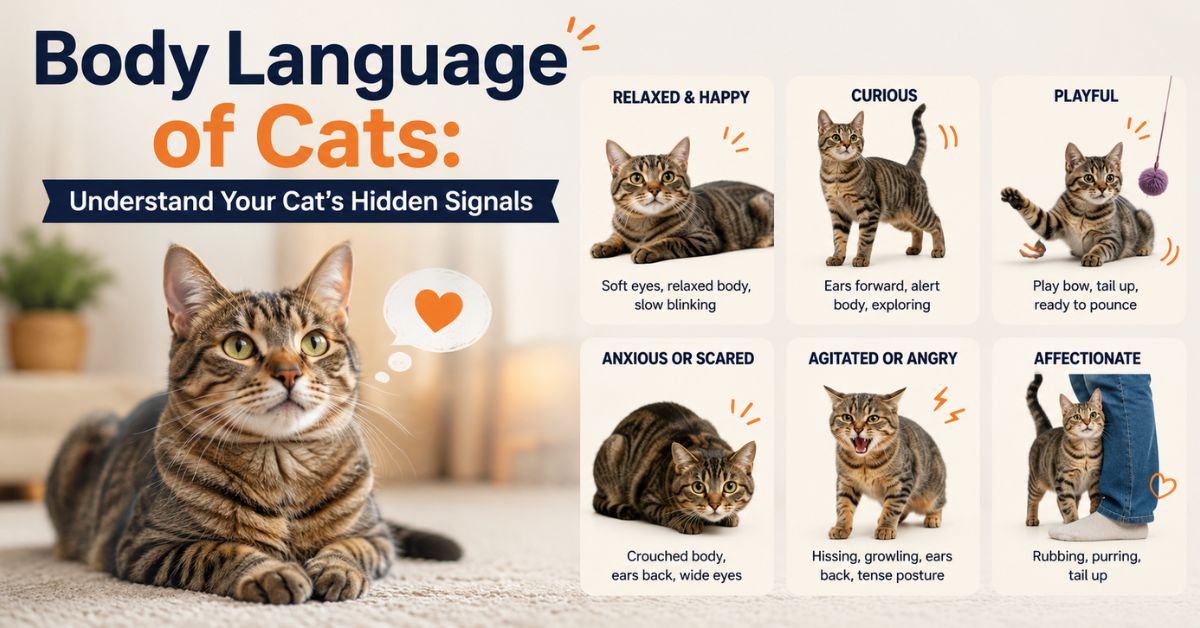
Cats may not speak human language, but they communicate constantly through their movements, posture, eyes, ears, tail, and sounds. Understanding the body language of cats can help you build a stronger relationship with your furry companion and recognize their emotions before problems arise.
Many cat owners misunderstand their pets because they fail to notice small behavioral cues. A twitching tail, flattened ears, or slow blinking eyes can reveal whether your cat feels happy, stressed, playful, or scared.
In this guide, you will learn how to read the body language of cats, recognize common signals, and respond appropriately to your feline friend’s emotions.
Why Understanding Cat Body Language Matters
Cats rely heavily on nonverbal communication. Unlike dogs, they are often more subtle with their emotions. Learning feline body signals can help you:
- Improve trust with your cat
- Prevent aggressive situations
- Recognize illness or stress early
- Create a safer environment
- Understand your cat’s needs better
The better you understand the body language of cats, the easier it becomes to care for them properly.
How Cats Communicate
Cats use several body parts to communicate emotions and intentions. These include:
- Tail movements
- Ear positions
- Eye expressions
- Body posture
- Vocal sounds
- Fur position
Each signal gives clues about your cat’s mood.
Understanding Cat Tail Movements
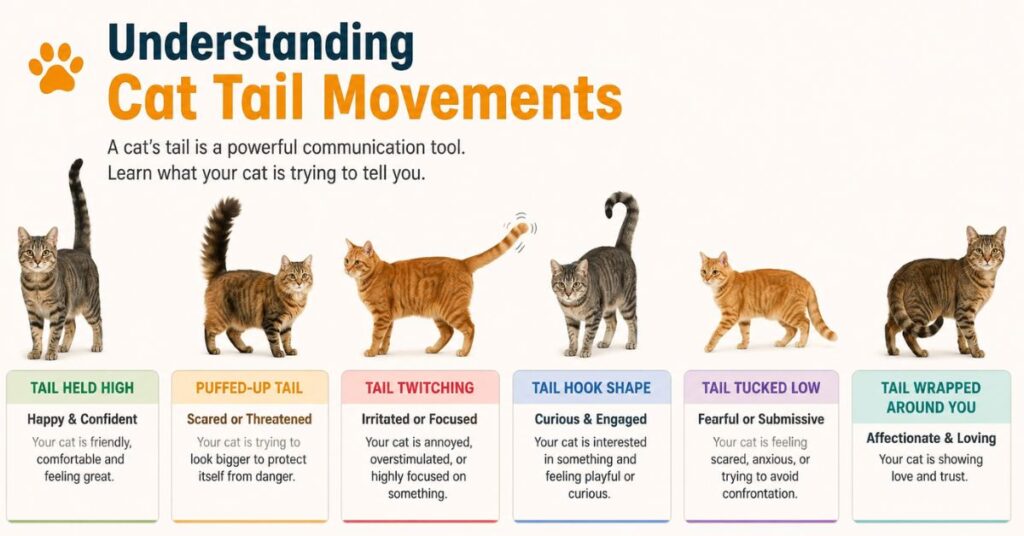
A cat’s tail is one of the clearest indicators of emotion.
Tail Held High
When a cat walks with its tail upright, it usually means confidence and happiness. This is often seen when cats greet their favorite humans.
What It Means
- Friendly mood
- Comfortable environment
- Trust and affection
Puffing Tail
A puffed-up tail usually indicates fear or defensiveness. Cats make themselves appear larger when threatened.
Common Causes
- Loud noises
- Unfamiliar animals
- Sudden surprises
If you notice this body language of cats signal, avoid forcing interaction.
Fast Tail Flicking
Rapid tail movements often indicate irritation or overstimulation.
Signs Your Cat Needs Space
- Swishing tail
- Flattened ears
- Dilated pupils
This commonly happens during unwanted petting.
Tail Wrapped Around You
When a cat wraps its tail around your leg or arm, it is usually a sign of affection and bonding.
Cat Ear Positions and Their Meanings
Ears reveal a lot about feline emotions.
| Ear Position | Meaning |
| Forward-facing ears | Curious and relaxed |
| Flattened ears | Fear or aggression |
| Swiveling ears | Alert and listening |
| Slightly sideways | Nervous or unsure |
Understanding ear movements is an important part of reading the body language of cats.
What Cat Eyes Can Tell You
Cats communicate strongly through eye contact and pupil size.
Slow Blinking
Slow blinking is often called a “cat kiss.” It shows comfort and trust.
Try This
Slowly blink back at your cat to strengthen your bond.
Dilated Pupils
Large pupils can indicate:
- Fear
- Excitement
- Playfulness
- Aggression
Context matters when interpreting this feline body signal.
Direct Staring
A hard stare may be seen as threatening in cat communication. Some cats may react defensively if challenged.
Cat Body Postures Explained
The overall body position gives major clues about mood.
Relaxed Cat Posture
A relaxed cat usually has:
- Loose muscles
- Calm tail
- Upright ears
- Soft eyes
This is a sign your cat feels safe.
Arched Back
An arched back may mean:
- Fear
- Defensive behavior
- Playfulness in kittens
The surrounding situation helps determine the emotion.
Crouching Low
Cats crouch close to the ground when they feel scared or are preparing to hide.
This body language of cats signal often appears during stressful situations.
Fur and Whisker Signals
Many people ignore whiskers and fur, but they are essential communication tools.
Raised Fur
Raised fur usually means the cat feels threatened.
Why Cats Do This
Cats instinctively try to appear larger to scare away danger.
Forward Whiskers
Forward-facing whiskers usually indicate curiosity and excitement.
Pulled-Back Whiskers
Whiskers flattened against the face often suggest fear or discomfort.
Vocal Sounds and Body Language Together
Cats combine sounds with body movements to communicate effectively.
Purring
Purring usually indicates comfort, but sometimes cats also purr when stressed or sick.
Signs of Happy Purring
- Relaxed posture
- Half-closed eyes
- Gentle kneading
Hissing and Growling
These sounds are warnings. Your cat may feel threatened or cornered.
Avoid handling your cat during these moments.
Meowing
Cats meow mostly to communicate with humans.
Different meows may signal:
- Hunger
- Attention-seeking
- Loneliness
- Discomfort
Listening carefully helps you better understand the body language of cats.
Signs Your Cat Is Happy
A happy cat usually displays several positive signals together.
Common Happy Cat Behaviors
- Slow blinking
- Purring
- Tail held high
- Kneading paws
- Relaxed body posture
- Gentle rubbing against you
These are strong signs of trust and affection.
Signs Your Cat Is Stressed
Stress in cats should never be ignored.
Common Stress Signals
- Hiding frequently
- Flattened ears
- Overgrooming
- Dilated pupils
- Aggressive behavior
- Sudden loss of appetite
Recognizing stress early can prevent serious behavioral issues.
Understanding Play Behavior in Cats
Play behavior is an important part of feline communication.
Common Play Signals
- Pouncing
- Sideways hopping
- Tail twitching
- Dilated pupils
- Playful swatting
Kittens especially use body movements to learn hunting skills.
How to Respond to Your Cat’s Body Language
Learning the body language of cats is only useful if you respond correctly.
Give Space When Needed
If your cat shows fear or aggression:
- Avoid direct eye contact
- Do not force petting
- Allow hiding spaces
Reward Positive Interaction
When your cat displays relaxed behavior:
- Offer treats
- Speak gently
- Pet softly if welcomed
Positive reinforcement builds trust.
Observe Changes Carefully
Sudden behavior changes may indicate illness or anxiety.
Contact a veterinarian if your cat suddenly becomes:
- Aggressive
- Extremely withdrawn
- Unusually vocal
- Less active
Common Mistakes Cat Owners Make
Many people misunderstand feline signals.
Mistake 1: Touching an Irritated Cat
A flicking tail and flattened ears usually mean “stop.”
Mistake 2: Assuming Purring Always Means Happiness
Cats may purr during pain or stress too.
Mistake 3: Ignoring Subtle Signals
Cats often communicate discomfort quietly before becoming aggressive.
Paying attention to small changes improves your understanding of the body language of cats.
Tips to Build Better Communication With Your Cat
Create a Calm Environment
Cats feel safer in quiet, predictable spaces.
Respect Boundaries
Not every cat enjoys constant handling.
Learn Your Cat’s Unique Personality
Every cat communicates differently. Spend time observing your pet’s habits and reactions.
Conclusion
Understanding the body language of cats is one of the best ways to strengthen your bond with your feline companion. Cats communicate constantly through their tails, ears, eyes, posture, and vocal sounds. By paying close attention to these signals, you can better understand your cat’s emotions, needs, and comfort levels.
Every cat has a unique personality, but learning common feline communication signs helps create trust, reduce stress, and improve overall care. At WhyKittiesHome, we believe that understanding your cat is the key to building a happy and loving relationship with your furry friend.
Cats may stare because they are curious, affectionate, or seeking attention. A relaxed stare with slow blinking usually indicates trust.
Tail flicking often signals irritation or overstimulation. It may be time to stop petting or give your cat space.
Flattened ears usually indicate fear, stress, or aggression. Cats do this to protect themselves in threatening situations.
No. While purring often means comfort, cats may also purr when anxious, injured, or unwell.
Cats rub against people to mark them with scent glands and show affection.

Muhammad Ahad — Passionate writer sharing informative, engaging, and easy-to-read articles across different topics. Focused on delivering valuable content that helps readers learn, explore, and stay inspired every day.
1 thought on “Body Language of Cats: Understand Your Cat’s Hidden Signals”