

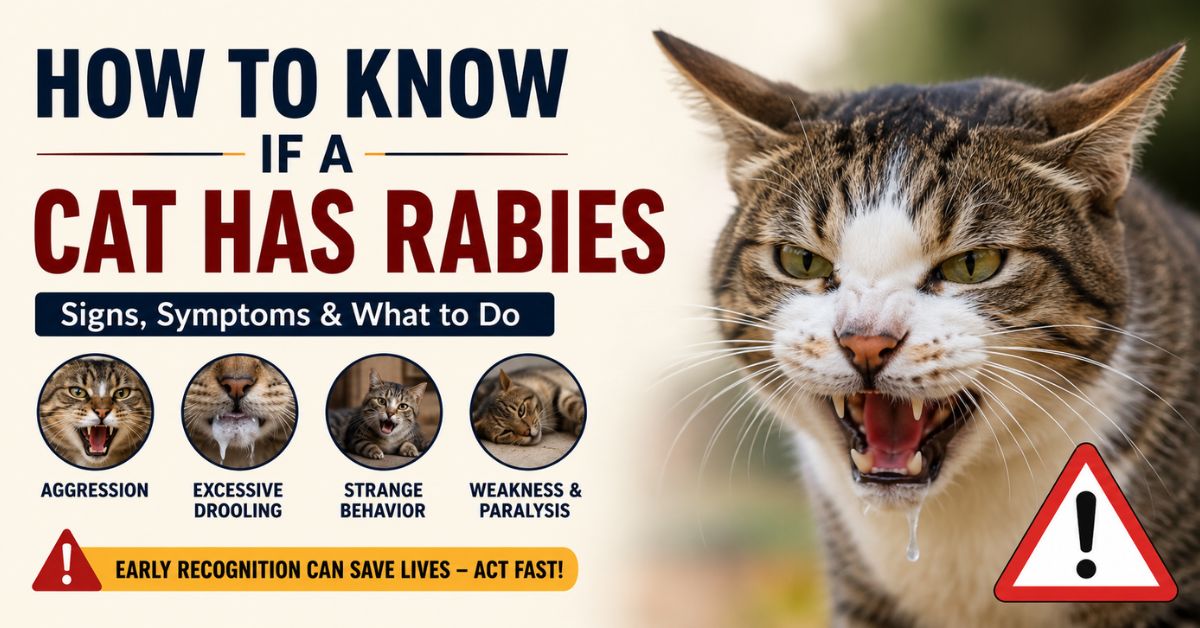
Introduction
Rabies is one of the most dangerous viral diseases that can affect cats and other mammals. Knowing how to know if a cat has rabies is extremely important because the disease can spread to humans and is usually fatal once symptoms appear.
Many pet owners mistake early rabies signs for normal sickness or aggressive behavior. However, recognizing the warning signs early can help protect your family, other pets, and the infected cat itself.
In this guide, you will learn the symptoms, causes, stages, diagnosis, prevention methods, and what actions to take if you suspect your cat has rabies.
What Is Rabies in Cats?
Rabies is a viral disease that attacks the brain and nervous system. It spreads mainly through the saliva of infected animals, usually from bites or scratches.
Wild animals such as bats, raccoons, foxes, and stray dogs are common carriers of rabies. Cats that spend time outdoors have a higher risk of exposure.
Once the virus enters the body, it travels through the nerves toward the brain. After symptoms begin, survival is extremely rare.
How Do Cats Get Rabies?
Understanding how cats become infected is essential when learning how to know if a cat has rabies.
Common Ways Cats Catch Rabies
- Bite from an infected animal
- Scratch contaminated with saliva
- Contact with infected saliva through open wounds
- Hunting infected wildlife outdoors
Outdoor cats are much more vulnerable because they interact with wild animals more often.
Early Signs of Rabies in Cats
The first symptoms are often mild and difficult to notice. Many owners think their cat is simply stressed or sick.
Behavioral Changes
One of the earliest clues for how to know if a cat has rabies is sudden personality changes.
A friendly cat may suddenly become:
- Aggressive
- Nervous
- Withdrawn
- Extremely clingy
Some cats hide constantly, while others become unusually active.
Fever and Weakness
Cats with rabies may also show:
- Low energy
- Fever
- Loss of appetite
- Tiredness
These symptoms can appear before neurological signs begin.
Main Symptoms of Rabies in Cats
As the disease progresses, symptoms become more severe and dangerous.
Aggressive Behavior
Rabid cats may:
- Bite without warning
- Attack people or animals
- Growl excessively
- Scratch aggressively
This stage is often called “furious rabies.”
Excessive Drooling
Rabies affects the throat muscles, making swallowing difficult.
You may notice:
- Thick saliva
- Foaming at the mouth
- Constant drooling
- Difficulty eating or drinking
This is one of the strongest indicators when identifying how to know if a cat has rabies.
Strange Vocal Sounds
Cats with rabies often develop unusual vocalizations such as:
- Loud meowing
- Growling
- High-pitched crying
- Continuous noises
Paralysis
In later stages, the virus attacks the nervous system severely.
Signs include:
- Weak legs
- Trouble walking
- Paralysis of the jaw
- Loss of body control
At this point, the disease is extremely advanced.
Stages of Rabies in Cats
Rabies generally develops in three stages.
| Stage | Symptoms | Duration |
| Prodromal Stage | Fever, anxiety, behavior changes | 2–3 days |
| Furious Stage | Aggression, biting, hyperactivity | 1–7 days |
| Paralytic Stage | Weakness, drooling, paralysis | 2–4 days |
Recognizing these stages helps owners understand how to know if a cat has rabies before the infection becomes fatal.
How Fast Does Rabies Progress in Cats?
The incubation period can vary from weeks to several months depending on:
- Bite location
- Viral load
- Cat’s immune system
However, once symptoms start, death usually occurs within 10 days.
This is why immediate veterinary care is critical.
How Veterinarians Diagnose Rabies
Unfortunately, rabies cannot be confirmed in a living cat with complete accuracy.
Common Diagnostic Methods
Veterinarians may:
- Review exposure history
- Observe symptoms
- Check vaccination records
- Recommend quarantine
Official rabies confirmation is usually done after death through brain tissue testing.
What to Do if You Suspect Rabies
If you think your cat may have rabies, act immediately.
Important Safety Steps
- Do not touch the cat unnecessarily
- Avoid bites or scratches
- Keep children and pets away
- Contact a veterinarian immediately
- Notify local animal control if necessary
Never attempt to treat a rabid cat at home.
Can Humans Catch Rabies From Cats?
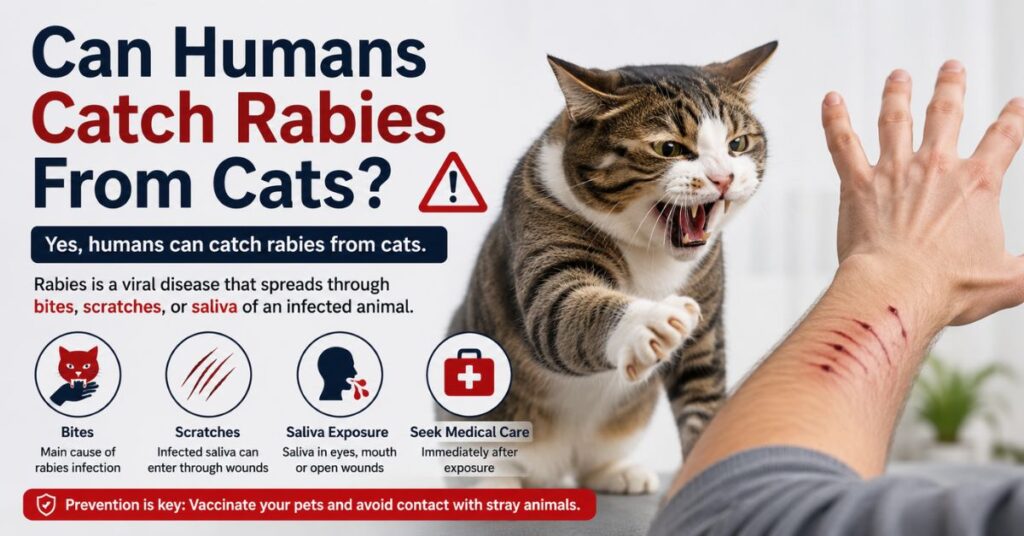
Yes, humans can become infected through:
- Bites
- Scratches
- Saliva entering open wounds
Rabies is considered a medical emergency in humans.
If bitten by a suspicious cat:
- Wash the wound immediately with soap and water
- Seek emergency medical care
- Ask about post-exposure vaccination
Knowing how to know if a cat has rabies can literally save lives.
Difference Between Rabies and Other Cat Illnesses
Several diseases can mimic rabies symptoms.
| Condition | Similar Symptoms | Key Difference |
| Rabies | Aggression, drooling | Fatal viral infection |
| Poisoning | Tremors, weakness | Usually sudden onset |
| Feline Distemper | Fever, lethargy | Digestive symptoms common |
| Neurological Disorders | Balance issues | No contagious saliva transmission |
A professional veterinary examination is necessary for accurate diagnosis.
Can Indoor Cats Get Rabies?
Indoor cats have a lower risk, but they are not completely safe.
Rabies exposure can happen if:
- A bat enters the home
- The cat escapes outdoors
- An infected animal gets inside
This is why rabies vaccination is important even for indoor cats.
How to Prevent Rabies in Cats
Prevention is the best defense against rabies.
Vaccinate Your Cat
Rabies vaccines are highly effective and often legally required.
Most veterinarians recommend:
- First vaccine at around 12–16 weeks
- Booster shots as advised
Vaccination is the most reliable way to avoid worrying about how to know if a cat has rabies.
Keep Cats Indoors
Indoor cats are less likely to encounter infected wildlife.
Avoid Stray Animals
Do not allow your cat to interact with:
- Stray dogs
- Wild animals
- Unknown cats
Supervise Outdoor Time
If your cat enjoys outdoor activity:
- Use a leash
- Build a catio
- Monitor outdoor playtime
Is There Treatment for Rabies in Cats?
Sadly, there is no cure once symptoms appear.
Most infected animals do not survive. In many regions, euthanasia is recommended to protect public health and prevent suffering.
This is why prevention and early action are essential.
Warning Signs That Require Immediate Attention
Seek veterinary help immediately if your cat shows:
- Sudden aggression
- Excessive drooling
- Trouble swallowing
- Unusual fearfulness
- Paralysis
- Unexplained biting behavior
These symptoms should never be ignored.
Common Myths About Rabies in Cats
Myth 1: Indoor Cats Cannot Get Rabies
Even indoor cats can become exposed through bats or accidental escapes.
Myth 2: Vaccinated Cats Never Need Boosters
Vaccines require regular boosters for continued protection.
Myth 3: Rabid Cats Always Foam at the Mouth
Not all infected cats show dramatic foaming. Early symptoms may be subtle.
Tips for Keeping Your Family Safe
Safety Recommendations
- Keep vaccinations updated
- Avoid touching stray animals
- Teach children not to approach unknown cats
- Report suspicious wildlife
- Visit the vet regularly
Responsible pet ownership greatly reduces rabies risks.
Conclusion
Understanding how to know if a cat has rabies is vital for every pet owner. Early symptoms such as aggression, drooling, paralysis, and unusual behavior should never be ignored. Rabies is a deadly disease, but it is also preventable through proper vaccination and responsible pet care.
Protecting your cat starts with awareness, routine veterinary visits, and keeping vaccinations up to date. At WhyKittiesHome, we believe informed cat owners create safer and healthier lives for their pets and families.
Common symptoms include aggression, drooling, paralysis, difficulty swallowing, and sudden behavioral changes. A veterinarian should evaluate any suspicious signs immediately.
Vaccinated cats have strong protection, but no vaccine is 100% guaranteed. Booster shots are important for maintaining immunity.
After symptoms appear, most cats survive only a few days to about 10 days.
Yes, rabies can spread through bites, scratches, or saliva exposure. Immediate medical attention is necessary after exposure.
No. Avoid direct contact and contact a veterinarian or animal control professional immediately.

Muhammad Ahad — Passionate writer sharing informative, engaging, and easy-to-read articles across different topics. Focused on delivering valuable content that helps readers learn, explore, and stay inspired every day.
1 thought on “How to Know if a Cat Has Rabies”