

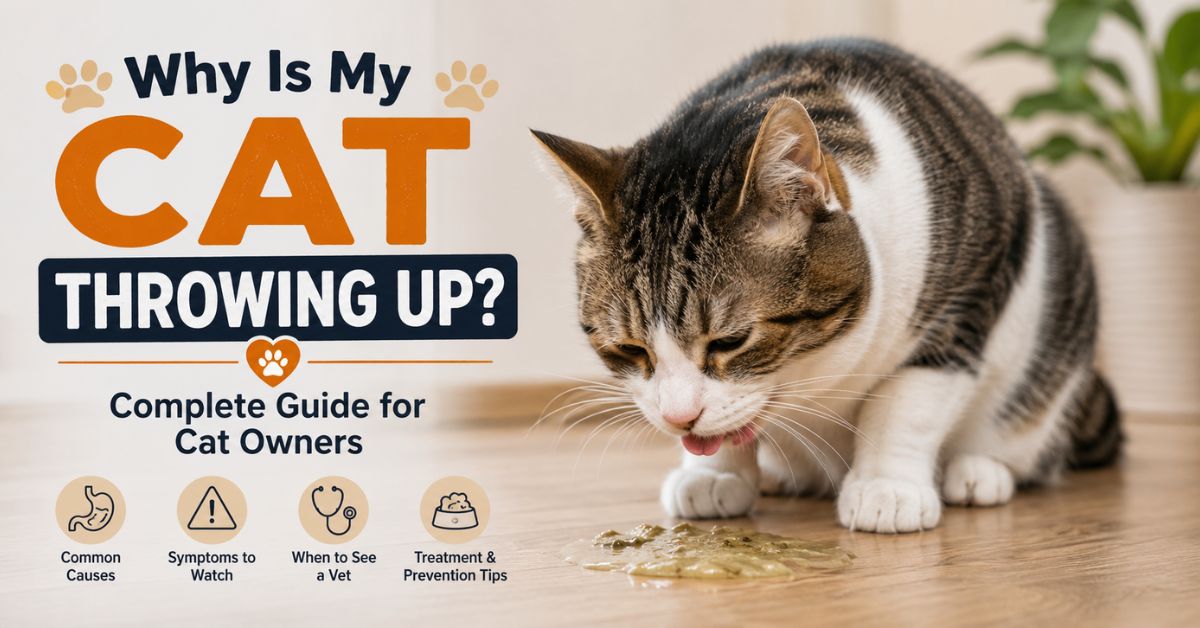
Cats throw up more often than many other pets, but frequent vomiting should never be ignored. If you keep asking yourself, “why is my cat throwing up?”, understanding the possible causes can help you protect your cat’s health before the problem becomes serious.
Vomiting in cats can happen because of simple issues like hairballs or eating too quickly. However, it may also point to infections, food allergies, parasites, or serious medical conditions. Knowing the difference between occasional vomiting and dangerous symptoms is very important for every cat owner.
In this detailed guide, you’ll learn the most common reasons cats vomit, signs to watch for, treatment options, and practical ways to keep your feline healthy.
Understanding Cat Vomiting
Before finding out why is my cat throwing up, it helps to understand what vomiting actually means.
Vomiting is the forceful removal of stomach contents through the mouth. It is different from regurgitation, which happens without stomach contractions and usually occurs right after eating.
Cats may vomit occasionally without serious concern, but repeated vomiting is not normal and should always be monitored carefully.
Common Signs Before Vomiting
Cats often show warning signs before throwing up, including:
- Lip licking
- Excessive swallowing
- Drooling
- Restlessness
- Hunched posture
- Loud stomach sounds
Recognizing these symptoms early can help you respond quickly.
Most Common Reasons Why Cats Throw Up
There are many answers to the question, “why is my cat throwing up?” Some causes are mild, while others require urgent veterinary care.
Hairballs
Hairballs are one of the most common reasons cats vomit.
Cats groom themselves constantly, swallowing loose fur that can build up inside the stomach. Long-haired breeds are especially prone to this issue.
Signs of Hairball Vomiting
- Tube-shaped vomit
- Coughing or gagging
- Vomiting fur
- Reduced appetite
Regular brushing can help reduce hairball formation.
Eating Too Fast
Some cats eat their meals so quickly that the stomach becomes irritated.
This often leads to vomiting immediately after eating.
How to Prevent Fast Eating
- Use slow-feeder bowls
- Offer smaller meals
- Feed multiple times daily
- Separate cats during feeding
If your cat throws up right after meals, this could explain why is my cat throwing up so often.
Food Allergies or Sensitivities
Certain ingredients may upset your cat’s digestive system.
Common triggers include:
- Dairy products
- Fish
- Beef
- Artificial additives
- Low-quality fillers
Cats with food sensitivities may vomit regularly after eating certain foods.
Symptoms of Food Allergies
- Vomiting
- Diarrhea
- Itchy skin
- Ear infections
- Weight loss
Switching to a high-quality diet may help reduce symptoms.
Sudden Diet Changes
Cats have sensitive stomachs, and changing food too quickly can cause digestive upset.
Always transition gradually over 7–10 days when introducing new food.
Intestinal Parasites
Worms and parasites can irritate your cat’s digestive tract.
Kittens are especially vulnerable to parasites.
Common Parasites in Cats
| Parasite | Symptoms | Risk Level |
| Roundworms | Vomiting, bloated belly | Moderate |
| Tapeworms | Weight loss, vomiting | Moderate |
| Hookworms | Weakness, diarrhea | High |
| Giardia | Diarrhea, nausea | Moderate |
Routine deworming is essential for prevention.
Serious Medical Conditions That Cause Vomiting
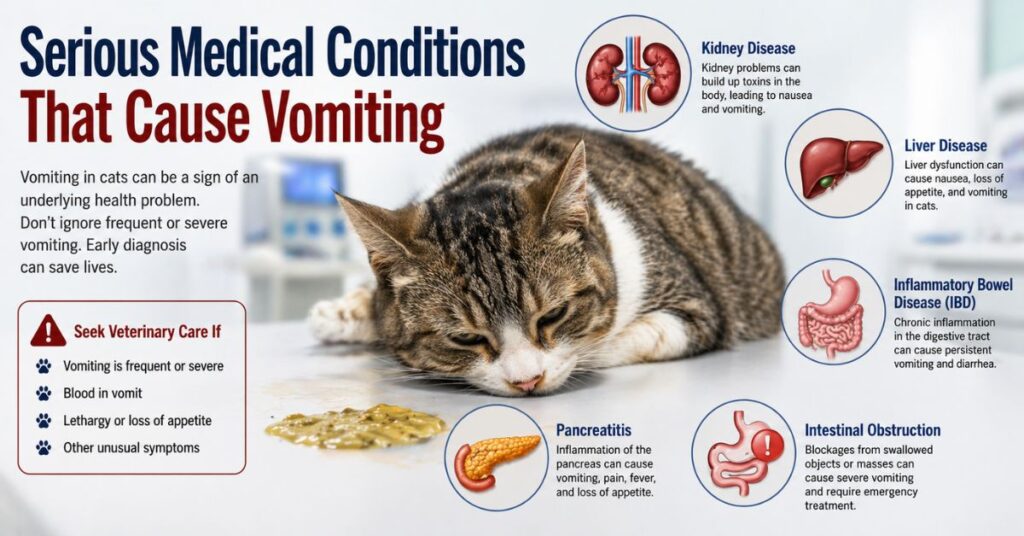
Sometimes the answer to why is my cat throwing up involves more serious health problems.
Kidney Disease
Kidney disease is common in older cats.
When the kidneys fail to filter toxins properly, nausea and vomiting may occur.
Other Symptoms
- Increased thirst
- Weight loss
- Bad breath
- Frequent urination
- Weakness
Early diagnosis can improve quality of life.
Liver Disease
Liver problems can also trigger vomiting in cats.
Cats with liver disease may show:
- Yellow gums or eyes
- Poor appetite
- Lethargy
- Weight loss
Immediate veterinary care is necessary.
Inflammatory Bowel Disease (IBD)
Digestion is chronically inflamed by IBD.
Cats with IBD often vomit regularly and may also experience diarrhea.
Common Signs of IBD
- Chronic vomiting
- Weight loss
- Reduced appetite
- Loose stools
Treatment usually involves dietary management and medication.
Pancreatitis
Pancreatitis occurs when the pancreas becomes inflamed.
This painful condition may cause:
- Vomiting
- Fever
- Abdominal pain
- Weakness
- Loss of appetite
Pancreatitis requires veterinary treatment.
Intestinal Blockage
Cats sometimes swallow dangerous objects like:
- String
- Plastic
- Toys
- Hair ties
These items can block the intestines and cause severe vomiting.
Emergency Symptoms
- Continuous vomiting
- No appetite
- Abdominal pain
- Constipation
- Weakness
This is a medical emergency requiring immediate veterinary attention.
When Should You Worry About Cat Vomiting?
Occasional vomiting may not be dangerous, but some symptoms should never be ignored.
Contact a Vet Immediately If Your Cat Has:
- Blood in vomit
- Frequent vomiting
- Weight loss
- Trouble breathing
- Severe lethargy
- Diarrhea with vomiting
- Refusal to eat
- Swollen abdomen
If these signs appear, stop asking why is my cat throwing up and seek professional help right away.
Different Types of Cat Vomit and What They Mean
The appearance of vomit can reveal important clues.
Yellow Vomit
Yellow vomit usually contains bile and may indicate an empty stomach.
White Foam
White foamy vomit often relates to stomach irritation or acid buildup.
Undigested Food
This usually means your cat ate too quickly.
Hairball Vomit
Hairballs appear as long tubes of wet fur.
Blood in Vomit
Blood may indicate ulcers, poisoning, or severe illness.
Always consult a veterinarian if you notice blood.
How Veterinarians Diagnose Vomiting in Cats
If vomiting continues, your veterinarian may perform several tests.
Common Diagnostic Methods
- Physical examination
- Blood tests
- X-rays
- Ultrasound
- Stool analysis
- Endoscopy
These tests help identify the root cause of the vomiting.
Treatment Options for Vomiting Cats
Treatment depends on the cause.
Dietary Changes
Many cats improve with a sensitive-stomach diet.
Your vet may recommend:
- Limited-ingredient food
- Prescription diets
- Wet food for hydration
Medications
Common medications include:
- Anti-nausea drugs
- Dewormers
- Antibiotics
- Probiotics
- Appetite stimulants
Never give human medication to cats unless directed by a veterinarian.
Hydration Support
Vomiting can quickly lead to dehydration.
Encourage water intake by:
- Using cat fountains
- Offering wet food
- Providing fresh water daily
Severe dehydration may require IV fluids.
Home Care Tips for Vomiting Cats
If your cat is otherwise healthy, some home care methods may help.
Helpful Tips
- Feed smaller meals
- Avoid sudden food changes
- Keep toxic plants away
- Brush your cat regularly
- Reduce stress
- Clean food bowls daily
These simple habits may reduce episodes of vomiting.
Foods Cats Should Never Eat
Some foods are toxic and may explain why is my cat throwing up unexpectedly.
Dangerous Foods for Cats
- Chocolate
- Onions
- Garlic
- Grapes
- Alcohol
- Caffeine
- Raw dough
- Xylitol
Always keep harmful foods out of reach.
Preventing Vomiting in Cats
Prevention is often easier than treatment.
Best Prevention Strategies
Maintain Regular Grooming
Brushing removes loose fur and reduces hairballs.
Provide High-Quality Food
Cheap food may irritate your cat’s stomach.
Schedule Vet Checkups
Routine health exams can detect problems early.
Keep Household Hazards Away
Small objects and toxic substances should stay out of reach.
Reduce Stress
Cats are sensitive animals. Calm environments support better digestion.
Conclusion
If you have been wondering, “why is my cat throwing up?”, the answer may range from harmless hairballs to serious medical conditions. Paying attention to your cat’s symptoms, eating habits, and overall behavior is essential for identifying the cause early.
Occasional vomiting may not be dangerous, but repeated episodes should never be ignored. Proper nutrition, regular grooming, hydration, and veterinary care all play a major role in keeping your cat healthy and comfortable.
At WhyKittiesHome, we believe informed cat owners can provide happier and healthier lives for their feline companions.
Occasional vomiting may happen because of hairballs or fast eating. Frequent vomiting is not normal and should be checked by a vet.
This usually happens when cats eat too quickly or overeat.
Yes. Stress and anxiety can upset a cat’s digestive system and lead to vomiting.
You can pause food for a few hours, then offer small bland meals. If vomiting continues, contact your veterinarian.
Frequent hairballs may result from excessive grooming or poor digestion. Regular brushing can help reduce them.

Muhammad Ahad — Passionate writer sharing informative, engaging, and easy-to-read articles across different topics. Focused on delivering valuable content that helps readers learn, explore, and stay inspired every day.
1 thought on “Why Is My Cat Throwing Up? Complete Guide for Cat Owners”