

Introduction
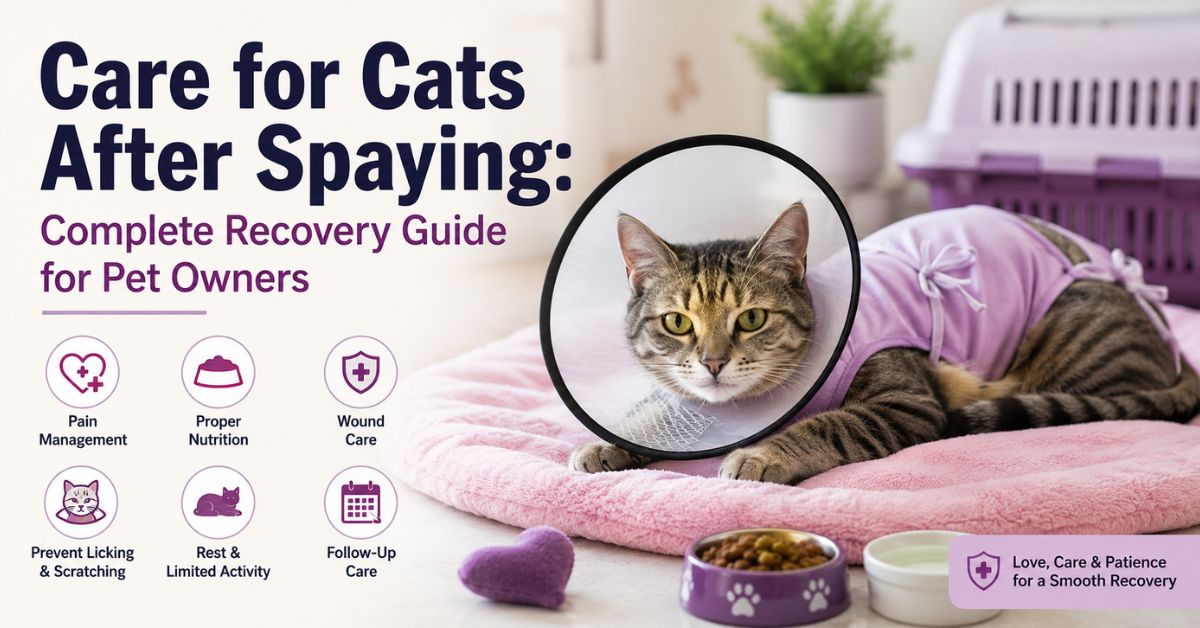
Bringing your cat home after surgery can feel stressful, especially if it is your first experience with spaying. Understanding the proper care for cats after spaying helps your feline recover safely, comfortably, and quickly. Spaying is a common surgical procedure, but cats still need attention, rest, and monitoring during the healing process.
Most cats recover well within 10–14 days after surgery. However, proper aftercare plays a major role in preventing complications such as infections, swelling, or reopening of the incision. From limiting activity to checking the surgical site daily, every small step matters.
In this guide, you will learn everything about care for cats after spaying, including feeding tips, recovery stages, warning signs, healing timelines, and practical advice for keeping your cat comfortable at home.
What Is Spaying in Cats?
Spaying is a surgical procedure performed to remove a female cat’s reproductive organs. Veterinarians usually recommend spaying to prevent unwanted pregnancies and reduce certain health risks.
Spaying can also help reduce behaviors linked to heat cycles, such as:
- Loud vocalization
- Excessive affection
- Spraying
- Restlessness
- Attempts to escape outdoors
The surgery is performed under anesthesia, and most cats return home the same day.
Why Proper Care After Spaying Is Important
Good care for cats after spaying ensures the incision heals properly and lowers the risk of complications. Although the surgery is routine, your cat’s body still needs time to recover.
Without proper aftercare, cats may experience:
- Infection
- Bleeding
- Swelling
- Torn stitches
- Pain or discomfort
Cats often try to jump, lick, or play too soon, which can delay healing. Creating a calm recovery environment is essential.
First 24 Hours After Spaying
The first day after surgery is the most important stage of recovery. Your cat may still feel sleepy or disoriented from anesthesia.
Common Behaviors After Surgery
It is normal for your cat to:
- Sleep more than usual
- Walk slowly
- Eat less
- Meow softly
- Hide temporarily
These effects usually improve within 24 hours.
Immediate Care Tips
For the best care for cats after spaying, follow these tips:
- Keep your cat indoors
- Provide a quiet resting area
- Avoid stairs and jumping
- Offer fresh water
- Give only small amounts of food initially
- Follow medication instructions carefully
Do not force your cat to eat immediately after surgery. Small meals are usually better.
Creating a Comfortable Recovery Space
Your cat needs a peaceful place to rest during recovery.
Ideal Recovery Area
Set up a space with:
- Soft bedding
- Clean blankets
- Low lighting
- Easy access to water
- A nearby litter box
Avoid placing your cat near loud noises, children, or other active pets.
Keep Activity Limited
One of the most important parts of care for cats after spaying is limiting movement. Running and jumping can reopen the incision.
Try to:
- Prevent climbing furniture
- Keep your cat in one room if needed
- Avoid rough play
- Use a large crate if necessary for very active cats
Monitoring the Incision Site
Checking the incision daily helps you notice problems early.
What a Healthy Incision Looks Like
A normal incision may appear:
- Slightly pink
- Mildly swollen
- Dry and clean
Minor redness during the first few days is common.
Signs of Infection or Problems
Contact your veterinarian if you notice:
- Pus or discharge
- Bad smell
- Excessive swelling
- Bleeding
- Open stitches
- Severe redness
Daily inspection is a critical part of care for cats after spaying.
Preventing Your Cat From Licking the Incision
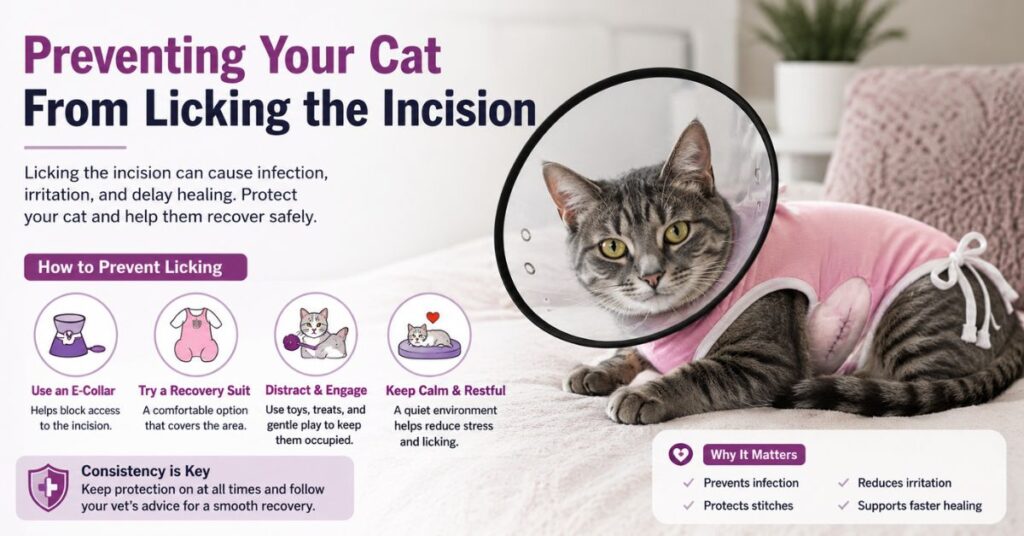
Cats naturally lick wounds, but excessive licking can cause infections or remove stitches.
Use an E-Collar or Recovery Suit
Most veterinarians recommend:
- Elizabethan collar (cone)
- Inflatable recovery collar
- Recovery bodysuit
Even if your cat dislikes the cone, it protects the incision from damage.
Distract Your Cat
Keep your cat calm with:
- Gentle petting
- Quiet toys
- Comfortable resting spots
Avoid energetic activities until healing is complete.
Feeding Tips After Spaying
Some cats lose their appetite temporarily after surgery.
What to Feed
Offer light meals such as:
- Wet cat food
- Small portions of regular food
- Easily digestible meals
Fresh water should always be available.
Appetite Changes
A reduced appetite for 24 hours can be normal. However, if your cat refuses food for more than a day, contact your veterinarian.
Proper nutrition supports faster healing and better care for cats after spaying.
Medication and Pain Management
Veterinarians often prescribe pain medications after surgery.
Important Medication Tips
- Give medicine exactly as directed
- Never use human painkillers
- Finish all prescribed medication
- Monitor for side effects
Cats may hide pain well, so follow your vet’s instructions carefully.
Signs Your Cat May Be in Pain
Watch for:
- Growling
- Hiding constantly
- Loss of appetite
- Aggressive behavior
- Difficulty walking
Pain management is a key part of successful care for cats after spaying.
Recovery Timeline After Spaying
Understanding the healing process helps reduce stress for cat owners.
| Recovery Stage | What to Expect |
| First 24 Hours | Sleepiness, reduced appetite, limited movement |
| Days 2–3 | Improved energy but still needs rest |
| Days 4–7 | Incision starts healing visibly |
| Days 8–10 | Most swelling decreases |
| Days 10–14 | Stitches may be removed if needed |
| After 2 Weeks | Most cats return to normal activities |
Every cat heals differently, so always follow your veterinarian’s advice.
How Long Should Cats Rest After Spaying?
Most cats need at least 10–14 days of restricted activity.
Activities to Avoid
During recovery, avoid:
- Jumping
- Running
- Outdoor access
- Bathing
- Rough play
Keeping activity low is essential for proper care for cats after spaying.
Litter Box Care During Recovery
Cats can usually use the litter box normally after surgery.
Helpful Tips
- Keep the litter box clean
- Use low-sided boxes if needed
- Avoid dusty litter temporarily
- Monitor urination and bowel movements
If your cat does not use the litter box within 24 hours, consult your veterinarian.
Behavioral Changes After Spaying
Some behavioral changes are normal after surgery.
Temporary Changes
Your cat may:
- Sleep more
- Become clingy
- Hide
- Seem less playful
These changes usually improve within a few days.
Long-Term Benefits
Spaying may reduce:
- Heat-related behaviors
- Spraying
- Aggression linked to hormones
- Roaming tendencies
Many owners notice calmer behavior after recovery.
Warning Signs That Need Veterinary Attention
While most cats recover well, serious symptoms should never be ignored.
Call Your Vet Immediately If You Notice
- Vomiting repeatedly
- Difficulty breathing
- Continuous bleeding
- Refusing food for over 24 hours
- High fever
- Open incision
- Extreme lethargy
Quick action can prevent severe complications.
Tips for Faster Healing
These practical tips can improve your cat’s recovery.
Best Recovery Practices
- Keep your cat indoors
- Follow medication schedules
- Prevent licking
- Limit movement
- Offer nutritious food
- Monitor the incision daily
Consistent care for cats after spaying helps cats heal safely and comfortably.
Common Mistakes Owners Should Avoid
Many cat owners accidentally slow recovery by making simple mistakes.
Avoid These Errors
- Removing the cone too early
- Allowing jumping
- Skipping medications
- Ignoring swelling
- Letting the cat outdoors
- Using human medicines
Being careful during recovery greatly reduces risks.
Conclusion
Proper care for cats after spaying is essential for a smooth and healthy recovery. Although spaying is a common procedure, your cat still needs rest, monitoring, and extra attention during healing. By limiting activity, checking the incision daily, providing proper nutrition, and following your veterinarian’s instructions, you can help your cat recover comfortably and safely.
At WhyKittiesHome, we believe informed pet owners create happier and healthier lives for their cats. Following these recovery tips will help your feline companion return to normal life as quickly as possible.
Most cats recover within 10–14 days. Full healing may vary depending on age and activity level.
No. Jumping should be limited during recovery because it can reopen the incision or damage stitches.
Yes. Sleepiness is common during the first 24–48 hours due to anesthesia and healing.
No. Cats can lick the incision at any time, including during the night. Keep the cone on unless your veterinarian says otherwise.
Most veterinarians recommend keeping cats indoors for at least 10–14 days after surgery.

Muhammad Ahad — Passionate writer sharing informative, engaging, and easy-to-read articles across different topics. Focused on delivering valuable content that helps readers learn, explore, and stay inspired every day.
1 thought on “Care for Cats After Spaying: Complete Recovery Guide for Pet Owners”