

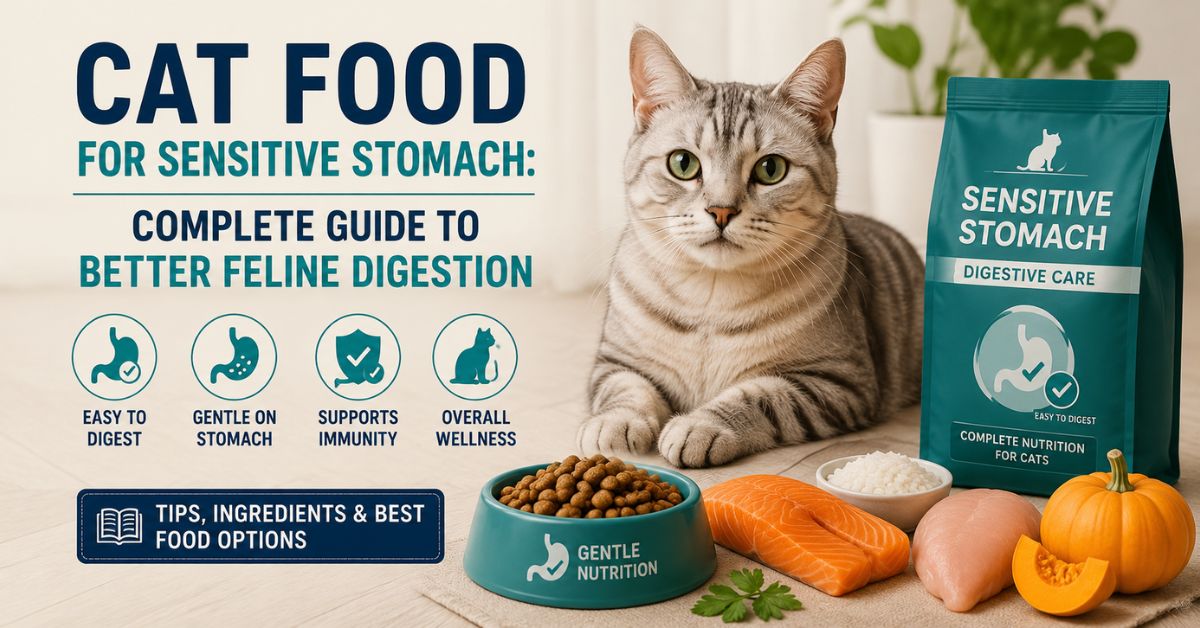
Cats are known for being picky eaters, but sometimes food preferences are not the issue. If your cat frequently experiences vomiting, diarrhea, gas, or digestive discomfort, the problem may be a sensitive stomach. Choosing the right cat food for sensitive stomach concerns can make a significant difference in your cat’s overall health and happiness.
A sensitive stomach can affect cats of any age and breed. Fortunately, understanding the causes and selecting appropriate nutrition can help improve digestion and reduce discomfort. This guide covers everything cat owners need to know about finding the best food for cats with digestive issues.
What Is a Sensitive Stomach in Cats?
A sensitive stomach refers to digestive problems that occur when a cat struggles to process certain foods or ingredients. While occasional stomach upset can happen, recurring symptoms may indicate that your cat needs a dietary adjustment.
Common signs include:
- Frequent vomiting
- Loose stools or diarrhea
- Excessive gas
- Lack of appetite
- Weight loss
- Stomach noises
- Discomfort after meals
If these symptoms persist, consulting a veterinarian is recommended to rule out underlying health conditions.
Common Causes of Sensitive Stomach in Cats
Understanding the root cause can help you choose the most suitable cat food for sensitive stomach issues.
Food Intolerances
Some cats have difficulty digesting specific ingredients such as:
- Dairy products
- Certain proteins
- Artificial additives
- Grains
Unlike allergies, food intolerances primarily affect digestion rather than the immune system.
Sudden Diet Changes
Cats have delicate digestive systems. Abruptly switching foods can trigger vomiting, diarrhea, and stomach discomfort.
Low-Quality Ingredients
Cheap fillers, artificial preservatives, and by-products may irritate a cat’s digestive tract.
Hairballs
Cats naturally ingest hair while grooming. Excessive hair accumulation can lead to digestive upset and vomiting.
Underlying Medical Conditions
Conditions such as:
- Inflammatory bowel disease (IBD)
- Parasites
- Pancreatitis
- Gastrointestinal infections
may cause symptoms similar to a sensitive stomach.
Why Nutrition Matters for Digestive Health
The right cat food for sensitive stomach problems helps reduce digestive stress while providing complete nutrition.
High-quality food can:
- Improve nutrient absorption
- Reduce vomiting episodes
- Support healthy stool consistency
- Strengthen the immune system
- Enhance overall well-being
Digestive-friendly diets are specifically formulated to be gentle on the stomach while still meeting a cat’s nutritional requirements.
Key Ingredients to Look for in Cat Food for Sensitive Stomach
When shopping for food, ingredient quality matters more than marketing claims.
Easily Digestible Protein Sources
Cats are obligate carnivores and require animal protein.
Good options include:
- Chicken
- Turkey
- Duck
- Salmon
- Whitefish
Single-protein formulas are often easier for sensitive cats to digest.
Prebiotics and Probiotics
These beneficial ingredients support healthy gut bacteria and improve digestion.
Benefits include:
- Better nutrient absorption
- Improved stool quality
- Reduced digestive upset
Limited Ingredient Formulas
Foods with fewer ingredients reduce the risk of digestive irritation.
Look for products that contain:
- One protein source
- Simple carbohydrate sources
- Minimal additives
Omega-3 Fatty Acids
Omega-3s help reduce inflammation within the digestive tract and support overall health.
Common sources include:
- Fish oil
- Salmon oil
- Flaxseed
Fiber
Moderate fiber supports healthy digestion and hairball control.
Good sources include:
- Pumpkin
- Beet pulp
- Sweet potato
Ingredients to Avoid
Not all cat foods are created equal. Some ingredients may worsen digestive issues.
Avoid foods containing:
- Artificial colors
- Artificial flavors
- Excess preservatives
- Excessive fillers
- Low-quality meat by-products
- Large amounts of corn, wheat, or soy
Reading ingredient labels carefully can help identify potential triggers.
Best Types of Cat Food for Sensitive Stomach
Different cats respond differently to various food formats.
Wet Food
Wet food offers several digestive benefits.
Advantages include:
- Higher moisture content
- Easier digestion
- Improved hydration
- Better palatability
Many cats with stomach sensitivities thrive on wet food diets.
Dry Food
High-quality dry food formulated for digestive care can also be effective.
Benefits include:
- Convenience
- Longer shelf life
- Dental support
Choose premium formulas specifically designed for sensitive digestion.
Limited Ingredient Diets
These diets contain fewer ingredients, making it easier to identify and avoid triggers.
Veterinary Prescription Diets
In severe cases, veterinarians may recommend therapeutic digestive diets tailored to specific gastrointestinal conditions.
Comparison Table: Features of Ideal Sensitive Stomach Cat Food
| Feature | Why It Matters |
| High-Quality Protein | Easier digestion and muscle maintenance |
| Limited Ingredients | Reduces risk of food sensitivities |
| Probiotics | Supports healthy gut bacteria |
| Omega-3 Fatty Acids | Helps reduce digestive inflammation |
| Moderate Fiber | Improves stool quality and digestion |
| No Artificial Additives | Minimizes stomach irritation |
| Moisture-Rich Formula | Supports hydration and digestion |
How to Transition to a New Cat Food
Even the best cat food for sensitive stomach conditions can cause issues if introduced too quickly.
Recommended Transition Schedule
/Days 1–2
- 75% old food
- 25% new food
/Days 3–4
- 50% old food
- 50% new food
Days 5–6
- 25% old food
- 75% new food
Day 7
- 100% new food
A gradual transition helps prevent digestive upset.
Feeding Tips for Cats with Sensitive Stomachs
Proper feeding habits are just as important as food selection.
Offer Smaller Meals
Smaller, more frequent meals reduce strain on the digestive system.
Maintain a Consistent Feeding Schedule
Cats thrive on routine. Feeding at the same times each day can improve digestion.
Ensure Fresh Water Access
Hydration supports healthy digestion and nutrient absorption.
Avoid Table Scraps
Human foods can upset your cat’s stomach and introduce unnecessary ingredients.
Monitor Reactions
Keep track of:
- Stool quality
- Vomiting frequency
- Appetite changes
- Energy levels
These observations can help identify food triggers.
Can Homemade Diets Help Sensitive Cats?
Some cat owners consider homemade diets when searching for cat food for sensitive stomach issues.
While homemade meals allow ingredient control, they also present challenges.
Potential benefits:
- Fewer additives
- Custom ingredients
- Better control over allergens
Potential risks:
- Nutritional imbalances
- Deficiencies
- Improper protein-to-nutrient ratios
Always consult a veterinary nutritionist before feeding homemade diets.
Signs Your Cat’s New Food Is Working
Positive improvements may appear within a few weeks.
Look for:
- Firmer stools
- Reduced vomiting
- Improved appetite
- Increased energy
- Better coat condition
- Healthy weight maintenance
Patience is important, as digestive systems often require time to adjust.
When to See a Veterinarian
A sensitive stomach may sometimes indicate a more serious medical condition.
Seek veterinary care if your cat experiences:
- Persistent vomiting
- Blood in stool
- Severe diarrhea
- Significant weight loss
- Lethargy
- Refusal to eat
Early diagnosis can prevent complications and improve treatment outcomes.
Conclusion
Finding the right cat food for sensitive stomach issues can greatly improve your cat’s comfort, digestion, and quality of life. By selecting high-quality ingredients, introducing new foods gradually, and monitoring your cat’s response, you can help reduce digestive problems and support long-term health.
Every cat is unique, so patience and observation are essential when making dietary changes. For more expert feline nutrition tips and cat care guides, keep visiting WhyKittiesHome, your trusted resource for happier and healthier cats.
Highly digestible proteins such as chicken, turkey, and fish are often well tolerated. However, every cat is different, so identifying individual triggers is important.
Most cats show improvement within two to four weeks after switching to an appropriate diet.
Wet food is often easier to digest because of its higher moisture content, but some cats do well on high-quality digestive-care dry foods.
Yes. Food allergies and intolerances can contribute to vomiting, diarrhea, and other digestive issues.
Not necessarily. Some cats tolerate grains well. The focus should be on high-quality ingredients and identifying specific dietary triggers.

Muhammad Ahad — Passionate writer sharing informative, engaging, and easy-to-read articles across different topics. Focused on delivering valuable content that helps readers learn, explore, and stay inspired every day.