

Introduction
If you own an unspayed female cat, understanding how often do cats go into heat is essential. A cat’s heat cycle can be confusing, especially for first-time cat owners. During this period, your cat may display unusual behaviors such as excessive vocalization, increased affection, restlessness, and attempts to escape outdoors.
Knowing when and why cats go into heat helps you provide better care and make informed decisions about breeding or spaying. In this comprehensive guide, you’ll learn everything about how often do cats go into heat, the stages of the heat cycle, common signs, management tips, and answers to frequently asked questions.
What Does It Mean When a Cat Goes Into Heat?
A cat is considered “in heat” when she becomes sexually receptive and capable of reproduction. The period between estrus and conception occurs in the reproductive cycle of female cats.
Unlike humans, cats do not have monthly menstrual cycles. Instead, they experience recurring heat cycles throughout their breeding season until they become pregnant or are spayed.
The heat cycle is controlled by hormones and environmental factors such as daylight hours and temperature.
How Often Do Cats Go Into Heat?
The answer to how often do cats go into heat depends on several factors, including age, breed, health, and environment.
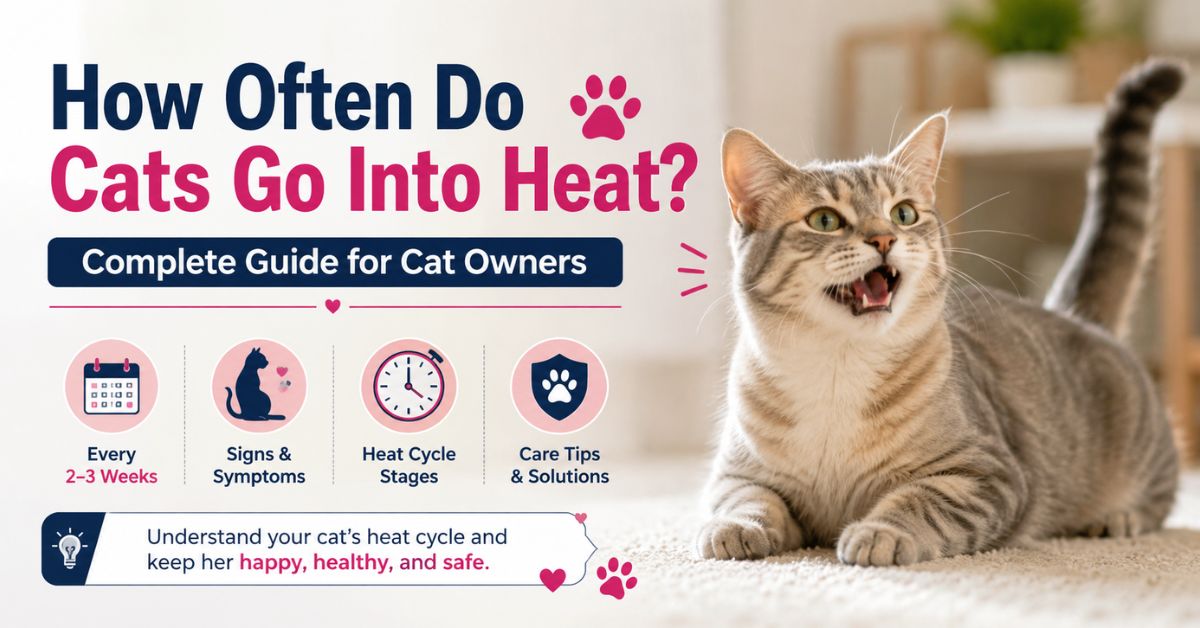
Most female cats go into heat every 2 to 3 weeks during the breeding season if they do not become pregnant.
The breeding season usually starts in early spring and continues through late fall. Indoor cats exposed to artificial lighting may cycle throughout the entire year.
Typical Heat Cycle Frequency
| Cat Condition | Heat Frequency |
| During breeding season | Every 2–3 weeks |
| Indoor cats | Can occur year-round |
| Outdoor cats | Mainly spring through fall |
| After unsuccessful mating | Heat returns within 2–3 weeks |
| Pregnant cats | Heat cycle stops |
Because cats are seasonally polyestrous, they can experience multiple heat cycles in one breeding season.
When Do Cats First Go Into Heat?
Most female cats reach sexual maturity between 4 and 9 months of age.
Several factors influence when a kitten enters her first heat cycle:
- Breed
- Body weight
- Nutrition
- Environment
- Daylight exposure
Some breeds mature earlier than others. For example, Siamese cats may go into heat as early as four months, while larger breeds often mature later.
Understanding the Cat Heat Cycle
To fully understand how often do cats go into heat, it’s important to know the stages of the reproductive cycle.
1. Proestrus
This is the beginning stage.
During proestrus:
- Hormone levels begin to rise.
- Male cats become interested.
- Females are not yet receptive to mating.
Duration:
- 1–2 days
2. Estrus (Heat)
Estrus is the actual heat period.
During this stage:
- The cat actively seeks mates.
- Fertility is highest.
- Behavioral changes become noticeable.
Duration:
- 3–14 days
This is when most owners notice signs that their cat is in heat.
3. Interestrus
If mating does not occur, the cat enters interestrus.
During this stage:
- Heat behaviors temporarily stop.
- Hormone levels decrease.
Duration:
- About 1–3 weeks
Afterward, another heat cycle usually begins.
4. Diestrus
If ovulation occurs, the cat enters diestrus.
This phase supports pregnancy or pseudopregnancy.
Duration:
- Several weeks
5. Anestrus
Anestrus is the reproductive resting phase.
It commonly occurs during winter months when daylight hours are shorter.
Duration:
- Varies by location and environment
Signs Your Cat Is In Heat
Recognizing the signs helps determine how often do cats go into heat and when a cycle begins.
Common Symptoms
Excessive Meowing
Cats in heat often become unusually vocal.
They may:
- Yowl loudly
- Cry during the night
- Call repeatedly for male cats
Increased Affection
Your cat may become:
- More cuddly
- Constantly seeking attention
- Rubbing against furniture and people
Rolling on the Floor
Many cats in heat roll repeatedly on the floor and stretch frequently.
This behavior is a natural response to hormonal changes.
Tail Position Changes
A cat may:
- Raise her hindquarters
- Move her tail to one side
- Adopt a mating posture
Restlessness
Cats often appear unable to settle down.
They may pace around the house and seem unusually energetic.
Escape Attempts
One of the biggest concerns during heat is the desire to find a mate.
Many cats:
- Scratch at doors
- Try to escape through windows
- Rush outside when doors open
Why Do Cats Go Into Heat So Frequently?
Many owners are surprised by how often do cats go into heat.
Cats evolved as highly efficient breeders. Frequent heat cycles increase their chances of reproduction.
Unlike many mammals, cats are induced ovulators. This means ovulation usually occurs after mating rather than automatically during the cycle.
If mating does not happen, the body quickly prepares for another heat cycle.
How Long Does a Cat Stay in Heat?
A typical heat period lasts between 3 and 14 days.
The average duration is around one week.
However, some cats may remain in heat longer depending on:
- Age
- Breed
- Health
- Seasonal conditions
If pregnancy does not occur, another cycle often starts within a few weeks.
Can Indoor Cats Go Into Heat Year-Round?
Yes.
Indoor cats frequently experience more heat cycles because artificial lighting mimics long daylight hours.
As a result:
- Seasonal patterns become less obvious.
- Heat cycles may continue throughout the year.
- Reproductive activity may increase.
This is one reason indoor cats often seem to go into heat more frequently than outdoor cats.
How to Care for a Cat in Heat
Managing a cat during heat can be challenging.
Provide Extra Attention
Many cats become more affectionate.
Try:
- Gentle petting
- Interactive play
- Spending additional time together
Keep Her Indoors
Prevent unwanted pregnancies by keeping your cat indoors.
Ensure:
- Doors stay closed
- Windows are secure
- Family members know the cat is in heat
Offer Comfortable Resting Areas
Create quiet spaces where your cat can relax.
Soft bedding and calm environments may help reduce stress.
Increase Play Sessions
Physical and mental stimulation can help distract your cat from heat-related behaviors.
Good options include:
- Feather toys
- Puzzle feeders
- Interactive games
Avoid Punishment
Heat behaviors are completely natural.
Punishing your cat for vocalizing or seeking attention can increase stress and anxiety.
The Benefits of Spaying
Spaying is the most effective way to stop heat cycles permanently.
Benefits include:
- No future heat cycles
- Prevention of unwanted pregnancies
- Reduced risk of reproductive diseases
- Lower risk of mammary tumors
- Improved household comfort
Many veterinarians recommend spaying before the first heat cycle whenever possible.
When Should You Contact a Veterinarian?
Seek veterinary advice if:
- Heat cycles seem unusually long.
- Heat occurs continuously.
- Your cat appears sick.
- There is abnormal discharge.
- Sudden behavioral changes occur.
A veterinarian can identify underlying reproductive or hormonal problems.
Conclusion
Understanding how often do cats go into heat helps cat owners better manage their pet’s behavior and reproductive health. Most female cats enter heat every two to three weeks during the breeding season, and some indoor cats may cycle throughout the year. Recognizing the signs, providing proper care, and considering spaying can greatly improve your cat’s well-being and prevent unwanted pregnancies.
At WhyKittiesHome, we believe informed cat owners provide happier and healthier lives for their feline companions. By learning about your cat’s heat cycle, you can make the best decisions for her long-term health and comfort.
Most cats go into heat every 2–3 weeks during the breeding season, resulting in multiple cycles annually.
Yes. A female cat can become pregnant during her very first heat cycle.
Most cats remain in heat for 3–14 days, with one week being the average.
Indoor cats may experience heat cycles year-round because artificial lighting affects reproductive hormones.
Yes. Spaying removes the reproductive organs responsible for heat cycles and prevents future heats.

Muhammad Ahad — Passionate writer sharing informative, engaging, and easy-to-read articles across different topics. Focused on delivering valuable content that helps readers learn, explore, and stay inspired every day.
1 thought on “How Often Do Cats Go Into Heat? Complete Guide for Cat Owners”