

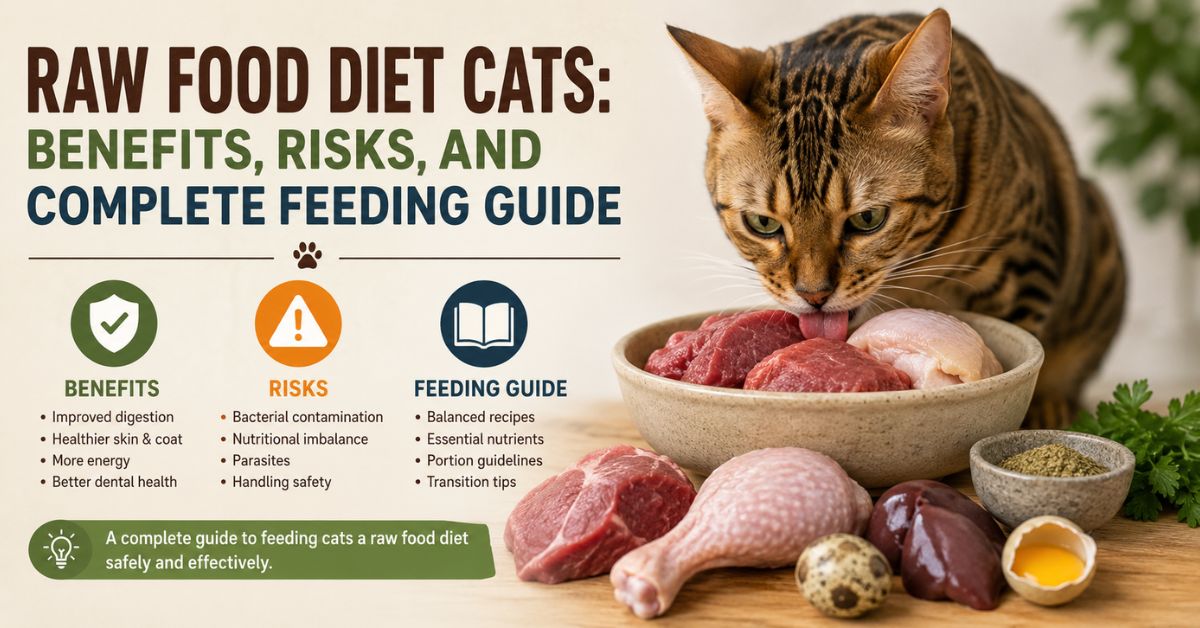
Introduction
Many cat owners are exploring alternative feeding methods to provide their pets with a more natural diet. Raw food diets for cats are popular, mimicking what wild cats would eat.
Supporters believe that raw feeding can improve digestion, enhance coat quality, and boost overall health. However, critics point out potential risks such as bacterial contamination and nutritional imbalances.
If you’re considering switching your feline friend to a raw diet, it is important to understand both the advantages and the challenges. This guide covers everything you need to know about raw food diet cats, including benefits, risks, feeding tips, and frequently asked questions.
What Is a Raw Food Diet for Cats?
A raw food diet consists of uncooked ingredients designed to replicate a cat’s natural prey-based diet. Since cats are obligate carnivores, their bodies are built to thrive on animal-based proteins and fats.
A typical raw diet may include:
- Raw muscle meat
- Raw organs such as liver and kidney
- Raw edible bones
- Animal fat
- Nutritional supplements when necessary
Some owners prepare homemade meals, while others purchase commercially prepared raw cat food.
Types of Raw Feeding
Homemade Raw Diet
Owners prepare meals using fresh ingredients and recipes.
Advantages:
- Full control over ingredients
- Can be customized for individual cats
Disadvantages:
- Time-consuming
- Higher risk of nutritional imbalance
Commercial Raw Diet
Pre-packaged raw foods formulated by pet nutrition experts.
Advantages:
- Convenient
- Nutritionally balanced
Disadvantages:
- More expensive
- Requires proper storage
Why Do Cat Owners Choose Raw Feeding?
Many pet owners believe that raw food diet cats feeding better reflects a cat’s natural nutritional needs.
Common reasons include:
- Higher protein intake
- Fewer processed ingredients
- Improved digestion
- Better weight management
- Enhanced dental health
While many owners report positive results, scientific research remains ongoing regarding long-term benefits.
Nutritional Requirements of Cats
Cats have unique dietary requirements compared to many other animals.
Essential nutrients include:
| Nutrient | Importance |
| Protein | Supports muscles, organs, and overall growth |
| Taurine | Essential for heart and eye health |
| Fat | Provides energy and healthy skin |
| Vitamins | Supports immune function |
| Minerals | Maintains bones and metabolism |
| Water | Supports hydration and kidney health |
A successful raw food diet cats plan must provide all of these nutrients in the correct amounts.
Benefits of a Raw Food Diet for Cats
Improved Coat and Skin Health
Many owners notice shinier coats and healthier skin after switching to a raw diet.
The natural fats found in raw meat may help:
- Reduce dry skin
- Improve coat texture
- Minimize excessive shedding
Better Digestion
Cats naturally digest animal protein efficiently.
A raw diet may:
- Produce smaller stools
- Reduce digestive upset
- Improve nutrient absorption
Increased Energy Levels
Nutritionally dense raw food can increase a cat’s activity and energy level.
Higher-quality protein can support:
- Muscle maintenance
- Physical activity
- Overall vitality
Healthier Weight Management
Obesity is a growing concern among domestic cats.
Because raw food diet cats feeding is often high in protein and lower in carbohydrates, it may help:
- Maintain lean muscle mass
- Reduce excess body fat
- Improve body condition
Better Dental Health
Chewing raw meaty bones may help reduce plaque buildup naturally.
Potential benefits include:
- Cleaner teeth
- Stronger jaws
- Fresher breath
Always supervise your cat and only use safe, edible bones recommended by experts.
Potential Risks of Raw Feeding
Despite its benefits, raw feeding is not without concerns.
Bacterial Contamination
The following bacteria can be present in raw meat:
- Salmonella
- E. coli
- Listeria
These bacteria can affect both cats and humans.
Safe food handling practices are essential.
Nutritional Imbalances
Homemade raw diets may lack important nutrients if not properly formulated.
Common deficiencies include:
- Taurine
- Calcium
- Vitamin D
Over time, these deficiencies can cause serious health issues.
Bone-Related Injuries
Improper bones may create risks such as:
- Choking
- Dental fractures
- Intestinal blockage
Cooked bones should never be fed because they can splinter.
Not Suitable for Every Cat
Several factors may necessitate specialized cat diets:
- Kidney disease
- Liver disease
- Immune disorders
- Certain digestive conditions
Always consult a veterinarian before switching diets.
Introducing Raw Food to Your Cat
Changing your cat’s diet suddenly can lead to digestive upset.
Step 1: Introduce Small Amounts
Start by mixing a small portion of raw food with your cat’s current food.
Step 2: Increase Gradually
Over 7–14 days, slowly increase the amount of raw food.
Step 3: Monitor Health
Watch for signs such as:
- Healthy stools
- Normal appetite
- Stable weight
- Good energy levels
Step 4: Adjust as Needed
Some cats adapt quickly, while others require a slower transition.
Patience is key.
Foods Commonly Included in Raw Cat Diets
A balanced raw food diet cats plan often includes a variety of ingredients.
Muscle Meat
Examples include:
- Chicken
- Turkey
- Rabbit
- Beef
- Duck
Organ Meat
Organ meats provide important vitamins and minerals.
Examples:
- Liver
- Heart
- Kidney
Edible Bones
Raw edible bones can provide calcium and phosphorus.
Examples:
- Chicken necks
- Chicken wings
- Rabbit bones
Supplements
Depending on the recipe, supplements may include:
- Taurine
- Fish oil
- Vitamin E
- Calcium
Foods to Avoid
Certain foods can be dangerous for cats.
Avoid:
- Cooked bones
- Onions
- Garlic
- Chocolate
- Grapes
- Raisins
- Alcohol
- Excessive salt
- Raw dough
These foods may cause serious illness or toxicity.
Safe Food Handling Tips
Proper hygiene is critical when feeding raw food diet cats meals.
Follow these guidelines:
- Wash hands before and after handling food
- Use separate cutting boards
- Clean feeding bowls daily
- Refrigerate food properly
- Freeze meat before use when appropriate
- Discard uneaten food promptly
Good hygiene helps reduce bacterial risks.
Signs Your Cat Is Thriving on a Raw Diet
Healthy indicators include:
- Bright eyes
- Healthy skin
- Glossy coat
- Consistent energy
- Strong appetite
- Ideal body weight
- Normal stools
Regular veterinary checkups remain important regardless of diet type.
Common Mistakes to Avoid
Many beginners make avoidable errors.
Feeding Only Muscle Meat
Muscle meat alone does not provide complete nutrition.
Cats also need:
- Organs
- Bone content
- Essential nutrients
Ignoring Portion Sizes
Overfeeding can lead to weight gain, while underfeeding may cause nutrient deficiencies.
Skipping Veterinary Advice
Professional guidance helps ensure nutritional balance and safety.
Making Sudden Changes
Rapid diet changes can trigger digestive issues.
Gradual transitions are safer.
Is a Raw Diet Better Than Commercial Cat Food?
There is no single answer that fits every cat.
Some cats perform well on carefully balanced raw diets, while others thrive on high-quality commercial foods.
Factors to consider:
- Health status
- Age
- Lifestyle
- Budget
- Convenience
- Veterinary recommendations
The best diet is one that meets your cat’s nutritional needs safely and consistently.
Conclusion
A raw food diet cats feeding approach can offer several potential benefits, including improved coat quality, enhanced digestion, and better weight management. However, it also comes with important responsibilities involving food safety, nutritional balance, and proper preparation.
Before making any major dietary changes, consult your veterinarian to determine whether raw feeding is appropriate for your cat’s specific needs. With proper planning and careful implementation, a raw diet may become a healthy option for many felines.
At WhyKittiesHome, we believe informed pet owners make the best decisions for their furry companions. Understanding both the benefits and risks of raw feeding will help you choose the healthiest path for your beloved cat.
A properly balanced raw diet can be safe, but food safety and nutritional balance are essential.
Yes, but their diets must be carefully formulated to support growth and development.
Most adult cats consume approximately 2–4% of their body weight daily, depending on activity level and metabolism.
Opinions vary. Some veterinarians support balanced raw diets, while others have concerns regarding bacteria and nutritional deficiencies.
Only appropriate raw edible bones should be offered, and they should always be given under supervision.

Muhammad Ahad — Passionate writer sharing informative, engaging, and easy-to-read articles across different topics. Focused on delivering valuable content that helps readers learn, explore, and stay inspired every day.
1 thought on “Raw Food Diet Cats: Benefits, Risks, and Complete Feeding Guide”