
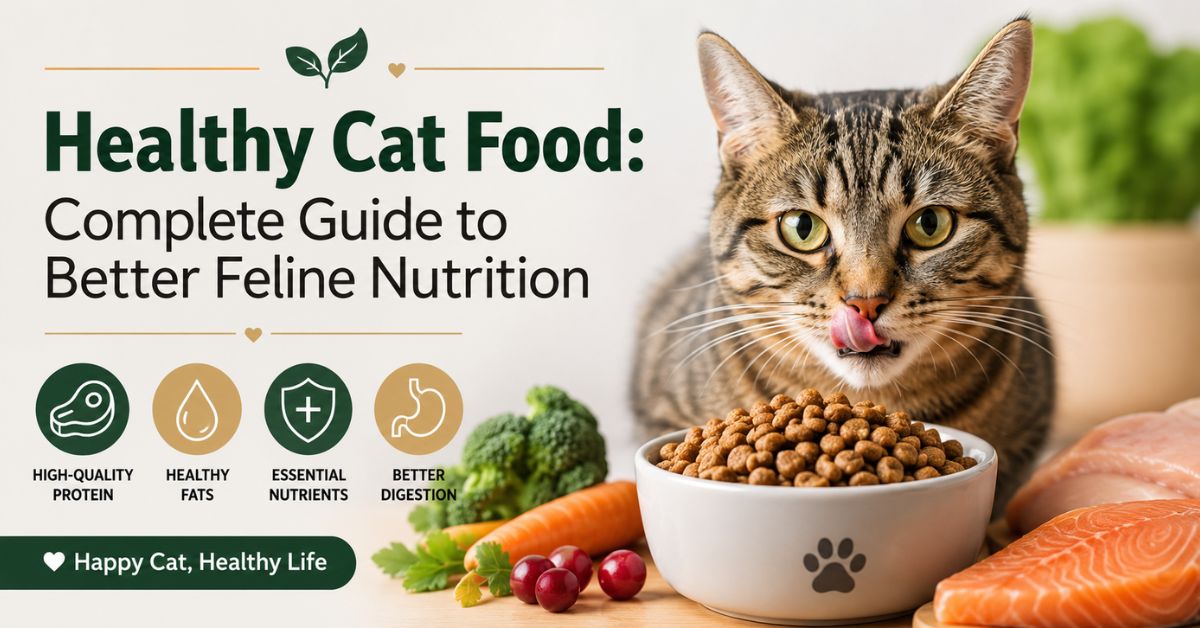
Cats are more than just pets — they are beloved family members. Just like humans, cats need proper nutrition to stay healthy, active, and happy. Choosing the right healthy cat food can improve your cat’s energy, digestion, coat quality, and overall well-being.
Many cat owners feel confused when they see hundreds of food options in pet stores. Some products claim to be natural, while others promise high protein or grain-free formulas. Understanding what your cat truly needs is the key to making smart feeding choices.
In this complete guide, you will learn how to choose the best healthy cat food, which ingredients matter most, foods to avoid, and practical feeding tips for every life stage.
Why Healthy Cat Food Matters
A balanced diet plays a major role in your cat’s long-term health. Cats are obligate carnivores, which means they require animal protein to survive and thrive.
Feeding poor-quality food may lead to:
- Obesity
- Digestive issues
- Low energy
- Poor coat condition
- Urinary problems
- Diabetes and other diseases
On the other hand, high-quality healthy cat food supports:
- Strong muscles
- Healthy skin and fur
- Better digestion
- Improved immune system
- Healthy weight management
- Longer lifespan
Essential Nutrients in Healthy Cat Food
Not all cat foods are created equal. A nutritious feline diet should contain several key nutrients.
High-Quality Protein
Protein is the most important nutrient for cats. Look for real meat sources such as:
- Chicken
- Turkey
- Salmon
- Tuna
- Beef
Protein helps build muscles, repair tissues, and maintain energy levels.
Healthy Fats
Healthy fats provide energy and keep your cat’s coat shiny. Omega-3 and Omega-6 fatty acids are especially beneficial.
Good fat sources include:
- Fish oil
- Chicken fat
- Salmon oil
Vitamins and Minerals
Cats need vitamins and minerals for proper body functions. Important nutrients include:
- Vitamin A
- Vitamin D
- Calcium
- Taurine
- Zinc
Taurine is especially critical because cats cannot produce enough on their own.
Water and Moisture
Hydration is essential for cats, especially because many cats naturally drink little water. Wet healthy cat food can help prevent urinary and kidney problems.
Wet Food vs Dry Food
Many cat owners wonder whether wet or dry food is better. Both have advantages and disadvantages.
| Feature | Wet Cat Food | Dry Cat Food |
|---|---|---|
| Moisture Content | High | Low |
| Hydration Support | Excellent | Limited |
| Shelf Life | Short after opening | Longer |
| Dental Benefits | Minimal | Can help reduce plaque |
| Protein Content | Usually higher | Varies |
| Cost | More expensive | Budget-friendly |
The best option often depends on your cat’s age, health, and preferences. Many veterinarians recommend combining both types for balanced nutrition.
Ingredients to Look for in Healthy Cat Food
Reading labels is one of the smartest things a cat owner can do.
Real Meat as the First Ingredient
The first ingredient should always be a real animal protein source. Avoid foods that list fillers first.
Limited Fillers
Some fillers offer little nutritional value. Try to avoid excessive amounts of:
- Corn
- Soy
- Wheat gluten
Natural Preservatives
Choose foods preserved naturally with:
- Vitamin E
- Vitamin C
- Rosemary extract
Taurine
Taurine supports heart health, vision, and digestion. Every high-quality healthy cat food should contain taurine.
Ingredients to Avoid
Certain ingredients may harm your cat’s health over time.
Artificial Additives
Avoid foods with:
- Artificial colors
- Artificial flavors
- Chemical preservatives
Excessive Carbohydrates
Cats do not require large amounts of carbohydrates. Too many carbs may contribute to obesity and diabetes.
Meat By-Products
Some by-products are acceptable, but vague terms like “animal digest” may indicate poor-quality ingredients.
Choosing Healthy Cat Food by Age
Cats have different nutritional needs at different life stages.
Healthy Food for Kittens
Kittens need extra calories, protein, and nutrients for growth.
Look for food labeled:
- Complete and balanced for growth
- Rich in DHA
- High in protein
Healthy Food for Adult Cats
Adult cats require balanced nutrition to maintain energy and weight.
Choose foods with:
- Moderate fat
- High-quality protein
- Essential vitamins
Healthy Food for Senior Cats
Older cats may develop health issues like joint pain or kidney problems.
Senior formulas often contain:
- Lower phosphorus
- Joint-support ingredients
- Easier-to-digest protein
Grain-Free vs Grain-Inclusive Cat Food
Grain-free diets have become popular, but they are not necessary for every cat.
Benefits of Grain-Free Food
Some cats with allergies or sensitivities may benefit from grain-free diets.
Benefits of Grain-Inclusive Food
Healthy grains like brown rice and oats can provide fiber and energy.
The best healthy cat food depends on your cat’s specific needs rather than trends.
Signs Your Cat Is Eating Healthy Food
A healthy diet often produces noticeable improvements.
Look for these positive signs:
- Shiny coat
- Healthy weight
- Good energy levels
- Clear eyes
- Regular digestion
- Reduced hairballs
If your cat experiences vomiting, diarrhea, or itching, consult a veterinarian.
Common Feeding Mistakes
Even caring owners sometimes make feeding errors.
Overfeeding
Overfeeding is one of the leading causes of feline obesity.
Always follow portion guidelines and monitor your cat’s weight.
Too Many Treats
Treats should not exceed 10% of daily calorie intake.
Sudden Food Changes
Switching food too quickly may upset digestion. Transition gradually over 7–10 days.
How to Transition to Healthy Cat Food
Changing your cat’s diet should happen slowly.
Step-by-Step Transition Plan
- Mix 25% new food with 75% old food
- Increase new food gradually
- Monitor digestion and appetite
- Complete the transition within one week
Patience is important because cats can be picky eaters.
Homemade vs Commercial Cat Food
Some owners prefer homemade diets, but they require careful planning.
Homemade Cat Food Pros
- Ingredient control
- Fewer preservatives
- Fresh preparation
Homemade Cat Food Cons
- Nutritional imbalance risk
- Time-consuming
- Expensive
Commercial healthy cat food approved by veterinary nutrition standards is usually the safer and easier option.
Tips for Maintaining a Healthy Cat Diet
Small daily habits can improve your cat’s health significantly.
Provide Fresh Water Daily
Always keep clean water available.
Follow Feeding Schedules
Regular meal times support digestion and prevent overeating.
Monitor Weight Regularly
Weight changes may indicate health problems.
Read Labels Carefully
Choose products with transparent ingredient lists and nutritional information.
Best Protein Sources for Cats
Protein quality matters more than quantity.
Excellent protein sources include:
- Chicken
- Turkey
- Duck
- Salmon
- Sardines
- Beef
- Lamb
Avoid foods with unclear protein sources.
Special Diets for Health Conditions
Some cats require specialized diets.
Sensitive Stomach Formulas
These contain easily digestible ingredients and probiotics.
Weight Management Food
Lower-calorie foods help overweight cats lose excess fat safely.
Urinary Health Diets
These formulas support urinary tract function and hydration.
Consult your veterinarian before changing to a prescription diet.
Conclusion
Choosing the right healthy cat food is one of the best ways to support your cat’s long-term health and happiness. A balanced diet filled with quality protein, essential nutrients, and proper hydration can improve your cat’s energy, digestion, and overall quality of life.
Always read ingredient labels carefully and choose food that matches your cat’s age, lifestyle, and health needs. Small nutritional improvements today can lead to a healthier future for your furry companion.
At WhyKittiesHome, we believe every cat deserves nutritious meals, proper care, and a happy life filled with love and wellness.
The healthiest healthy cat food contains high-quality animal protein, essential nutrients, taurine, and minimal fillers or artificial additives.
Wet food offers better hydration, while dry food is convenient and may help dental health. Many cats benefit from a combination of both.
Most adult cats do well with two meals daily, while kittens may require more frequent feeding.
Homemade food can work if properly balanced, but many homemade diets lack essential nutrients. Veterinary guidance is recommended.
Not all cats need grain-free diets. Grain-free food may help cats with allergies, but healthy grains can also be beneficial.

Muhammad Ahad — Passionate writer sharing informative, engaging, and easy-to-read articles across different topics. Focused on delivering valuable content that helps readers learn, explore, and stay inspired every day.
Nice