

Introduction
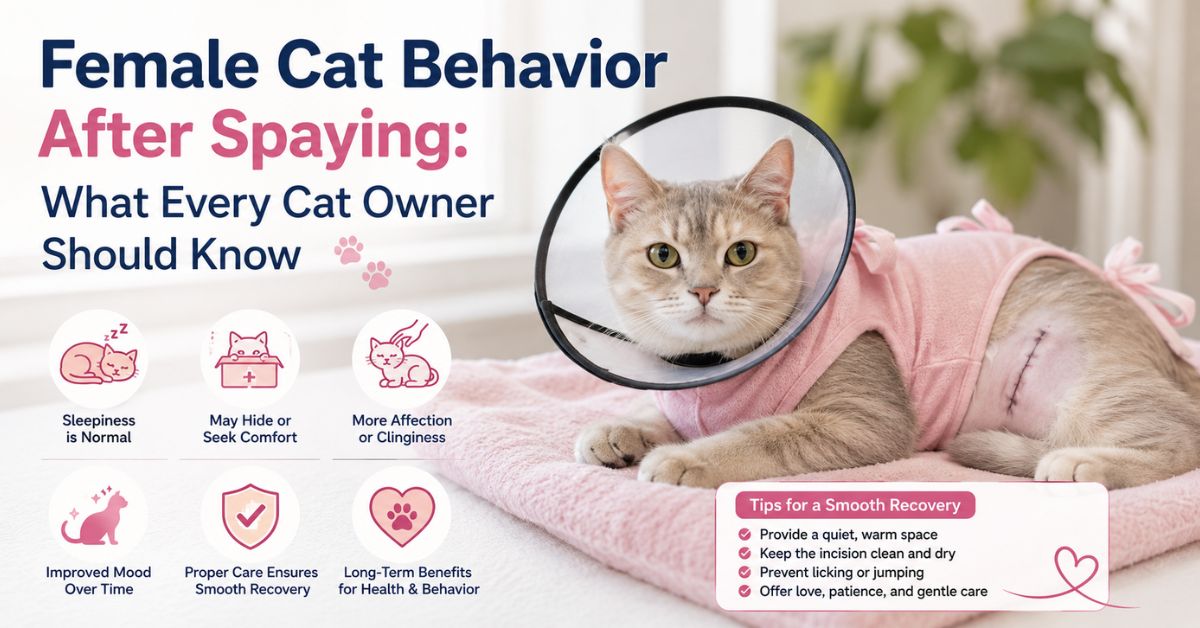
Spaying is one of the most important procedures for protecting a cat’s long-term health and preventing unwanted litters. However, many pet owners notice changes in their cat’s mood, energy levels, and daily habits after surgery. Understanding female cat behavior after spaying can help you support your pet during recovery and avoid unnecessary worry.
Some cats become quieter and more affectionate, while others may appear confused, sleepy, or irritated for a few days. These changes are usually temporary and are part of the healing process. Knowing what behaviors are normal and what signs may require veterinary attention is essential for every cat owner.
In this guide from WhyKittiesHome, you will learn about common behavior changes, recovery stages, care tips, warning signs, and how to keep your cat comfortable after spaying.
What Is Spaying in Cats?
Spaying is a surgical procedure that removes a female cat’s reproductive organs. Veterinarians perform this surgery under anesthesia to prevent pregnancy and reduce health risks later in life.
Spaying also helps reduce unwanted behaviors linked to heat cycles, such as:
- Loud vocalization
- Restlessness
- Excessive attention-seeking
- Spraying urine
- Attempting to escape outdoors
After surgery, hormones gradually decrease, which can influence female cat behavior after spaying in several ways.
Common Female Cat Behavior After Spaying
Every cat reacts differently after surgery. Some changes are immediate, while others appear over several weeks.
Sleepiness and Low Energy
One of the most common signs of female cat behavior after spaying is drowsiness. Anesthesia and pain medication can make cats sleepy for 24 to 48 hours.
Your cat may:
- Sleep more than usual
- Move slowly
- Avoid jumping
- Show less interest in playing
This is generally normal during early recovery.
How to Help
- Provide a warm and quiet resting area
- Keep food and water nearby
- Limit physical activity for several days
Hiding Behavior
Many cats hide after surgery because they feel vulnerable or uncomfortable. This behavior usually lasts one or two days.
Common hiding spots include:
- Under beds
- Inside closets
- Behind furniture
Avoid forcing your cat out of hiding unless necessary.
Why Cats Hide After Spaying
Cats naturally seek safe spaces when they feel stressed or weak. The unfamiliar smells of the clinic and the effects of anesthesia can increase anxiety.
Increased Affection
Some owners notice their cats becoming extra cuddly after surgery. This type of female cat behavior after spaying may happen because the cat seeks comfort and reassurance.
Your cat may:
- Follow you around
- Purr more often
- Sit closer to you
- Enjoy gentle petting
This affectionate phase can be temporary or long-lasting.
Temporary Aggression or Irritability
Pain and discomfort can make some cats grumpy after surgery. A usually friendly cat may hiss, swat, or avoid touch.
This behavior is often temporary and improves as healing progresses.
Avoid These Mistakes
- Do not pick up your cat unnecessarily
- Avoid touching the incision area
- Keep children and other pets calm around the cat
Behavioral Changes During Recovery
The first two weeks are important for healing. Monitoring female cat behavior after spaying helps you identify normal recovery signs and possible complications.
First 24 Hours
During the first day, your cat may experience:
| Behavior | Is It Normal? | Notes |
|---|---|---|
| Sleepiness | Yes | Common after anesthesia |
| Reduced appetite | Yes | Usually improves within 24 hours |
| Mild confusion | Yes | Temporary disorientation |
| Hiding | Yes | Stress response |
| Small vocal sounds | Sometimes | Mild discomfort |
Days 2 to 7
Most cats gradually improve during this period.
You may notice:
- Better appetite
- Increased walking
- More grooming
- Mild curiosity
- Improved mood
However, excessive licking near the incision should be stopped because it can cause infection.
Week 2 and Beyond
By the second week, most cats return to their normal routine. Long-term female cat behavior after spaying often includes reduced heat-related behaviors and a calmer personality.
Many owners report:
- Less yowling
- Reduced aggression
- Fewer escape attempts
- Improved indoor behavior
Emotional Changes After Spaying
Hormonal changes can influence emotions and temperament.
Reduced Heat Cycle Behaviors
Before spaying, female cats in heat may:
- Cry loudly
- Roll on the floor
- Become restless
- Seek male cats
After surgery, these behaviors usually disappear completely.
Calmer Personality
Many cats become calmer because reproductive hormones are no longer fluctuating. This can make indoor living easier and reduce stress.
Still, personality changes vary. Some cats remain playful and energetic after recovery.
How Long Does Behavior Change Last?
Temporary recovery behaviors usually improve within:
- 24–48 hours for anesthesia effects
- 7–14 days for incision healing
- Several weeks for hormonal adjustment
Long-term improvements in female cat behavior after spaying may continue developing over one to two months.
Signs Your Cat Is Recovering Normally
Healthy recovery signs include:
- Sleeping comfortably
- Eating small meals
- Using the litter box normally
- Gentle movement
- Mild interest in surroundings
A calm recovery environment is very important.
Warning Signs You Should Never Ignore
Although most cats recover safely, some symptoms require immediate veterinary care.
Contact Your Vet If You Notice:
- Bleeding from the incision
- Swelling or pus
- Vomiting for more than 24 hours
- Refusing food completely
- Difficulty breathing
- Severe lethargy
- Continuous crying
- Open stitches
These are not normal signs of female cat behavior after spaying.
Best Tips for Caring for a Spayed Female Cat
Good care helps your cat heal faster and reduces stress.
Create a Quiet Recovery Space
Choose a peaceful room away from loud noises and active pets.
Include:
- Soft bedding
- Fresh water
- Clean litter box
- Easy access to food
Prevent Jumping and Running
Too much activity can damage stitches.
Limit:
- Climbing
- Jumping on furniture
- Rough play
- Outdoor access
Use a small room if necessary.
Monitor the Incision Daily
Check the surgical site carefully.
Normal healing includes:
- Mild redness
- Small swelling
- Dry incision
Abnormal healing may involve discharge or a strong odor.
Use an E-Collar if Needed
Some cats obsessively lick the incision. An Elizabethan collar can prevent infections and protect stitches.
Does Spaying Change a Cat’s Personality Permanently?
Many owners worry that surgery will completely change their cat’s personality. Fortunately, this is rarely true.
Most long-term changes are positive and related to hormone reduction rather than personality loss.
Positive long-term effects may include:
- Less aggression
- Reduced roaming
- Better focus indoors
- Fewer mood swings
Your cat’s core personality usually remains the same.
Diet and Weight Changes After Spaying
After surgery, metabolism can slow slightly. Some cats gain weight if overfed.
Healthy Feeding Tips
- Measure meals carefully
- Avoid too many treats
- Encourage light exercise after recovery
- Choose balanced cat food
Maintaining a healthy weight supports overall health.
Indoor Behavior Improvements After Spaying
Many owners notice better household behavior after surgery.
Common Improvements
Less Spraying
Hormonal urine marking often decreases significantly.
Fewer Escape Attempts
Cats become less driven to search for mates outdoors.
Reduced Loud Vocalization
Heat-related crying usually stops completely.
These changes make female cat behavior after spaying easier to manage for most families.
How to Comfort Your Cat Emotionally
Cats need emotional reassurance during recovery.
Helpful Comfort Tips
- Speak softly
- Avoid sudden movements
- Sit quietly nearby
- Offer gentle petting if welcomed
- Maintain a normal routine
Patience helps your cat feel secure again.
Conclusion
Understanding female cat behavior after spaying helps cat owners provide better care and reduce anxiety during recovery. Temporary changes like sleepiness, hiding, or irritability are usually normal and improve within days. Over time, many cats become calmer and healthier after the procedure.
By creating a safe recovery environment, monitoring healing carefully, and offering emotional comfort, you can help your cat heal smoothly and comfortably.
At WhyKittiesHome, we believe informed pet owners create happier and healthier lives for their cats.
Yes, sleepiness is very common during the first 24 to 48 hours due to anesthesia and pain medication.
Hiding is a natural stress response. Most cats hide temporarily while recovering from discomfort and unfamiliar experiences.
Most cats return to normal behavior within one to two weeks, although hormonal adjustments may take longer.
Usually no. Your cat may seem calm during recovery, but most cats regain their normal playful personality afterward.
Yes, some hormone-related aggression and mood swings may decrease after spaying.

Muhammad Ahad — Passionate writer sharing informative, engaging, and easy-to-read articles across different topics. Focused on delivering valuable content that helps readers learn, explore, and stay inspired every day.