

Introduction
Many cat owners focus on feeding, grooming, and vaccinations but often overlook dental care. However, cleaning cat teeth is one of the most important aspects of maintaining your cat’s overall health. Poor oral hygiene can lead to plaque buildup, gum disease, bad breath, tooth loss, and even serious health complications affecting the heart, kidneys, and liver.
Cats are experts at hiding pain, which means dental problems can go unnoticed for months. Establishing a routine for cleaning cat teeth helps prevent disease and keeps your feline friend comfortable and healthy throughout life.
This guide covers everything you need to know about feline dental care, including why it matters, how to clean your cat’s teeth safely, and tips for maintaining long-term oral health.
Why Cleaning Cat Teeth Is Important
Cats are often affected by dental disease.Studies suggest that a large percentage of cats over the age of three show signs of dental issues.
Regular cleaning cat teeth helps:
- Remove plaque before it hardens into tartar
- Prevent gingivitis and periodontal disease
- Reduce bad breath
- Lower the risk of tooth loss
- Improve overall health
- Make eating more comfortable
- Reduce costly veterinary treatments
Without proper dental care, bacteria from the mouth can enter the bloodstream and affect vital organs.
Understanding Common Dental Problems in Cats
Plaque and Tartar Buildup
Bacteria form a sticky film on teeth every day called plaque. If not removed through cleaning cat teeth, it hardens into tartar, which is much more difficult to eliminate.
Gingivitis
Plaque accumulation causes gum inflammation, which is called gingivitis. Early symptoms include:
- Red gums
- Swelling
- Bad breath
- Mild discomfort
Fortunately, gingivitis can often be reversed with proper dental care.
Periodontal Disease
Periodontal disease develops when gingivitis progresses. This condition affects the tissues supporting the teeth and can eventually lead to tooth loss.
Tooth Resorption
Tooth resorption is a painful condition where a cat’s tooth structure breaks down over time. It often requires veterinary treatment and tooth extraction.
Signs Your Cat May Need Dental Care
Watch for these warning signs:
- Persistent bad breath
- Yellow or brown tartar on teeth
- Red or swollen gums
- Drooling excessively
- Difficulty eating
- Pawing at the mouth
- Bleeding gums
- Weight loss
- Reduced appetite
If you notice these symptoms, schedule a veterinary dental examination.
Best Age to Start Cleaning Cat Teeth
The ideal time to begin cleaning cat teeth is during kittenhood. Young cats adapt more easily to tooth brushing and oral care routines.
However, adult cats can still learn new dental habits with patience and positive reinforcement.
It is easier to complete the process if you start early.
Supplies Needed for Cleaning Cat Teeth
Before starting, gather the proper tools.
Essential Dental Care Supplies
- Cat-specific toothbrush
- Finger toothbrush
- Veterinary-approved cat toothpaste
- Dental treats
- Dental wipes
- Dental water additives
- Positive rewards or treats
Never use human toothpaste because it contains ingredients that may be harmful to cats.
How to Clean Your Cat’s Teeth Step by Step
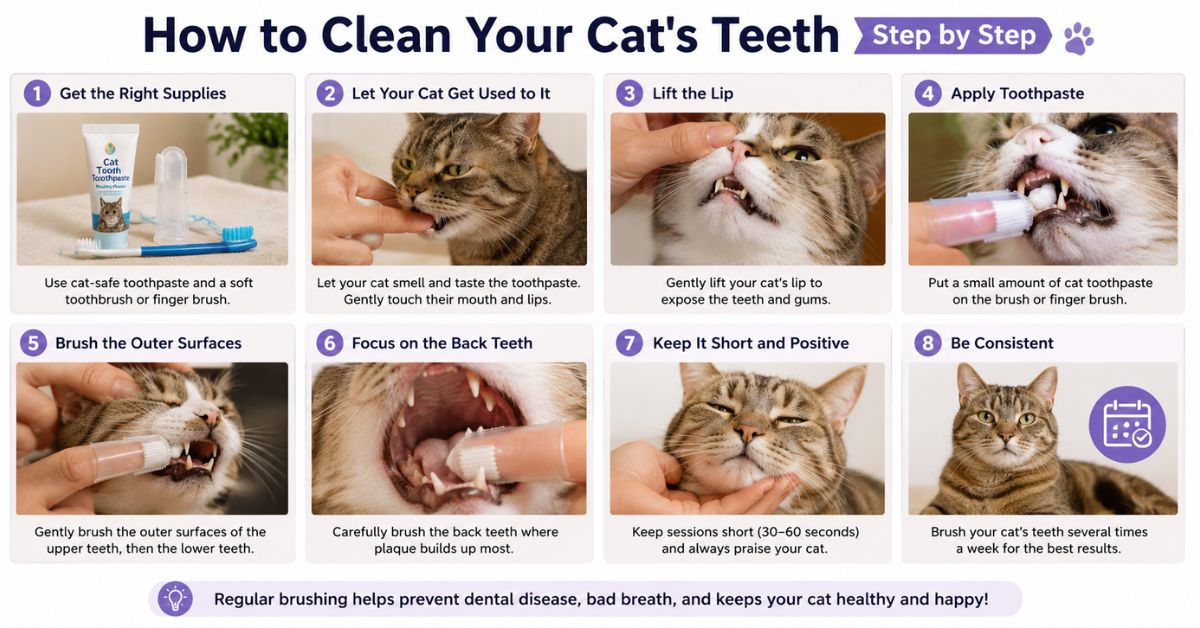
Step 1: Introduce Mouth Handling
Begin by gently touching your cat’s face and lips daily. Reward calm behavior with treats.
This helps your cat become comfortable with oral examinations.
Step 2: Introduce Cat Toothpaste
Place a small amount of cat toothpaste on your finger and allow your cat to taste it.
Most feline toothpastes come in flavors cats enjoy, such as poultry or seafood.
Step 3: Start Gentle Brushing
Lift the lip gently and brush the outer surfaces of the teeth using small circular motions.
Focus on the gumline where plaque commonly accumulates.
Step 4: Keep Sessions Short
Initially brush for only 20–30 seconds.
Your cat will become more comfortable as you increase brushing time.
Step 5: Reward Your Cat
Always reward your cat after brushing.
Positive experiences make future dental care much easier.
Recommended Brushing Frequency
Veterinarians generally recommend cleaning cat teeth daily for the best results.
However, even brushing several times per week can significantly reduce plaque buildup.
Ideal Schedule
| Dental Activity | Recommended Frequency |
| Tooth Brushing | Daily |
| Dental Treats | Daily |
| Dental Wipes | Several times weekly |
| Oral Checkups at Home | Weekly |
| Veterinary Dental Exam | Annually |
| Professional Dental Cleaning | As recommended |
Consistency matters more than perfection.
Alternatives to Brushing Cat Teeth
Not every cat tolerates brushing immediately. Fortunately, several alternatives can help support oral health.
Dental Treats
Dental treats are designed to reduce plaque through chewing action.
Benefits include:
- Easy to use
- Highly appealing to cats
- Supports daily dental maintenance
Dental Diets
Plaque and tartar formation can be reduced with certain veterinary dental diets.
The kibble texture encourages chewing and mechanical cleaning.
Dental Wipes
Dental wipes can be useful for cats that resist toothbrushes.
While not as effective as brushing, they can still help remove surface bacteria.
Water Additives
Dental water additives are mixed into drinking water to reduce bacteria and freshen breath.
They work best when combined with other dental care methods.
Professional Dental Cleaning for Cats
Home care is important, but some cats eventually need professional dental cleaning.
A veterinary dental procedure typically includes:
- Oral examination
- Scaling above and below the gumline
- Polishing teeth
- Dental X-rays when needed
- Treatment of damaged teeth
Professional cleanings help address problems that brushing alone cannot resolve.
Common Mistakes to Avoid
When cleaning cat teeth, avoid these common errors:
Using Human Toothpaste
Human toothpaste often contains fluoride and xylitol, which are unsafe for cats.
Forcing Your Cat
Forcing dental care can create fear and resistance.
Always proceed gradually and patiently.
Ignoring Early Warning Signs
Bad breath is not normal in cats. It often signals underlying dental disease.
Waiting Too Long Between Dental Exams
Regular veterinary checkups help identify issues before they become severe.
Tips for Making Dental Care Easier
Create a Routine
Brush at the same time each day so your cat knows what to expect.
Choose a Quiet Environment
Reduce distractions and noise during brushing sessions.
Stay Calm
Cats respond to your emotions. A calm approach encourages cooperation.
Use Rewards
Treats, praise, and affection can turn dental care into a positive experience.
The Connection Between Dental Health and Overall Health
Many owners do not realize how closely oral health affects the rest of the body.
Poor dental hygiene can contribute to:
- Heart disease
- Kidney problems
- Liver issues
- Chronic inflammation
- Reduced quality of life
Regular cleaning cat teeth helps reduce harmful bacteria and supports long-term wellness.
Natural Ways to Support Oral Health
In addition to brushing, consider these healthy habits:
- Feed a balanced diet
- Encourage chewing with safe dental products
- Provide fresh water daily
- Monitor oral health regularly
- Schedule routine veterinary visits
Combining these methods creates a strong foundation for dental health.
Conclusion
Maintaining your cat’s oral health should be a regular part of their care routine. Cleaning cat teeth helps prevent plaque buildup, reduces the risk of dental disease, improves breath, and supports overall health. By combining regular brushing, dental products, and professional veterinary care, you can keep your cat comfortable and healthy for years to come.
At WhyKittiesHome, we believe that proactive dental care is one of the best investments you can make in your cat’s long-term well-being. Start today, stay consistent, and give your feline companion the healthy smile they deserve.
Daily brushing is ideal, but brushing three to four times weekly can still provide significant benefits.
No. Human toothpaste may contain ingredients that are toxic or unsafe for cats. Always use veterinary-approved cat toothpaste.
Start slowly with dental wipes, flavored toothpaste, and positive reinforcement. Gradual training often improves acceptance.
No. Dental treats can support oral health, but brushing remains the most effective method for removing plaque.
Common signs include bad breath, swollen gums, tartar buildup, drooling, and difficulty eating.

Muhammad Ahad — Passionate writer sharing informative, engaging, and easy-to-read articles across different topics. Focused on delivering valuable content that helps readers learn, explore, and stay inspired every day.
How often do you recommend brushing a cat’s teeth? I never thought about dental care for my cat until recently.