
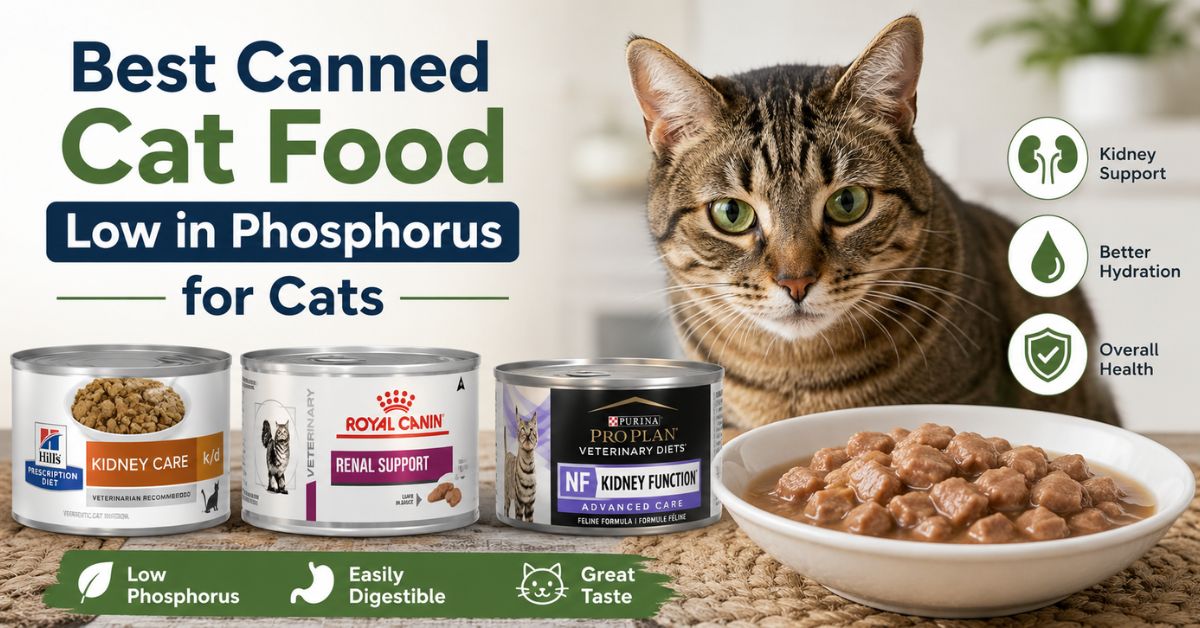
Keeping your cat healthy becomes more important as they age, especially when kidney problems begin to appear. One of the most recommended dietary changes by veterinarians is switching to canned cat food low in phosphorus. A proper low-phosphorus diet can help reduce stress on the kidneys and improve your cat’s quality of life.
Many cat owners feel confused when choosing the right food because not all wet cat foods are designed for kidney support. Some contain high mineral levels that may worsen kidney disease over time. This guide explains everything you need to know about choosing the best canned cat food low in phosphorus for your feline friend.
Why Phosphorus Matters for Cats
Phosphorus is an essential mineral that supports healthy bones and teeth. However, too much phosphorus can be dangerous for cats with kidney disease.
Healthy kidneys remove excess phosphorus from the body. When the kidneys become weak, phosphorus builds up in the bloodstream and causes additional damage.
Signs Your Cat May Need a Low-Phosphorus Diet
Some common symptoms include:
- Increased thirst
- Frequent urination
- Weight loss
- Poor appetite
- Vomiting
- Low energy
- Bad breath
If your cat shows these signs, consult a veterinarian before changing their diet.
What Is Canned Cat Food Low in Phosphorus?
Canned cat food low in phosphorus is wet food specially formulated with reduced phosphorus levels to support kidney health. These foods are easier to digest and usually contain more moisture, which helps keep cats hydrated.
Hydration is especially important because cats with kidney disease often become dehydrated quickly.
Benefits of Low-Phosphorus Wet Cat Food
Choosing the right diet offers several benefits:
- Supports kidney function
- Helps slow kidney disease progression
- Improves hydration
- Encourages better appetite
- Reduces stress on the kidneys
- Supports overall health in senior cats
Why Wet Food Is Better Than Dry Food
Wet food generally contains 70–80% moisture, while dry food contains very little water.
Cats naturally have a low thirst drive, so they often do not drink enough water on their own. Feeding canned cat food low in phosphorus helps increase daily fluid intake naturally.
Main Advantages of Wet Food
| Feature | Wet Cat Food | Dry Cat Food |
| Moisture Content | High | Low |
| Kidney Support | Better | Limited |
| Hydration | Excellent | Poor |
| Texture | Soft and easy to eat | Crunchy |
| Appetite Stimulation | Higher | Moderate |
Important Ingredients to Look For
Not all cat foods labeled “healthy” are suitable for kidney support. Always check ingredient quality and nutritional information.
High-Quality Protein
Cats still need protein, but it should come from digestible animal sources like:
- Chicken
- Turkey
- Salmon
- Duck
Controlled Phosphorus Levels
The main goal is reducing phosphorus without sacrificing nutrition.
Omega-3 Fatty Acids
Omega-3s may help reduce inflammation and support kidney health.
Added Vitamins and Minerals
Look for balanced nutrition with vitamins B, E, and taurine.
Ingredients to Avoid
Certain ingredients may worsen kidney stress.
Avoid These When Possible
- Artificial preservatives
- Excess sodium
- Meat by-products
- High ash content
- Excessive fish meal
- Fillers like corn syrup
Reading labels carefully can make a huge difference in your cat’s long-term health.
Best Types of Canned Cat Food Low in Phosphorus
There are different categories of low-phosphorus wet foods available.
Veterinary Prescription Diets
These are specially designed for cats diagnosed with kidney disease.
Benefits
- Carefully controlled phosphorus levels
- Balanced minerals
- Scientifically formulated nutrition
Drawbacks
- More expensive
- Requires veterinary approval in some cases
Non-Prescription Low-Phosphorus Foods
These foods may work for early-stage kidney support or prevention.
Benefits
- Easier to purchase
- More flavor options
- Often less expensive
Drawbacks
- Phosphorus levels vary by brand
- Not always suitable for advanced kidney disease
How to Transition Your Cat to a New Food
Cats can be picky eaters, especially when changing diets.
Switching too quickly may cause stomach upset or refusal to eat.
Gradual Transition Plan
| Day | Old Food | New Food |
| 1–2 | 75% | 25% |
| 3–4 | 50% | 50% |
| 5–6 | 25% | 75% |
| 7 | 0% | 100% |
Slow transitions help cats adjust comfortably.
Tips to Encourage Your Cat to Eat
Some cats with kidney problems lose their appetite.
Helpful Feeding Tips
- Warm the food slightly
- Offer smaller meals more often
- Keep feeding areas quiet
- Try different textures
- Use shallow bowls
- Maintain a consistent feeding schedule
Patience is important during dietary changes.
How Much Phosphorus Is Safe for Cats?
The ideal phosphorus level depends on your cat’s condition and veterinary recommendations.
Generally, kidney-friendly foods contain lower phosphorus percentages than standard cat foods.
Typical Guidelines
- Healthy cats: Moderate phosphorus levels
- Senior cats: Reduced phosphorus may help
- Kidney disease cats: Low phosphorus recommended
Always ask your veterinarian before making major dietary changes.
Are Senior Cats More Likely to Need Low-Phosphorus Food?
Yes. Older cats are more likely to develop chronic kidney disease (CKD).
Even if your cat seems healthy, routine checkups can detect kidney issues early.
Senior Cat Nutrition Tips
- Increase hydration
- Monitor weight regularly
- Feed balanced wet food
- Schedule routine blood tests
- Watch appetite and energy levels
Early prevention can improve lifespan and comfort.
Common Mistakes Cat Owners Make
Many owners unknowingly choose foods that are not suitable for kidney support.
Mistake 1: Only Looking at Protein Levels
Low protein does not always mean kidney-friendly. Phosphorus levels matter more.
Mistake 2: Ignoring Moisture Content
Hydration plays a major role in kidney support.
Mistake 3: Switching Foods Too Fast
Sudden changes may cause digestive problems.
Mistake 4: Feeding Too Many Treats
Some treats contain high phosphorus levels and unhealthy additives.
Homemade Diets: Are They Safe?
Some owners prefer homemade meals for better ingredient control.
However, homemade diets can become nutritionally unbalanced if not prepared correctly.
Risks of Homemade Diets
- Vitamin deficiencies
- Incorrect phosphorus levels
- Poor calcium balance
- Insufficient taurine
Always consult a veterinary nutritionist before preparing homemade meals.
How to Read Cat Food Labels
Understanding labels helps you choose better nutrition.
Key Things to Check
Guaranteed Analysis
Look for:
- Protein
- Fat
- Moisture
- Ash
- Phosphorus (if listed)
Ingredient Order
Ingredients are listed by weight.
Choose foods with real animal protein near the top.
Feeding Guidelines
Follow feeding instructions based on your cat’s weight and health condition.
Wet Food Storage Tips
Proper storage keeps food fresh and safe.
Best Practices
- Refrigerate opened cans
- Use within 2–3 days
- Cover cans tightly
- Serve food at room temperature
- Wash bowls daily
Fresh food helps improve taste and safety.
Conclusion
Choosing the right canned cat food low in phosphorus can make a major difference in your cat’s health and comfort. A balanced low-phosphorus wet diet supports hydration, reduces kidney stress, and may help slow the progression of kidney disease.
Always consult your veterinarian before making major dietary changes, especially if your cat already has health issues. By selecting quality ingredients and monitoring your cat closely, you can help your feline companion live a healthier and happier life.
At WhyKittiesHome, we believe every cat deserves proper nutrition, loving care, and the best chance at long-term wellness.
No. Some senior cats may benefit from reduced phosphorus even before kidney disease develops.
Kittens need higher mineral levels for growth. Low-phosphorus diets are generally not recommended unless prescribed by a veterinarian.
A veterinarian can diagnose kidney disease through blood tests, urine tests, and physical examinations.
Wet food is usually preferred because it improves hydration, which supports kidney function.
Yes, but consult your veterinarian to ensure the overall diet still meets kidney-support goals.

Muhammad Ahad — Passionate writer sharing informative, engaging, and easy-to-read articles across different topics. Focused on delivering valuable content that helps readers learn, explore, and stay inspired every day.
2 thoughts on “Best Canned Cat Food Low in Phosphorus for Cats”