

introduction
Choosing the right food is one of the most important decisions you can make for your cat’s health. If your veterinarian has recommended a low phosphorus cat food, you may be wondering why phosphorus matters and how it affects your pet.
Phosphorus is an essential mineral that helps build strong bones and teeth. However, too much phosphorus can become a problem for cats with kidney disease or other health conditions. In these situations, feeding a phosphorus-controlled diet can help reduce stress on the kidneys and improve your cat’s quality of life.
This guide explains everything you need to know about low phosphorus cat food, including its benefits, ingredients to look for, feeding tips, and how to choose the best option for your feline companion.
What Is Low Phosphorus Cat Food?
Low phosphorus cat food is specially formulated to contain lower amounts of phosphorus than regular cat food. These diets are often recommended for cats with chronic kidney disease (CKD), kidney insufficiency, or other conditions that affect phosphorus metabolism.
When the kidneys are healthy, they help regulate phosphorus levels in the body. However, damaged kidneys struggle to remove excess phosphorus. As a result, phosphorus can build up in the bloodstream and cause additional health problems.
A low phosphorus diet helps:
- Reduce kidney workload
- Slow the progression of kidney disease
- Support overall health
- Improve comfort and quality of life
- Maintain balanced mineral levels
Why Phosphorus Matters for Cats
Phosphorus plays several important roles in a cat’s body.
Functions of Phosphorus
- Supports bone development
- Helps produce energy
- Assists muscle function
- Contributes to healthy cell growth
- Works alongside calcium
Although phosphorus is necessary, excessive levels can become harmful, especially for cats with kidney problems.
Risks of High Phosphorus Levels
When phosphorus accumulates in the body, cats may experience:
- Loss of appetite
- Weight loss
- Weakness
- Increased kidney damage
- Bone disorders
- Poor overall health
Therefore, managing phosphorus intake is often a key part of veterinary treatment plans.
Which Cats Need Low Phosphorus Cat Food?
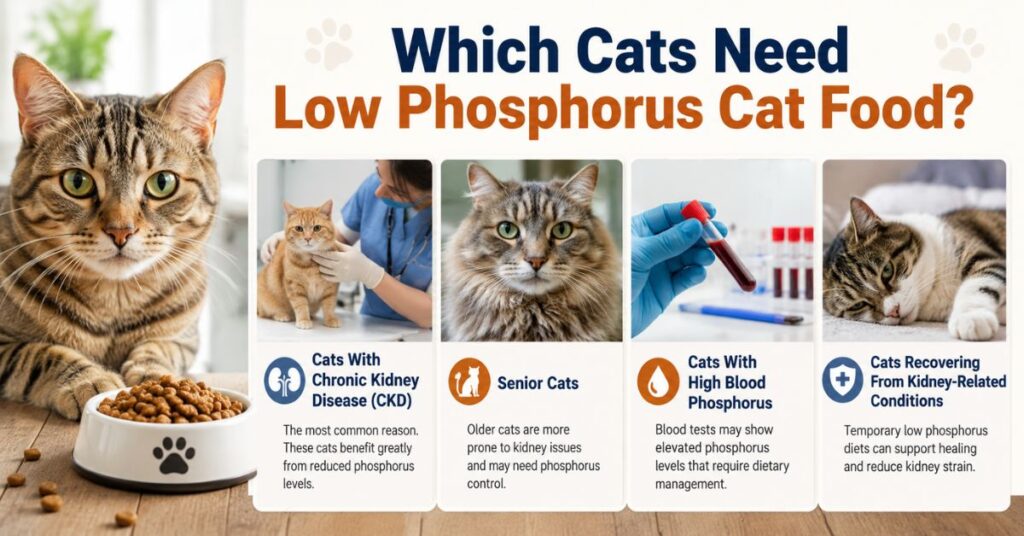
Not every cat requires a phosphorus-restricted diet. However, certain health conditions may make it necessary.
Cats With Chronic Kidney Disease
Kidney disease is the most common reason veterinarians recommend a renal diet for cats. Chronic kidney disease affects many older cats and often requires lifelong dietary management.
Senior Cats
Older cats are more likely to develop kidney issues. Some veterinarians may suggest monitoring phosphorus intake as cats age.
Cats With Elevated Blood Phosphorus
Blood tests may reveal unusually high phosphorus levels. In such cases, dietary adjustments can help restore balance.
Cats Recovering From Kidney-Related Conditions
Some cats recovering from kidney injuries may benefit from temporary phosphorus restriction under veterinary supervision.
Signs Your Cat May Have Kidney Problems
Kidney disease often develops gradually, making early detection important.
Common signs include:
- Increased thirst
- Frequent urination
- Weight loss
- Poor appetite
- Vomiting
- Bad breath
- Lethargy
- Dull coat condition
If you notice these symptoms, consult your veterinarian promptly.
Benefits of Low Phosphorus Cat Food
Switching to a kidney-friendly diet offers several potential benefits.
Supports Kidney Function
Reducing phosphorus intake helps decrease strain on the kidneys.
Slows Disease Progression
Studies have shown that phosphorus control may help slow the advancement of chronic kidney disease.
Improves Appetite
Many renal support cat food formulas are designed to be highly palatable, encouraging cats to eat regularly.
Enhances Quality of Life
Cats often feel better when their phosphorus levels remain within a healthy range.
Supports Balanced Nutrition
Most kidney care cat food formulas provide carefully balanced nutrients while limiting phosphorus.
Key Ingredients to Look For
Not all low phosphorus diets are created equal.
High-Quality Animal Protein
Cats are obligate carnivores and need protein from animal sources such as:
- Chicken
- Turkey
- Salmon
- Whitefish
- Duck
Controlled Phosphorus Content
Look for foods specifically labeled for kidney support or phosphorus control.
Omega-3 Fatty Acids
Omega-3 fatty acids may help support kidney health and reduce inflammation.
Common sources include:
- Fish oil
- Salmon oil
- Sardine oil
Antioxidants
Antioxidants help protect cells from damage.
Examples include:
- Vitamin E
- Vitamin C
- Taurine
Adequate Moisture
Wet food often helps increase water intake, which can be beneficial for cats with kidney disease.
Ingredients to Avoid
Some ingredients may contribute to higher phosphorus levels.
Avoid excessive amounts of:
- Bone meal
- Meat by-products with high mineral content
- Excessive organ meats
- Unbalanced homemade diets
- Foods with unknown phosphorus levels
Always check labels carefully and consult your veterinarian.
Wet Food vs Dry Food for Kidney Health
Many cat owners wonder whether wet or dry food is better.
| Feature | Wet Food | Dry Food |
| Moisture Content | High | Low |
| Hydration Support | Excellent | Limited |
| Kidney Support | Often Better | Can Still Be Effective |
| Shelf Life | Shorter After Opening | Longer |
| Palatability | Usually Higher | Moderate |
| Cost | Higher | Lower |
In many cases, wet kidney-friendly cat food is preferred because it provides additional hydration.
How to Choose the Best Low Phosphorus Cat Food
Consult Your Veterinarian
Always seek professional guidance before changing your cat’s diet.
Review Nutritional Information
Look for foods specifically designed for:
- Kidney support
- Renal care
- Phosphorus restriction
Consider Your Cat’s Preferences
Cats can be picky eaters. You may need to try several flavors and textures.
Check Protein Quality
Choose foods with high-quality animal protein sources.
Monitor Your Cat’s Response
Observe changes in:
- Appetite
- Energy level
- Weight
- Water consumption
- Overall behavior
Feeding Tips for Cats on a Renal Diet
Making dietary changes can sometimes be challenging.
Transition Gradually
Mix increasing amounts of the new food with the old food over 7–10 days.
Serve Fresh Meals
Cats often prefer freshly opened food.
Warm Wet Food Slightly
A small amount of warming can improve aroma and encourage eating.
Offer Small Frequent Meals
Many cats with kidney disease eat better when offered smaller portions throughout the day.
Ensure Access to Fresh Water
Hydration remains extremely important.
Can You Make Homemade Low Phosphorus Cat Food?
Some owners consider homemade diets. While this may seem appealing, creating a balanced renal diet is complex.
Homemade recipes can easily become deficient in:
- Essential vitamins
- Minerals
- Taurine
- Protein balance
If you want to prepare homemade meals, work closely with a veterinary nutritionist to ensure complete and balanced nutrition.
Common Mistakes to Avoid
Changing Food Too Quickly
Rapid transitions can cause digestive upset and food refusal.
Ignoring Veterinary Advice
Kidney disease requires professional monitoring.
Focusing Only on Phosphorus
Cats still need balanced nutrition, including adequate protein and essential nutrients.
Feeding High-Phosphorus Treats
Treats can significantly increase phosphorus intake if not carefully selected.
Skipping Follow-Up Testing
Regular bloodwork helps evaluate how well the diet is working.
Conclusion
A low phosphorus cat food can play a major role in supporting cats with kidney disease and other phosphorus-related health concerns. By reducing phosphorus intake, these diets help lessen kidney stress, support overall wellness, and improve quality of life.
When choosing a kidney-friendly cat food, focus on balanced nutrition, high-quality ingredients, and veterinary guidance. Every cat is unique, so regular monitoring and adjustments may be necessary. With the right diet and proper care, many cats with kidney issues can continue to enjoy comfortable, happy lives for years to come.in
Low phosphorus cat food contains reduced phosphorus levels compared to standard cat food and is typically formulated for cats with kidney disease or elevated phosphorus levels.
Not always. Some cats with elevated phosphorus levels or other medical conditions may also benefit from phosphorus-controlled diets under veterinary supervision.
Healthy cats can generally eat it, but these diets are usually designed for specific medical needs. Consult your veterinarian before making the switch.
Wet food is often preferred because it provides additional hydration, which supports kidney function. However, both wet and dry renal diets can be effective.
Many cats with chronic kidney disease remain on a kidney-friendly diet for life. Your veterinarian can recommend the best plan based on your cat’s condition.

Muhammad Ahad — Passionate writer sharing informative, engaging, and easy-to-read articles across different topics. Focused on delivering valuable content that helps readers learn, explore, and stay inspired every day.