

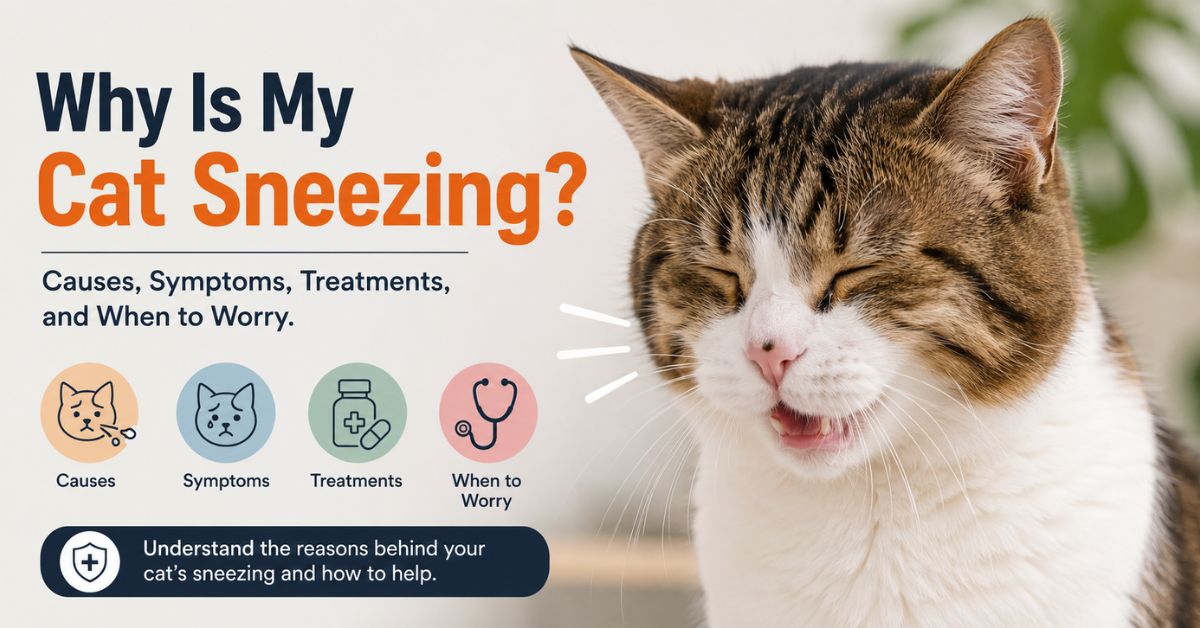
If you’ve recently noticed your cat sneezing more than usual, you’re probably asking yourself: “why is my cat sneezing?”
A random sneeze here and there is usually nothing serious. Just like humans, cats can sneeze because of dust, strong smells, or tiny irritants in the air. But when sneezing becomes frequent or comes with other symptoms, it could point to a health issue that needs attention.
For many cat owners in the USA, sneezing is one of the first signs that something may be wrong. The good news is that most causes are treatable when caught early.
In this guide, you’ll learn:
- The common reasons cats sneeze
- When sneezing becomes a concern
- Treatment options
- Home care tips
- When to call a veterinarian
Let’s break it down in simple terms.
Why Do Cats Sneeze?
The body naturally clears irritants from the nose by sneezing. A single sneeze usually isn’t a problem. However, repeated sneezing may signal irritation, allergies, infections, or dental problems.
Some cats sneeze once after sniffing dusty litter, while others may develop chronic sneezing due to ongoing health conditions.
Understanding the cause is the key to helping your cat feel better.
Common Causes of Cat Sneezing
Upper Respiratory Infections (URIs)
One of the most common answers to “why is my cat sneezing” is an upper respiratory infection.
Cat colds are very common, especially in:
- Shelters
- Multi-cat homes
- Rescue cats
- Young kittens
These infections are often caused by viruses such as:
- Feline herpesvirus
- Feline calicivirus
Symptoms may include:
- Sneezing
- Runny nose
- Watery eyes
- Congestion
- Low energy
- Reduced appetite
A mild infection will typically resolve within 1–2 weeks, but a severe infection may need to be treated by a veterinarian.
Allergies
Cats can develop allergies just like humans.
Common household triggers in the USA include:
- Dust
- Mold
- Cigarette smoke
- Perfumes
- Scented candles
- Cleaning products
- Pollen
If your cat sneezes more during certain seasons or after exposure to strong smells, allergies could be the cause.
Dusty Cat Litter
Some cat litters produce fine dust particles that irritate sensitive noses.
Clay-based litter is often the biggest culprit. Switching to low-dust or unscented litter can sometimes solve the problem quickly.
Signs your litter may be the issue:
- Sneezing near the litter box
- Sneezing after digging
- No other illness symptoms
Dental Disease
Many owners are surprised to learn that dental infections can cause sneezing.
The roots of upper teeth sit close to the nasal passages. When an infection develops, it can affect the nose and trigger sneezing.
Warning signs include:
- Bad breath
- Drooling
- Trouble eating
- Pawing at the mouth
- Facial swelling
Dental disease is especially common in older cats.
Foreign Objects in the Nose
Sometimes cats accidentally inhale:
- Grass blades
- Tiny seeds
- Dust particles
- Hair strands
This can lead to sudden, repeated sneezing fits.
If your cat sneezes violently and paws at the nose, a foreign object may be stuck inside.
Nasal Polyps or Tumors
Chronic sneezing in older cats may sometimes be linked to nasal growths or tumors.
Although less common, symptoms may include:
- Persistent sneezing
- Bloody nasal discharge
- Noisy breathing
- Facial swelling
This situation always requires veterinary evaluation.
Cat Sneezing Symptoms: What’s Normal vs. Concerning?
Here’s a quick comparison to help you understand when sneezing may need medical attention.
| Normal Sneezing | Concerning Sneezing |
| Occasional sneezing | Frequent sneezing fits |
| No other symptoms | Runny nose or eyes |
| Active and playful | Low energy |
| Eating normally | Loss of appetite |
| Sneezing stops quickly | Symptoms lasting over a week |
| No discharge | Blood or thick mucus |
If your cat shows the symptoms listed in the second column, it’s best to contact a veterinarian.
When Should You Worry About Cat Sneezing?
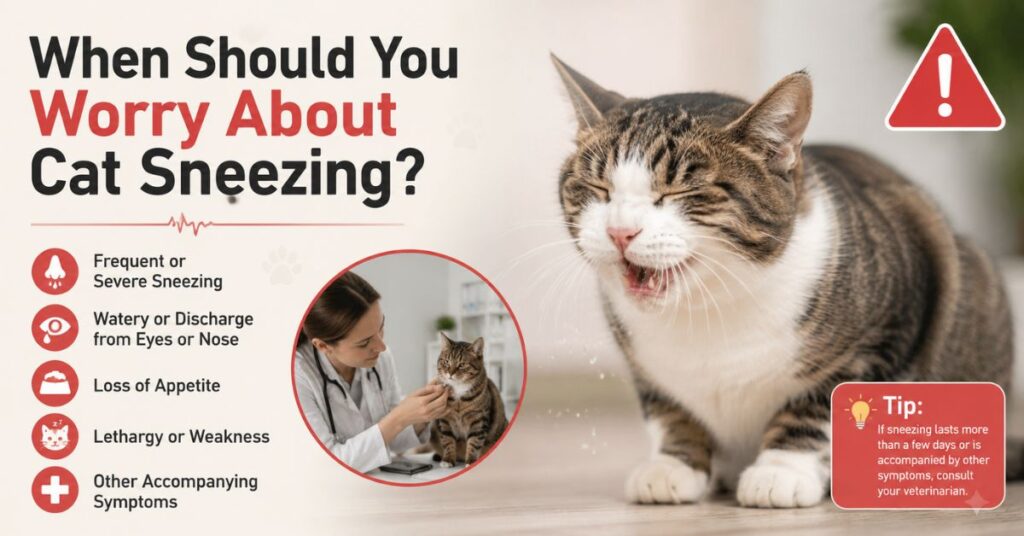
Many cat owners wonder when sneezing becomes serious.
You should contact a vet if your cat has:
- Sneezing lasting more than 7 days
- Green or yellow nasal discharge
- Trouble breathing
- Loss of appetite
- Fever
- Eye discharge
- Blood from the nose
- Severe lethargy
Kittens, senior cats, and cats with weakened immune systems are more vulnerable to complications.
Why Is My Indoor Cat Sneezing?
Indoor cats can still develop sneezing problems.
Even without outdoor exposure, indoor cats encounter irritants such as:
- Air fresheners
- Household cleaners
- Dust
- HVAC filters
- Smoke
- Dry air
Indoor cats can also catch viruses from:
- New pets
- Boarding facilities
- Grooming visits
- Contaminated objects
If your indoor cat suddenly starts sneezing, think about any recent changes in the home environment.
How Veterinarians Diagnose Sneezing in Cats
A vet will usually begin with a physical examination.
They may ask questions like:
- How long has the sneezing lasted?
- Is there nasal discharge?
- Has your cat been eating normally?
- Any recent environmental changes?
Depending on symptoms, your vet may recommend:
- Blood tests
- Nasal swabs
- X-rays
- Dental exams
- Imaging scans
This helps identify the underlying cause accurately.
Treatments for Sneezing Cats
Treatment depends on the reason behind the sneezing.
Treatment for Viral Infections
For mild cat colds, vets may recommend:
- Rest
- Hydration
- Humidified air
- Appetite support
Some severe cases require:
- Antiviral medications
- Antibiotics for secondary infections
- Eye medications
Allergy Management
If allergies are the issue, treatment may involve:
- Removing triggers
- Air purifiers
- Unscented products
- Allergy medications prescribed by a vet
Never give human allergy medicine without professional guidance.
Dental Treatment
Dental infections may require:
- Professional cleaning
- Tooth extraction
- Antibiotics
- Pain relief
Proper dental care can prevent recurring sneezing.
Foreign Object Removal
If something is stuck in the nose, a vet may safely remove it using special tools or sedation.
Avoid trying to remove it yourself at home.
Home Care Tips for Sneezing Cats
If your cat has mild symptoms, these home care tips may help.
Keep the Environment Clean
Reduce airborne irritants by:
- Vacuuming regularly
- Using low-dust litter
- Avoiding smoke exposure
- Limiting strong fragrances
Increase Humidity
Dry air can irritate nasal passages.
Helpful options include:
- Humidifiers
- Sitting with your cat in a steamy bathroom for a few minutes
This may help loosen congestion.
Encourage Eating and Drinking
Cats with congestion may lose interest in food because they can’t smell well.
Try:
- Warming wet food slightly
- Offering strong-smelling foods
- Providing fresh water often
Hydration is important for recovery.
Monitor Symptoms Closely
Keep track of:
- Frequency of sneezing
- Appetite changes
- Energy levels
- Nasal discharge
This information helps your veterinarian if symptoms worsen.
Can Cat Sneezing Spread to Other Cats?
Yes, many respiratory infections are contagious between cats.
Viruses such as feline herpesvirus spread through:
- Sneezing droplets
- Shared bowls
- Grooming
- Close contact
If you have multiple cats:
- Separate sick cats when possible
- Wash food bowls regularly
- Clean litter boxes often
Vaccinations can also help reduce risk.
Preventing Sneezing Problems in Cats
You can’t prevent every illness, but these steps lower the risk.
Keep Vaccinations Updated
Routine vaccines help protect against common respiratory viruses.
Maintain Good Hygiene
Clean:
- Food bowls
- Water bowls
- Bedding
- Litter boxes
A cleaner environment supports better health.
Reduce Stress
Stress weakens the immune system in cats.
Try to provide:
- Quiet resting areas
- Stable routines
- Gradual introductions to new pets
Schedule Regular Vet Checkups
Annual wellness exams help catch issues early before symptoms become severe.
Common Myths About Cat Sneezing
“Sneezing Always Means a Cold”
Not necessarily. Allergies, dust, dental disease, and irritants can also trigger sneezing.
“Indoor Cats Don’t Get Sick”
A cat living indoors can still contract an infection or react to an environmental trigger.
“Human Medicine Is Safe for Cats”
Many human medications are dangerous for cats. Always consult a vet first.
Final Thoughts
If you’ve been wondering, “why is my cat sneezing?”, the answer could range from something minor like dust exposure to a more serious health issue such as an infection or dental disease.
The most important thing is to watch for additional symptoms and act early if your cat seems uncomfortable or sick. In many cases, simple environmental changes and supportive care can help your cat recover quickly.
At the same time, persistent sneezing should never be ignored. A veterinary visit can provide peace of mind and ensure your cat gets proper treatment before the condition worsens.
At whykittieshome.com, helping cat owners understand their pets better is always the priority. A healthy cat is a happier companion, and informed pet parents make all the difference.
It is common for occasional sneezing without other symptoms to be harmless. Dust, litter, or mild irritation may be the cause. Monitor your cat for changes.
Yes. Dusty or scented litter can irritate a cat’s nose and trigger sneezing, especially in sensitive cats.
You should contact a vet if sneezing lasts more than a week or comes with symptoms like discharge, low appetite, fever, or breathing problems.
Kittens commonly develop upper respiratory infections because their immune systems are still developing. Vet care may be needed if symptoms worsen.
Yes. Some cats react to pollen, dust, mold, or seasonal environmental changes.

Muhammad Ahad — Passionate writer sharing informative, engaging, and easy-to-read articles across different topics. Focused on delivering valuable content that helps readers learn, explore, and stay inspired every day.
2 thoughts on “Why Is My Cat Sneezing? Causes, Symptoms, Treatments, and When to Worry”