

Introduction
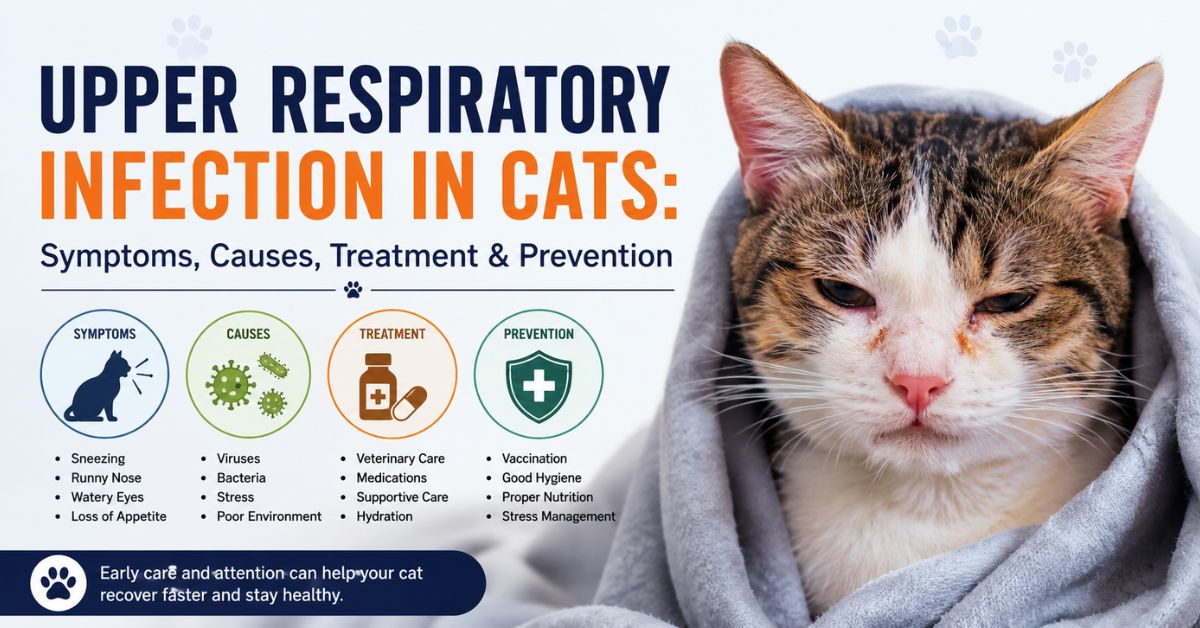
A bold upper respiratory infection in cats is one of the most common health issues affecting felines worldwide. Similar to the common cold in humans, this condition affects a cat’s nose, throat, and sinuses, causing discomfort and breathing difficulties.
While many cases are mild and resolve with proper care, some infections can become serious, especially in kittens, senior cats, or cats with weakened immune systems. Understanding the symptoms, causes, treatment options, and prevention methods can help cat owners protect their furry companions and ensure a faster recovery.
This guide covers everything you need to know about upper respiratory infection in cats, from early warning signs to effective treatment and prevention strategies.
What Is an Upper Respiratory Infection in Cats?
An upper respiratory infection in cats (URI) is an infection that affects the upper airways, including the nose, throat, and sinuses. These infections are usually caused by viruses, bacteria, or a combination of both.
The condition spreads easily among cats through direct contact, shared food bowls, bedding, or contaminated surfaces.
Cats living in shelters, multi-cat households, or stressful environments are particularly vulnerable to respiratory infections.
Common Causes of Upper Respiratory Infection in Cats
Several infectious agents can trigger a upper respiratory infection in cats.
Viral Causes
Viruses are responsible for the majority of feline respiratory infections.
Common viral causes include:
- Feline Herpesvirus (FHV-1)
- Feline Calicivirus (FCV)
These viruses are highly contagious and often spread through sneezing and close contact.
Bacterial Causes
Certain bacteria may cause infections or worsen existing viral infections.
Common bacterial causes include:
- Bordetella bronchiseptica
- Chlamydia felis
- Mycoplasma species
Environmental Factors
Infection risks can be increased by environmental factors such as:
- Overcrowding
- Poor ventilation
- Stress
- Inadequate nutrition
- Exposure to infected cats
Symptoms of Upper Respiratory Infection in Cats
Recognizing symptoms early can help prevent complications.
Early Signs
The first signs often resemble a common cold.
Symptoms may include:
- Sneezing
- Runny nose
- Mild cough
- Watery eyes
- Reduced appetite
Moderate Symptoms
As the infection progresses, cats may develop:
- Nasal congestion
- Thick eye discharge
- Fever
- Lethargy
- Difficulty smelling food
Severe Symptoms
In severe cases, cats may experience:
- Open-mouth breathing
- Severe dehydration
- Weight loss
- Eye ulcers
- Pneumonia
Seek veterinary attention immediately if breathing becomes difficult.
How Contagious Is an Upper Respiratory Infection in Cats?
An upper respiratory infection in cats is highly contagious among felines.
The infection can spread through:
- Direct cat-to-cat contact
- Shared food and water bowls
- Grooming each other
- Sneezing droplets
- Contaminated bedding and toys
Fortunately, most feline respiratory viruses do not infect humans.
Diagnosing Upper Respiratory Infection in Cats
A veterinarian will usually diagnose the condition based on symptoms and physical examination.
Additional diagnostic tests may include:
- Eye and nasal swabs
- Blood tests
- X-rays
- Bacterial cultures
These tests help determine the exact cause and guide treatment decisions.
Symptoms and Severity Guide
| Symptom | Mild | Moderate | Severe |
| Sneezing | ✓ | ✓ | ✓ |
| Runny Nose | ✓ | ✓ | ✓ |
| Eye Discharge | ✓ | ✓ | ✓ |
| Fever | ✗ | ✓ | ✓ |
| Loss of Appetite | ✗ | ✓ | ✓ |
| Difficulty Breathing | ✗ | ✗ | ✓ |
| Weight Loss | ✗ | ✗ | ✓ |
Treatment for Upper Respiratory Infection in Cats
Treatment depends on the severity and underlying cause.
Veterinary Treatment
Your veterinarian may recommend:
- Antibiotics for bacterial infections
- Antiviral medications
- Eye drops
- Fluid therapy
- Appetite stimulants
Always follow your veterinarian’s instructions carefully.
Home Care Support
Supportive care plays a major role in recovery.
Helpful measures include:
- Keeping your cat warm
- Providing fresh water
- Cleaning eye and nasal discharge
- Offering strong-smelling foods
- Reducing stress
Many cats recover faster when receiving proper supportive care.
How to Help a Cat Breathe More Easily
Congestion can make breathing uncomfortable.
Try these safe methods:
Use Steam Therapy
Place your cat in a bathroom while a hot shower runs.
Congestion and mucus can be eased by steam.
Keep the Nose Clean
Use a soft damp cloth to gently remove nasal discharge.
Encourage Hydration
Adequate hydration helps thin mucus and supports recovery.
Recovery Time for feline upper respiratory disease
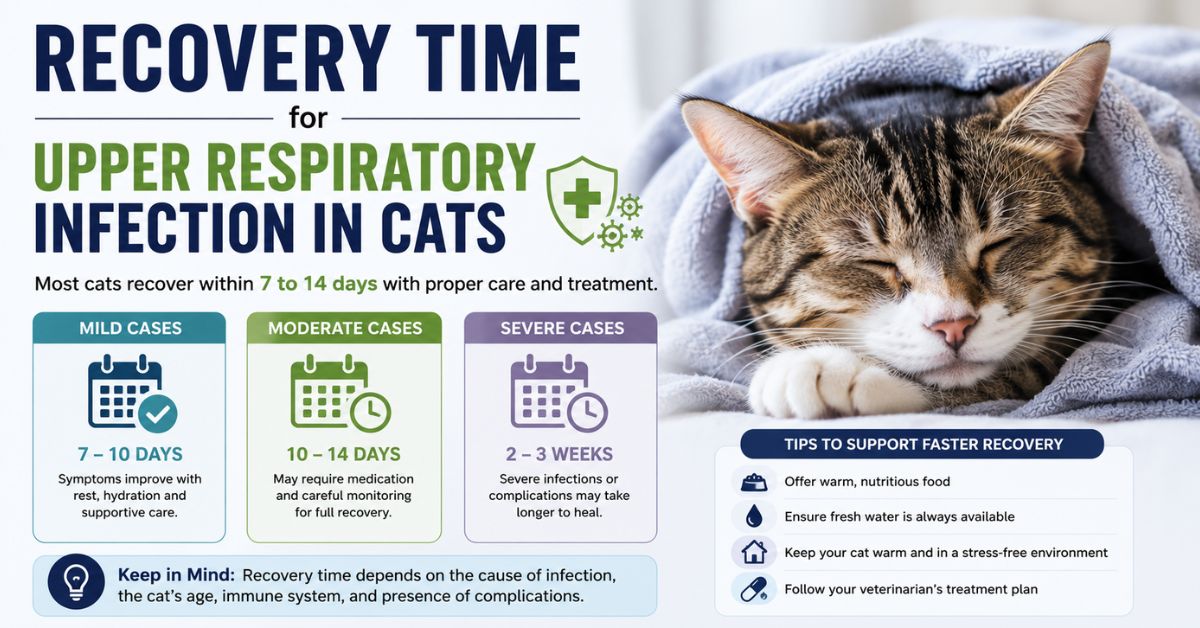
Most mild cases of upper respiratory infection in cats improve within 7 to 14 days.
Recovery time may vary depending on:
- The cause of infection
- The cat’s age
- Immune system strength
- Presence of secondary infections
Some cats infected with herpesvirus may become lifelong carriers and experience occasional flare-ups.
Potential Complications
Without proper treatment, complications may develop.
Possible complications include:
- Chronic sinus infections
- Eye damage
- Pneumonia
- Dehydration
- Persistent respiratory issues
Early treatment greatly reduces these risks.
Preventing feline upper respiratory disease
Prevention is always better than treatment.
Keep Vaccinations Current
Core vaccinations help reduce the severity and spread of respiratory diseases.
Important vaccines include:
- Feline Herpesvirus vaccine
- Calicivirus vaccine
Maintain Good Hygiene
Practice good sanitation by:
- Cleaning food bowls daily
- Washing bedding regularly
- Disinfecting shared surfaces
Reduce Stress
Stress weakens the immune system and increases susceptibility to infection.
Provide:
- Comfortable resting spaces
- Predictable routines
- Environmental enrichment
Isolate Sick Cats
If one cat becomes ill, separate them from healthy cats until recovery.
When Should You Visit a Veterinarian?
Contact your veterinarian if your cat:
- Stops eating for more than 24 hours
- Has difficulty breathing
- Develops eye ulcers
- Experiences persistent fever
- Shows severe lethargy
Prompt treatment can prevent serious complications.
Conclusion
A upper respiratory infection in cats is a common but potentially serious condition that requires prompt attention and proper care. Recognizing symptoms early, seeking veterinary advice, and providing supportive home care can significantly improve recovery outcomes.
Preventive measures such as vaccination, hygiene, stress reduction, and regular health monitoring can help keep your cat healthy year-round. At WhyKittiesHome, we are committed to helping cat owners provide the best possible care for their feline companions and make informed decisions about their health and well-being.
Most feline upper respiratory infections are species-specific and do not spread to humans.
Most cases improve within one to two weeks with proper care and treatment.
Mild infections may resolve on their own, but veterinary evaluation is recommended to prevent complications.
Yes. Isolation helps prevent the spread of infection to other cats in the household.
Yes. Vaccination reduces severity and risk but does not guarantee complete protection.

Muhammad Ahad — Passionate writer sharing informative, engaging, and easy-to-read articles across different topics. Focused on delivering valuable content that helps readers learn, explore, and stay inspired every day.
1 thought on “Upper Respiratory Infection in Cats: Symptoms, Causes, Treatment & Prevention”